







For many people, dieting becomes an endless cycle of restriction, frustration, and weight regain. Even repeated dieting attempts often fail to deliver lasting results and can deepen food preoccupation and emotional distress. Instead of chasing the next best diet, a sustainable solution is to learn how to eat in ways that honor your body’s needs without rigid rules. This article explains how to stop dieting forever, grounded in research-supported practices that promote long-term wellbeing.
What Makes Diets Unsustainable?
Traditional diets emphasize food rules, calorie counting, and often weight loss as the primary goal. However:
- Dieting has limited long-term success for weight management and frequently leads to weight cycling (loss followed by regain).
- Chronic restriction increases food preoccupation and risk of disordered eating behaviors like binge eating.
- External food rules disconnect people from internal hunger and fullness signals, making intuitive eating harder over time.
Research shows that a shift from dieting to non-dieting approaches can improve emotional well-being and behavioral outcomes.
A Better Alternative: Intuitive Eating
One of the most studied non-diet approaches is intuitive eating — a self-care framework that encourages listening to your body rather than following restrictive diet rules.
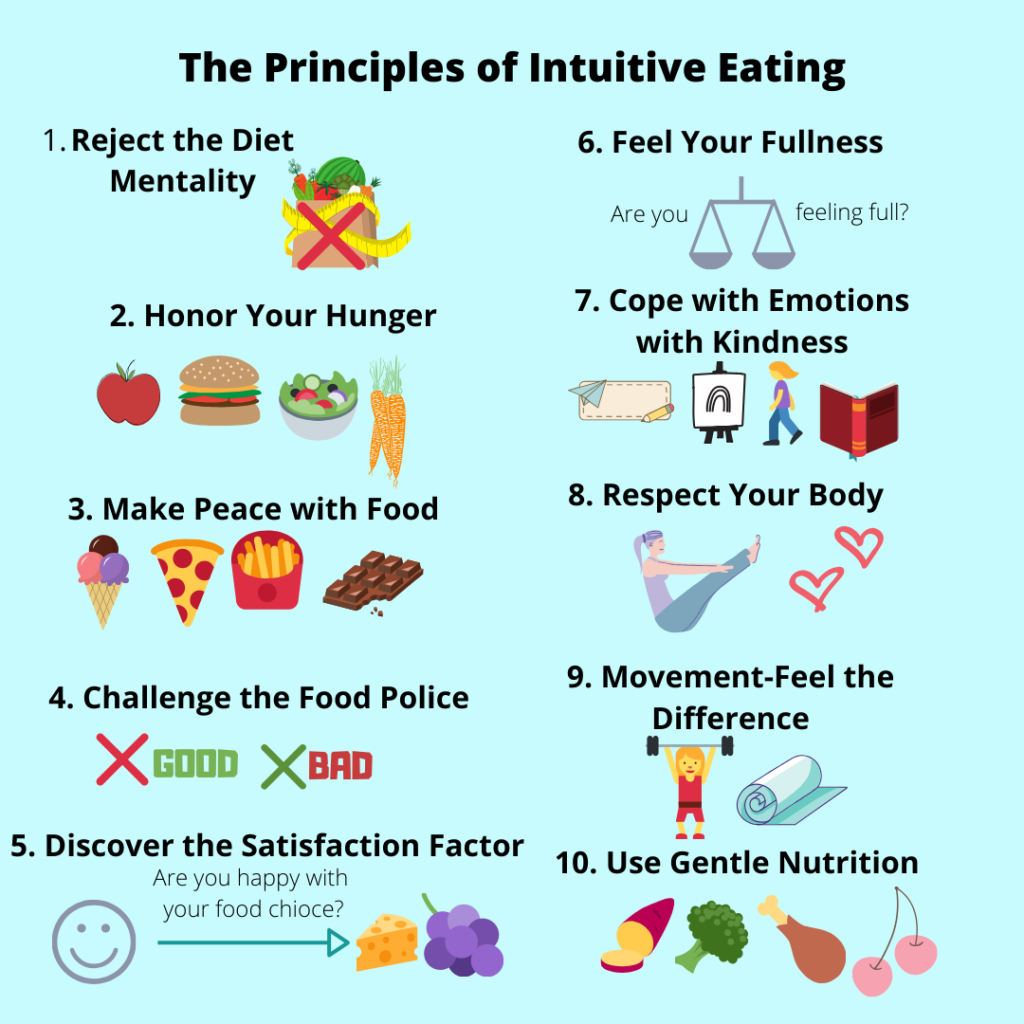
This method was developed by dietitians Evelyn Tribole and Elyse Resch and is rooted in 10 core principles that help you rebuild trust with food and your body.
Core Principles to Stop Dieting (and Stay Stopped)
Reject the Diet Mentality
To stop dieting forever, begin by questioning the belief that success depends on a specific diet. Recognize that diet culture often promotes quick fixes rather than sustainable habits.
Example: Instead of starting “Monday clean eating,” ask: What patterns have I tried already, and how did they make me feel?
Honor Hunger and Fullness
Reconnect with internal cues to decide when and how much to eat. This rebuilds trust in your body’s signals rather than external rules.
Practical step: Label your hunger and fullness on a scale so you learn to interpret your body’s messages.
Make Peace with Food
Dieting creates forbidden foods — and forbidden foods often become obsessive. Intuitive eating encourages unconditional permission to eat all foods, diminishing the restrict–rebel cycle.
Real-world application: Allow yourself a treat without guilt and observe how it affects your hunger and satisfaction.
Discover Satisfaction
Eating should be enjoyable. When meals are satisfying physically and emotionally, you’re less likely to overeat or obsess about food.
Example: Choose foods you like for meals and notice how satisfaction influences your eating pace and choices.
Honor Your Feelings Without Using Food
Recognize emotional triggers and develop ways to cope with stress, boredom, or sadness without automatically turning to food.
Activity: Keep a feelings journal to track emotional states and non-food coping strategies.
Respect Your Body
This principle encourages body acceptance and reduces the shame that dieting often reinforces. A compassionate mindset supports healthier eating patterns over time.
Practical Tools for Building Food Freedom
Mindful Eating Breaks
Mindful eating focuses attention on the experience of eating — taste, texture, sensations of hunger and fullness — which supports intuitive eating skills.
Practice: Slow down at meals, put away distractions, and chew thoughtfully.
Small, Sustainable Lifestyle Shifts
Rather than drastic rules, aim for gradual lifestyle adjustments (consistent meals, hydration, and regular sleep) that support well-being without rigid diets. Even tiny habit shifts accumulate over time.
Seek Guidance When Needed
Working with a registered dietitian or therapist familiar with non-diet approaches can accelerate progress and help navigate challenges.
Why This Works: Backed by Research
Unlike diets that emphasize weight loss as the primary outcome, non-dieting approaches like intuitive eating encourage health behaviors that are self-directed and body-respectful. These approaches have been associated with improvements in eating behavior, psychological well-being, and reduced risk of disordered eating.
High-quality sources for further reading include:
- Harvard T.H. Chan School of Public Health – Intuitive Eating Overview — A thorough explanation of how intuitive eating differs from dieting and why listening to internal cues matters.
- The Intuitive Eating Organization – Principles Summary — The official guide to the 10 principles of intuitive eating.
Conclusion: Food Freedom Begins With Reconnection
Stopping dieting forever doesn’t mean abandoning structure or wellbeing — it means shifting the foundation of your relationship with food. By honoring hunger, respecting your body, and practicing mindful and intuitive eating, you can cultivate long-term peace with food. These are sustainable habits rooted in self-trust, not external rules — allowing you to eat in ways that support both physical and emotional health without restriction.


