

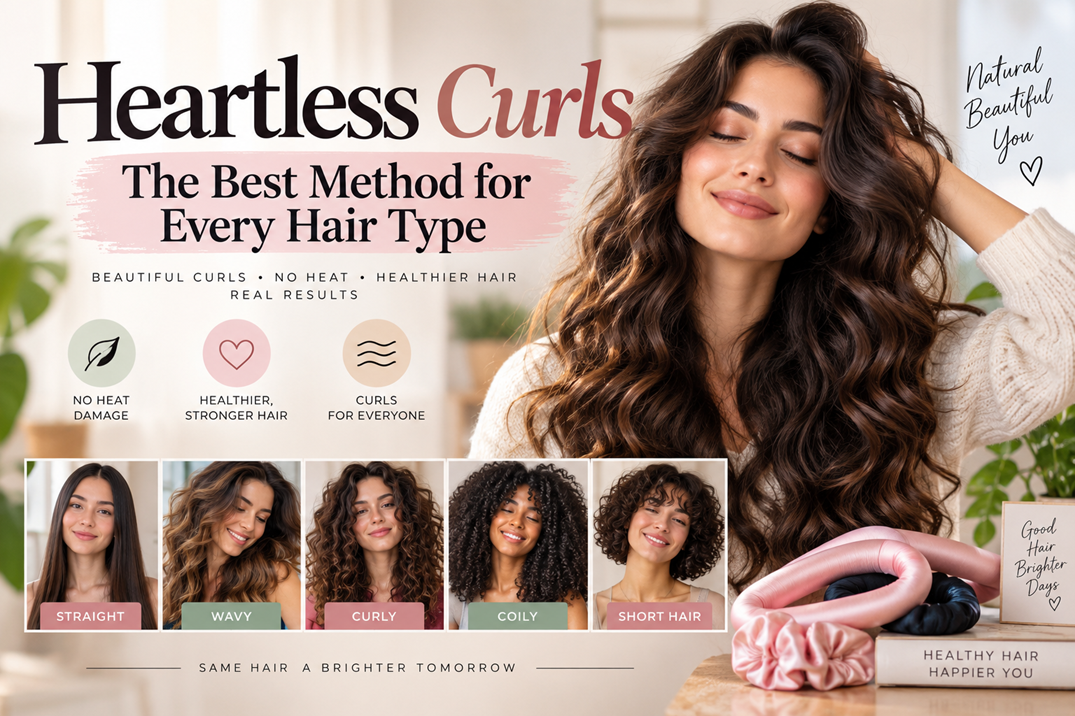
Heartless curls—sometimes called heartless curls—have become a practical way to create waves, curls, and volume without relying on curling irons or wands. Instead of using high temperatures to reshape the hair, these techniques use gentle tension, wrapping, braiding, twisting, or soft curling tools while the hair dries or sets.
The biggest advantage is flexibility: there isn’t one heartless curling method that works identically for everyone. Fine straight hair may need a lightweight mousse and tighter wrapping, while thick or naturally curly hair may respond better to larger sections, twists, or curl-enhancing products.
Heartless styling can also help reduce exposure to the excessive heat that dermatologists associate with hair damage. The American Academy of Dermatology recommends limiting heat styling because excessive heat can make hair brittle, frizzy, and more prone to breakage.
What Are Heartless Curls?
The term heartless curls is generally used online to describe curling techniques that don’t require heated styling tools. The more common term is heartless curls.
Popular techniques include:
- Satin or foam curling rods
- Robe-belt curls
- Overnight braids
- Two-strand twists
- Flex rods
- Foam rollers
- Sock curls
- Pin curls
- Headband curls
- Scrunching and air-drying for naturally curly hair
The final result depends on several factors, including hair texture, length, density, moisture level, section size, wrapping tension, and how completely the hair dries before the curls are released.
Professional hairstylists have also highlighted techniques such as sock curls, braiding, robe-belt wrapping, and twist-outs as useful heat-free options for different textures.
Why Try Heartless Curls?
1. Less exposure to high heat
Curling irons and wands expose individual sections of hair to concentrated heat. Excessive heat can damage the hair shaft, regardless of hair type.
Heartless styling removes that particular source of stress.
However, heartless does not automatically mean damage-proof. Pulling hair too tightly, using aggressive de-tangling techniques, or sleeping in an uncomfortable style can still cause breakage.
2. Different curl patterns are possible
Changing the size of the curling tool or hair sections can dramatically alter the result.
For example:
- Large rod + large sections = loose waves
- Medium rod + medium sections = soft curls
- Small rod + small sections = tighter curls
- Braids = textured waves
- Twists = more defined, elongated curls
3. Convenient overnight styling
Many heartless methods work while you sleep. You can prepare your hair in the evening, allow it to dry or set overnight, and release it in the morning.
For curly and coil hair, the American Academy of Dermatology also recommends gentle nighttime styling to help preserve curls and reduce friction.
The Best Heartless Curl Method for Every Hair Type
1. Fine, Straight Hair: Satin Rod or Sock Curls
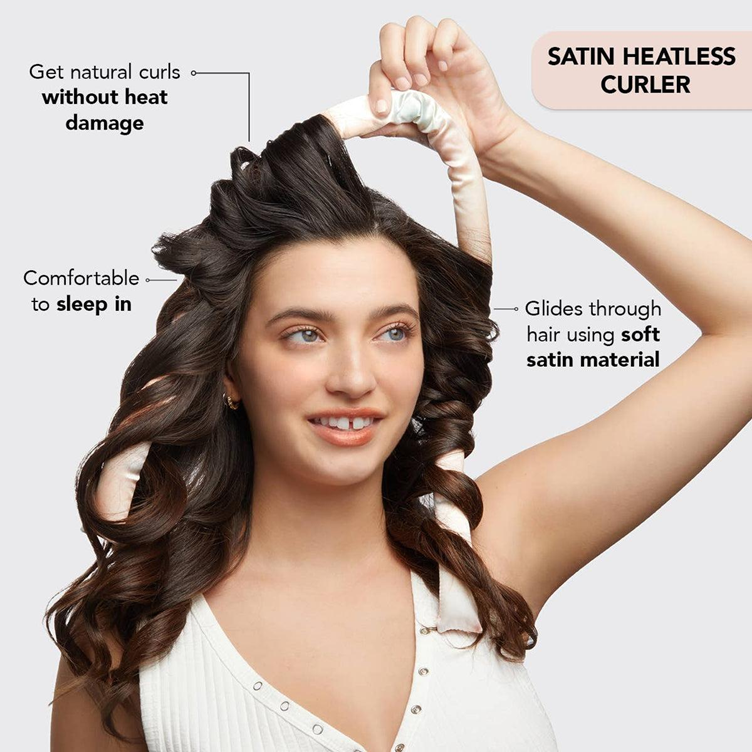
Fine, straight hair can sometimes struggle to hold a curl. For this hair type, a flexible satin curling rod or sock-curl method can be particularly practical.
How to do it
- Start with slightly damp, not soaking-wet, hair.
- Apply a small amount of lightweight mousse or styling product.
- Divide your hair into two or four sections.
- Wrap each section around the curling rod.
- Secure the ends gently.
- Allow the hair to dry completely.
- Remove the rod and separate the curls with your fingers.
Avoid applying too much oil or heavy cream because fine hair can become weighed down.
Pro tip: If your curls disappear quickly, use smaller sections and make sure the hair is completely dry before removing the curling tool.
2. Medium or Wavy Hair: Overnight Braids
Naturally wavy hair is often well suited to loose overnight braids.
Braiding produces a softer, textured wave rather than the polished spiral produced by a curling rod.
Best technique
After washing:
- Gently remove excess water.
- Apply a lightweight leave-in conditioner or mousse.
- Divide the hair into two or more sections.
- Create loose braids.
- Allow the hair to dry completely.
- Undo the braids and gently separate the waves.
Avoid making the braids extremely tight. A hairstyle that creates significant pulling or discomfort isn’t a good styling choice. The AAD specifically advises avoiding styles that continuously pull on the hair.
3. Thick or Long Hair: Large Satin Curling Rods
Thick hair often requires a different approach because there is simply more hair to wrap.
A large, flexible curling rod can make the process easier.
Try this approach
Divide the hair into four to six manageable sections rather than attempting to wrap everything at once.
Work from the top downward, wrapping sections evenly around the rod.
For very long hair, avoid wrapping excessively thick sections because the inside of the section may remain damp while the outside feels dry.
Experience-based tip: Smaller sections create more definition, but they also increase styling time. For everyday wear, larger sections usually provide a good balance between definition and convenience.
4. Curly Hair: Twist-Outs
If your hair already has a natural curl pattern, you may not need a traditional curling rod at all.
A twist-out can enhance the existing pattern while avoiding direct heat.
How it works
- Start with damp, conditioned hair.
- Apply a curl cream or leave-in conditioner appropriate for your texture.
- Divide the hair into sections.
- Split each section into two pieces.
- Twist the pieces around each other.
- Allow the hair to dry completely.
- Carefully unravel the twists.
- Separate the curls with your fingertips.
The AAD recommends minimizing unnecessary manipulation of curly hair and using gentle de-tangling methods because curly and coil hair can be more susceptible to dryness and breakage.
5. Coil or Tightly Textured Hair: Flex Rods or Twist-Outs
For tightly coiled hair, flex rods, perm rods, or twist-outs can provide different versions of defined curls.
Because tightly textured hair can be particularly vulnerable to dryness and breakage, preparation matters.
Use:
- A moisturizing leave-in conditioner
- A suitable curl cream
- Small, manageable sections
- Gentle finger de-tangling
- Minimal tension
The goal should be to shape the hair rather than force it into an unfamiliar pattern.
The American Academy of Dermatology recommends gentle de-tangling for curly and coil hair, preferably with fingers or a wide-tooth comb while the hair is wet and conditioned.
6. Short Hair: Foam Rollers or Small Flex Rods
Shorter hair can be difficult to wrap around a long curling ribbon.
Small foam rollers or flex rods are usually more practical.
For a short bob, for example, use smaller sections and roll away from the face. Leave enough space at the root to avoid creating uncomfortable tension.
If your goal is simply extra volume rather than defined curls, larger rollers placed around the crown can create lift without dramatically changing the entire texture.
How to Make Heartless Curls Last Longer
Creating the curl is only half the process. Maintaining it is equally important.
Start with the right moisture level
Hair that is dripping wet may take too long to dry inside a wrapped section. Completely dry hair may not reshape easily.
For many techniques, slightly damp hair is a useful starting point.
However, don’t leave hair wet for extended periods simply to achieve stronger curls.
Choose products according to your hair
Fine hair
Try:
- Lightweight mousse
- Voluminous spray
- Light styling cream
Thick or dry hair
Consider:
- Leave-in conditioner
- Curl cream
- Lightweight styling gel
Naturally curly or coil hair
Look for products designed specifically for your texture and focus on moisture and manageable hold.
The AAD recommends choosing hair-care products according to your specific hair type rather than following a universal routine.
Common Heartless Curl Mistakes to Avoid
Wrapping hair too tightly
Tighter isn’t necessarily better.
Excessive tension can cause discomfort and repeated pulling can contribute to hair breakage or traction-related hair loss. If a hairstyle hurts, it is too tight.
Going to bed with soaking-wet hair
Very wet hair is more fragile and can be easier to damage during manipulation. The AAD recommends handling wet hair gently because it breaks more easily when handled aggressively.
Using too much product
Heavy layers of cream, oil, mousse, and gel can leave fine hair flat and make the curls difficult to separate.
Start with a small amount and add more only when necessary.
Brushing out the finished curls
A brush can turn defined curls into frizz.
Instead, use your fingers to gently separate the sections.
Expecting identical results every time
Heartless curls depend on humidity, hair moisture, product choice, section size, drying time, and hair texture. Even the same technique can produce slightly different results from one day to another.
Heartless Curls vs. Heat Styling
| Feature | Heatless Curls | Curling Iron/Wand |
| Uses direct heat | No | Yes |
| Styling time | Usually longer | Usually faster |
| Overnight use | Often possible | No |
| Curl consistency | Can vary | Usually more predictable |
| Heat exposure | Eliminated | Present |
| Suitable for textured hair | Yes, with adaptation | Yes, with heat precautions |
| Damage risk | Lower from heat, but tension still matters | Heat can contribute to damage |
Heartless styling isn’t a guarantee of perfectly healthy hair, but it can be one practical way to reduce reliance on heated tools.
For additional information about protecting hair during styling, the American Academy of Dermatology’s hair-styling guidance provides dermatologist-reviewed recommendations.
You can also read Allure’s expert guide to heartless curls and waves for technique ideas across different textures.
For a broader perspective on hair health and reducing heat-related damage, see Health line’s guide to heat-damaged hair, which includes medically reviewed information.
A Simple Heartless Curl Routine to Try Tonight
If you’re new to heartless styling, don’t start with a complicated technique.
For straight or slightly wavy hair
Step 1: Wash and condition as normal.
Step 2: Gently remove excess moisture.
Step 3: Apply a small amount of lightweight styling product.
Step 4: Divide your hair into two sections.
Step 5: Wrap each section around a soft satin curling rod.
Step 6: Secure loosely.
Step 7: Allow the hair to dry completely.
Step 8: Remove the rod carefully.
Step 9: Separate curls using your fingers.
Step 10: Finish with a small amount of lightweight serum if needed.
If the result is too tight, use larger sections next time. If the curls are too loose, use smaller sections or slightly more hold.
Final Thoughts
Heartless—or heartless—curls aren’t about finding one magical technique that works for everyone. The best method depends on your hair’s texture, density, length, condition, and the type of curl you want.
Fine straight hair may benefit from a lightweight satin rod. Wavy hair can respond beautifully to loose braids. Thick hair may need larger sections and a longer setting period. Curly and coil textures can often achieve beautiful definition through twist-outs, flex rods, or techniques that work with the natural curl pattern.
The most important principle is gentle styling. Avoid excessive heat, aggressive brushing, and tight wrapping. Give your hair enough time to dry before releasing the style, and adjust your technique based on how your hair responds.
With a little experimentation, heartless curls can become a simple part of a styling routine that creates attractive texture while reducing dependence on high-temperature tools.
