

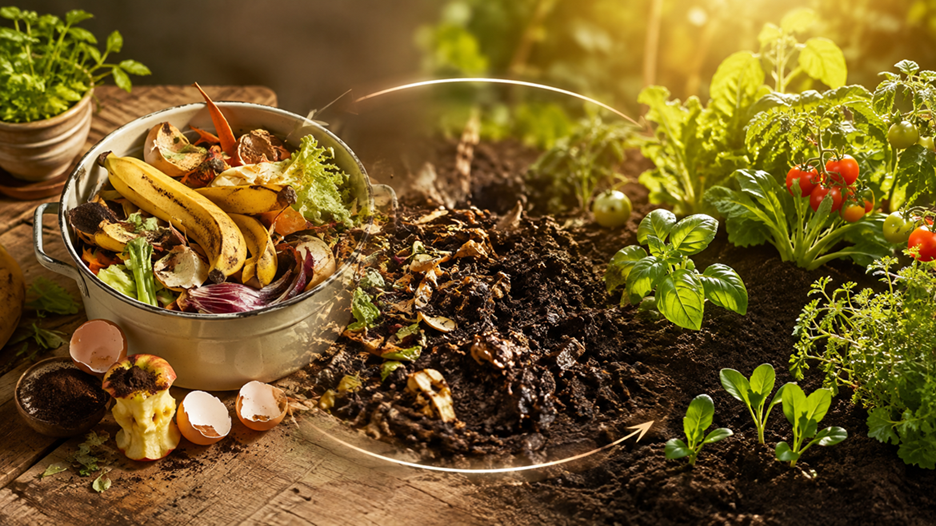
If you throw vegetable peels, fruit scraps, coffee grounds, and eggshells into the trash every day, you may be throwing away useful organic material that could eventually return nutrients and organic matter to your garden. DIY organic fertilizer using kitchen scraps is one of the simplest ways to reduce household waste while improving garden soil. You do not need expensive equipment or a complicated gardening setup. With the right materials, moisture, airflow, and a little patience, ordinary kitchen waste can become compost or another useful soil amendment.
There is an important distinction, though. A banana peel sitting directly beside a tomato plant is not the same thing as finished fertilizer. Raw food scraps need to break down before their nutrients become available in a useful, stable form. Composting is a controlled aerobic process in which microorganisms decompose organic materials and create a biologically stable soil amendment. The U.S. Environmental Protection Agency describes compost as a valuable soil amendment that can improve soil health, retain water, provide slow-release nutrients, and reduce organic waste going to landfills.
That makes the goal of kitchen-scrap gardening much bigger than simply making a homemade fertilizer recipe. You are creating a small nutrient-recycling system in your own home. Vegetable scraps become compost, compost becomes healthier soil, and healthier soil gives plants a better environment for roots. If you have a balcony, backyard, raised bed, container garden, or even a few houseplants, learning how to use kitchen scraps properly can be a practical step toward more sustainable gardening.
Why Turn Kitchen Scraps Into Organic Fertilizer?
The easiest way to understand kitchen-scrap composting is to think of your garden as a recycling system. Plants take nutrients from soil, you harvest food, and some of the unused plant material ends up in your kitchen bin. Instead of sending all those scraps away, composting gives you a way to return much of that organic material to the soil. The process is powered by microorganisms that use carbon-rich and nitrogen-rich materials, along with oxygen and moisture, to break organic matter down. The finished product is not simply rotten food; properly managed compost becomes a stable, dark, crumbly material that can be mixed with soil or used around plants.
There is also a practical environmental reason to compost. EPA data shows that food is a major component of material sent to U.S. landfills, where oxygen-poor decomposition can produce methane. Composting keeps suitable organic material in an aerobic system and recycles nutrients back into soil. EPA’s current guidance says composting can reduce waste, improve soil structure, increase water retention, and reduce reliance on some synthetic fertilizer inputs.
How Kitchen Waste Becomes Plant Food
Kitchen scraps contain organic compounds and nutrients that plants originally obtained from soil, water, and sunlight. When microorganisms break those scraps down, complex organic material is transformed into more stable organic matter and nutrients that can participate in the soil ecosystem. This is why compost is better thought of as a soil builder than a concentrated fertilizer. It can improve the physical condition of soil while gradually contributing nutrients rather than delivering a large dose immediately.
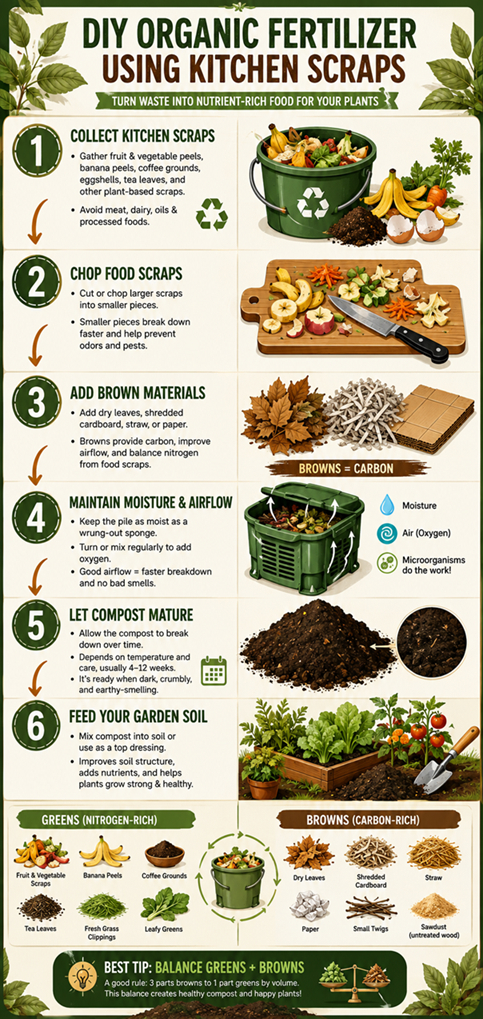
The process works best when you provide a mixture of greens and browns. Fruit and vegetable scraps, coffee grounds, and fresh plant material are generally nitrogen-rich greens, while dry leaves, shredded cardboard, untreated wood material, and similar dry ingredients provide carbon-rich browns. EPA’s current home-composting guidance recommends balancing these materials and maintaining adequate moisture and oxygen. Its composting guidance gives a rough target of about three parts browns to one part greens by volume, although the exact balance depends on the materials and system.
This balance is what separates successful compost from a smelly bucket of decomposing food. Too many wet food scraps can create compact, oxygen-poor conditions. Too many dry materials can slow decomposition because microorganisms do not have enough nitrogen or moisture. Think of the pile as a living ecosystem rather than a garbage container. Give it the right environment and microorganisms do the hard work for you.
The Difference Between Compost and Homemade Liquid Fertilizer
People often use the terms organic fertilizer, compost tea, compost, and kitchen-scrap fertilizer as though they mean exactly the same thing. They do not. Finished compost is a stable soil amendment created through decomposition. A homemade liquid made by soaking or fermenting raw scraps is a different material, and it should not automatically be treated as equivalent to finished compost.
This distinction matters because raw kitchen scraps can contain unstable organic compounds and can attract insects or animals. Simply soaking banana peels or vegetable scraps in water does not magically produce a complete fertilizer. If you want the safest and most reliable beginner method, composting is usually the better place to start. Once the material has decomposed properly, you can use the finished compost to improve garden soil rather than guessing how concentrated a homemade liquid might be.
For most home gardeners, the simplest strategy is therefore to prioritize finished compost and use individual kitchen scraps as compost ingredients rather than applying large quantities directly to plants. This approach also follows the broader principle behind professional composting: organic materials are managed until they become stable rather than being placed around plants in their raw form.
Best Kitchen Scraps for Homemade Fertilizer
Not every item from the kitchen belongs in the compost bin, but many ordinary plant-based scraps are useful. Fruit and vegetable peels are among the easiest materials to compost because they are moist and relatively quick to break down when chopped into smaller pieces. Coffee grounds, tea materials without problematic packaging, and crushed eggshells can also be incorporated into a compost system. University extension guidance from Minnesota and Oregon State lists many of these materials as suitable compost ingredients.
The important point is not to become obsessed with one “magic” kitchen scrap. A healthy compost system depends on diversity and balance. If you make a pile containing nothing but banana peels, it will not automatically become superior fertilizer. A mixture of food scraps and carbon-rich dry material gives microorganisms a better environment and helps control moisture and odors. In other words, your compost pile should look more like a balanced meal than a single-ingredient diet.
Fruit and Vegetable Peels
Fruit and vegetable scraps are excellent starting materials for a home compost system. Potato peels, carrot ends, apple cores, cucumber scraps, leafy vegetable trimmings, melon rinds, and similar plant-based waste can all contribute organic material. Cutting larger pieces into smaller chunks increases the surface area available to microorganisms and can help the material break down faster.
There is no need to make every scrap perfectly tiny. A few seconds with a kitchen knife is enough to reduce very large pieces. The bigger benefit comes from combining the scraps with dry carbon-rich material rather than creating a thick layer of wet food. If your bin contains a lot of fresh vegetable waste, add dry leaves, shredded plain cardboard, or another appropriate brown material to maintain structure and airflow.
Banana Peels
Banana peels are one of the most popular homemade fertilizer ingredients because they are easy to collect and contain organic nutrients. You will often see recipes recommending banana-peel water, buried banana peels, or dried banana-peel powder. The more reliable approach is to treat banana peels as a compost ingredient rather than expecting a raw peel to act like a complete fertilizer.
Chop banana peels into smaller pieces and place them into your compost system with other green and brown materials. They can also be used in a suitable vermicomposting system. Oregon State University Extension specifically lists banana peels among foods that can be fed to red wiggler worms.
If you want to experiment with banana-peel liquid, keep your expectations realistic. The concentration and nutrient composition will vary depending on the preparation, and homemade liquid fertilizer is not a standardized product. For consistent plant nutrition, soil testing and a fertilizer formulated for the plant’s actual needs are more predictable than relying entirely on kitchen-scrap recipes.
Coffee Grounds and Tea Leaves
Used coffee grounds can be useful in compost, but they are one of the most misunderstood kitchen scraps. Many gardeners believe coffee grounds will dramatically acidify soil, yet University of Minnesota Extension says used coffee grounds have not been shown to consistently lower soil pH. They can provide organic material and compounds that support soil organisms, but they should not be treated as a guaranteed acidifying treatment.
Oregon State University Extension also warns against using excessive amounts. Coffee grounds contain nitrogen and other compounds, but they are not a complete fertilizer, and too much can create problems. OSU recommends moderation and notes that grounds should make up no more than about 20% of a compost pile’s total volume.
Tea leaves can also be composted, provided you remove staples, plastic components, or other non-compostable packaging. If you use tea bags, check the material rather than assuming every tea bag belongs in the compost. Loose tea leaves are simpler because there is no packaging to worry about.
Eggshells
Eggshells are another popular kitchen-scrap amendment. They contain calcium, but that does not mean sprinkling crushed shells around tomato plants will instantly solve calcium-related problems. University of Minnesota Extension specifically explains that eggshells break down slowly and do not prevent blossom-end rot.
The better use for eggshells is to crush them and add them to compost. Very finely ground shells break down more readily than large pieces, although they can still decompose slowly. They contribute mineral material to the compost system without requiring you to buy a special product.
If you are dealing with a suspected nutrient deficiency, avoid guessing based on social-media gardening recipes. Soil conditions, water availability, root health, pH, and nutrient balance can all influence plant symptoms. A soil test is much more useful than assuming every yellow leaf means the plant needs eggshells or banana water.
How to Make Compost From Kitchen Scraps
A basic home compost system can be surprisingly simple. You need a container or designated outdoor area, a supply of kitchen scraps, carbon-rich brown materials, moisture, and enough airflow for aerobic decomposition. You do not necessarily need a fancy compost tumbler. A simple bin can work if it allows adequate drainage and ventilation while keeping unwanted animals from accessing the food.
The first step is choosing a sensible location. For an outdoor system, select an area that is convenient enough that you will actually use it. A compost bin hidden at the far end of the yard may sound ideal, but if walking there every evening becomes annoying, scraps will eventually return to the trash. Keep the system reasonably protected from excessive rain while allowing air circulation. EPA recommends balancing carbon-rich browns and nitrogen-rich greens while maintaining oxygen and moisture.
What You Need
You can begin with materials you already have at home. A lidded compost bin, ventilated container, or appropriate outdoor compost structure can serve as the main system. You also need a steady supply of brown material, such as dry leaves, shredded uncoated cardboard, or other suitable carbon-rich material.
Your green materials can include fruit and vegetable scraps, coffee grounds, and certain plant-based kitchen leftovers. Crushed eggshells can also be added. Avoid placing meat, fish, dairy, fats, oils, and other problematic materials into a basic backyard compost system unless you are using a specialized system designed to handle them. EPA and university extension guidance generally recommends keeping these attractants out of simple home piles.
Step-by-Step Composting Method
Start with a layer of dry brown material. Add a moderate amount of chopped fruit and vegetable scraps, then cover those scraps with more brown material. This helps absorb excess moisture, improves airflow, and makes the fresh food less accessible to insects and animals. Continue alternating or mixing the materials rather than creating thick layers of food scraps.
Keep the pile moist but not saturated. A useful comparison is a wrung-out sponge: damp enough to support microbial activity but not dripping wet. If the pile becomes slimy or smells rotten, add dry browns and turn it to introduce oxygen. If it is extremely dry and decomposition has stopped, add a little water while mixing.
Turning the pile helps redistribute moisture and oxygen. You do not have to obsessively turn it every day. A well-managed system can decompose gradually without constant attention, while more active systems can be turned more frequently to encourage faster breakdown. OSU Extension notes that odor problems often indicate low oxygen and excess moisture, with dry bulky material and turning helping restore balance.
The finished compost should look and smell different from the original scraps. Instead of recognizable vegetable pieces and strong food odors, mature compost becomes dark, crumbly, and earthy-smelling. Do not rush this stage. Raw or partially decomposed material is not the same as finished compost, and EPA specifically distinguishes stable compost from material that remains biologically active.
How to Make Kitchen Scrap Liquid Fertilizer
Homemade liquid fertilizer made from kitchen scraps is popular because it appears faster than composting. A typical recipe might involve soaking banana peels or vegetable scraps in water, then applying the resulting liquid to plants. The problem is that the actual nutrient concentration can be unpredictable. You may end up with a weak solution, an unpleasant fermenting mixture, or a liquid that contains compounds you did not intend to put directly onto your plants.
For that reason, treat homemade kitchen-scrap liquids as an experimental garden amendment, not a guaranteed replacement for fertilizer. If you make one, avoid applying concentrated or obviously decomposing liquid directly to edible leaves or plant stems. Strain the material carefully, dilute conservatively, and test it on a small number of plants first. Stop using it if you see leaf burn, unusual odors, mold problems, or plant stress.
Simple Fermented Scrap Fertilizer
One common approach is to use chopped plant-based scraps, water, and a fermentation container. However, fermentation is not the same process as aerobic composting. The resulting liquid can vary significantly depending on the ingredients, temperature, oxygen availability, fermentation time, and microbial population.
For beginners, there is a simpler alternative: make compost first. Once the compost is mature, you have a much more stable material to work with. If you specifically want a liquid product, consider a properly managed composting method designed for that purpose rather than relying on a random kitchen recipe.
This distinction is important because “natural” does not automatically mean “safe at any concentration.” Plants can be damaged by excessive nutrients just as they can suffer from deficiencies. Organic gardening still requires attention to dosage, soil conditions, plant species, and timing.
How to Use It Safely
Never assume that more homemade fertilizer means faster plant growth. Start with a small amount and observe how the plant responds. Avoid spraying homemade scrap liquids directly onto edible plant parts unless you have a reliable, appropriate recipe and understand the sanitation risks.
For routine feeding, finished compost is usually easier to manage. You can mix a suitable amount into garden soil before planting or use it around established plants as a soil amendment. EPA notes that compost releases nutrients relatively slowly and improves soil health, but it may not contain enough immediately available nutrients to meet the requirements of every annual crop.
That is a useful reality check. Compost is powerful, but it is not a magical replacement for every fertilizer. Think of it as improving the foundation of your garden. If a particular crop has a known nutrient requirement, you may still need a targeted fertilizer based on soil testing and plant needs.
Kitchen Scraps You Should Avoid
A basic backyard compost pile is not a miniature landfill. Certain foods can create odors, attract rodents and other animals, or make the composting process more difficult. EPA’s home-composting guidance recommends avoiding meat, fish, bones, dairy, fats, oils and grease in ordinary backyard systems, along with treated wood, pet waste, diseased plant material, and other problematic materials.
You should also be cautious about weeds that contain mature seeds and plants affected by serious diseases. A poorly managed compost pile may not reach temperatures sufficient to destroy every weed seed or pathogen. If you are unsure about a particular material, leave it out or use a composting system specifically designed to process it.
Common Mistakes That Cause Odor and Pests
The most common mistake is adding too many wet kitchen scraps without enough brown material. Imagine putting a pile of chopped vegetables into a sealed plastic bag and leaving it in the sun. You would not expect fresh, earthy compost to appear. The same principle applies to a compost pile that lacks oxygen and structure.
Another common mistake is adding food scraps to the surface and leaving them exposed. Bury or cover fresh scraps inside the pile with brown material. This reduces odors and makes the food less obvious to flies and animals. OSU Extension recommends avoiding major animal attractants such as meat, fish, fat, oil, dairy, and bones and emphasizes managing moisture and airflow.
Other frequent mistakes include:
- Adding too many coffee grounds.
- Keeping the pile constantly waterlogged.
- Letting the pile become bone dry.
- Using plastic-coated or glossy paper.
- Adding pet waste to a basic vegetable-garden compost pile.
- Applying unfinished compost directly around sensitive plants.
- Expecting compost to provide all nutrients immediately.
A successful compost pile should generally smell earthy rather than rotten. If it smells like sulfur or sewage, do not add more food. Mix in dry carbon-rich material and turn the pile to improve oxygen flow. This simple adjustment often solves the problem.
How to Use Homemade Fertilizer on Plants
Once your kitchen scraps have become mature compost, you have several useful options. Mix compost into garden soil before planting, incorporate it into raised beds, or apply a suitable layer around established plants without piling it directly against stems. The goal is to improve the soil environment rather than bury plants in a thick layer of decomposing material.
Compost can help sandy soils retain water and can improve the structure of heavier soils. Pennsylvania State University Extension describes compost as a source of organic matter that can improve water-holding capacity, aeration, and nutrient retention.
For container plants, be more conservative. Containers have limited soil volume, so excessive organic amendments can alter drainage, moisture retention, and nutrient levels. Instead of filling a pot with kitchen-scrap compost, use a quality potting mix and incorporate a modest amount of mature compost when appropriate.
The same principle applies to seedlings. Young plants have smaller root systems and can be sensitive to poorly finished organic material. If your compost still contains recognizable food scraps, smells strongly, or feels hot inside the pile, it is not ready for delicate seedlings. Give it additional time to mature.
A good garden strategy is to think in terms of soil health first, fertilizer second. Compost adds organic matter, supports soil organisms, improves water management, and provides slow-release nutrients. EPA’s current research summary emphasizes these soil-health benefits while also noting that compost does not always contain enough plant-available nutrients to replace all fertilizer needs for every crop.
This balanced approach prevents one of the biggest mistakes in organic gardening: assuming that anything labeled “natural” can be applied without limits. Plants need nutrients in appropriate amounts and proportions. Composting kitchen scraps is a fantastic way to recycle organic material, but a soil test can tell you far more about what your garden actually needs than a viral fertilizer recipe.
Conclusion
DIY organic fertilizer using kitchen scraps is best understood as a simple nutrient-recycling habit rather than a single magic recipe. Fruit and vegetable scraps, coffee grounds, tea materials, and eggshells can become useful components of a balanced compost system. With the right combination of greens, browns, moisture, and oxygen, microorganisms transform kitchen waste into stable compost that can improve soil structure, water retention, and nutrient cycling.
If you are just starting, keep the process simple. Collect plant-based kitchen scraps, chop large pieces, mix them with plenty of dry carbon-rich material, maintain moisture, and give the pile time to mature. Avoid meat, dairy, fats, oils, pet waste, and other materials that can create problems in a basic backyard system. Most importantly, do not confuse raw scraps or homemade liquid mixtures with finished compost.
The real beauty of this method is its simplicity. Yesterday’s carrot peels and coffee grounds can become part of tomorrow’s healthy soil. Instead of seeing kitchen scraps as useless waste, you can treat them as a resource that moves nutrients back into the garden. That small change in habit can reduce household waste while helping you build a healthier and more resilient growing environment.
FAQs
1. Can I put kitchen scraps directly into my garden soil?
You can technically bury some plant-based scraps, but it is usually better to compost them first. Raw scraps can attract pests, create odors, temporarily disrupt the soil environment, and take time to decompose. Finished compost is more stable and easier to use around plants. For a cleaner and more predictable result, compost your kitchen waste before adding it to garden beds.
2. Are banana peels good organic fertilizer?
Banana peels can be useful compost ingredients, but they are not a complete fertilizer by themselves. Chop the peels and add them to a balanced compost pile or appropriate worm bin. Avoid assuming that banana-peel water provides a precise dose of potassium or other nutrients. For specific nutrient deficiencies, soil testing and targeted fertilization are more reliable.
3. Do eggshells make tomatoes grow better?
Eggshells contain calcium, but they decompose slowly and should not be considered a quick solution for tomato problems. University of Minnesota Extension notes that eggshells do not prevent blossom-end rot and are generally better placed in compost.
4. Can coffee grounds be used directly on plants?
Small amounts of used coffee grounds can be useful, but excessive application is not recommended. Coffee grounds are not a guaranteed soil-acidifying treatment, and too much can create problems. They are particularly useful as part of a compost mixture. Oregon State University Extension recommends moderation and says coffee grounds should not exceed about 20% of a compost pile by volume.
5. How long does kitchen-scrap compost take to become ready?
The timeline varies widely depending on temperature, moisture, oxygen, material size, composting method, and how actively the pile is managed. A well-managed active system can mature in a few months, while a passive pile can take considerably longer. Do not rely only on a calendar. Finished compost should be dark, crumbly, relatively uniform, and have an earthy smell rather than smelling like fresh food or rot.
