

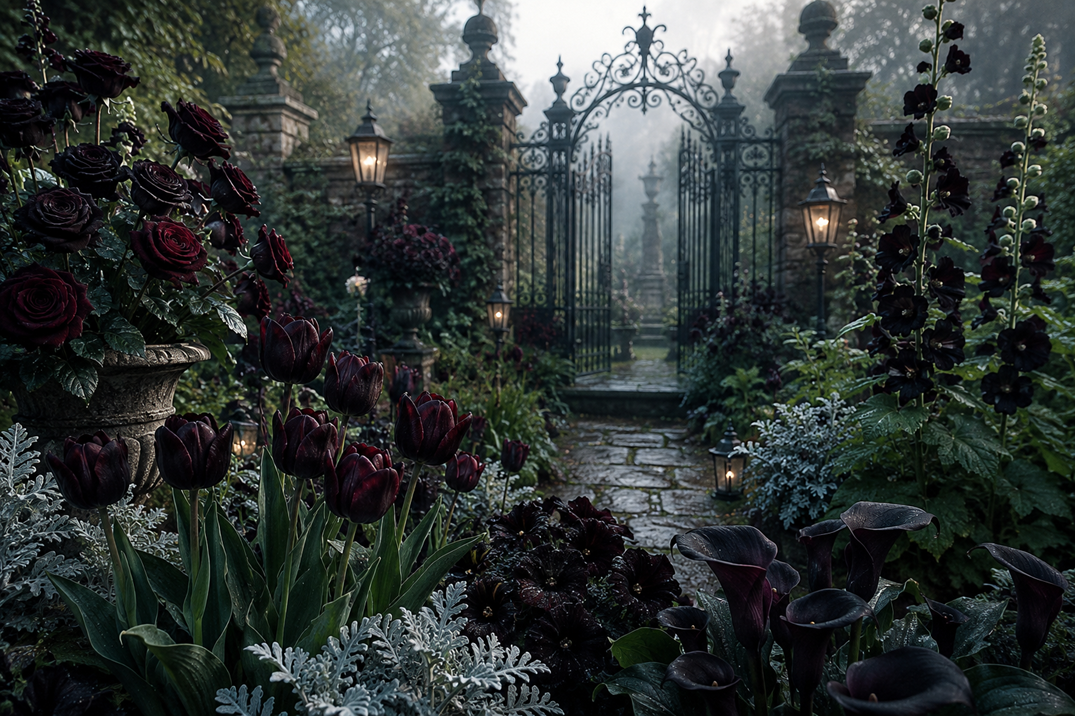
Imagine walking through a garden where velvety black roses glow against silver foliage, mysterious tulips sway beneath moonlight, and dramatic flowers create an atmosphere that feels straight out of a gothic novel. That is exactly why black flower gardens have become one of the fastest-growing landscaping trends among gardeners who want something unforgettable.
While nature rarely produces flowers that are truly black, many plants display incredibly dark shades of burgundy, maroon, violet, or deep purple that appear black under natural light. These dramatic blooms instantly transform an ordinary backyard into a sophisticated outdoor retreat filled with elegance, mystery, and timeless beauty.
Whether you’re designing a Victorian-inspired landscape, a Halloween-themed garden, or simply love unconventional flowers, this guide introduces the most beautiful unique black flowers for a goth garden aesthetic, along with expert growing tips and design inspiration.
Why Black Flowers Are Trending in Modern Gothic Gardens
Dark gardens are no longer considered unusual. Landscape designers increasingly use dramatic color palettes to create outdoor spaces that stand apart from traditional flower beds overflowing with pastel colors. Instead of relying only on bright blooms, modern gardeners combine nearly black flowers with silver foliage, white blossoms, natural stone, wrought iron, and evergreen shrubs to produce striking visual contrast.
One reason for this growing popularity is social media. Images of gothic gardens featuring black tulips, dark roses, and mysterious pathways attract millions of views because they evoke emotion. Unlike conventional gardens that emphasize cheerful colors, gothic landscapes tell a story. They suggest romance, mystery, history, and artistic expression all at once.
Another factor is versatility. Black flowers pair beautifully with nearly every color in the garden. White flowers become brighter beside them, red flowers appear richer, and silver foliage develops an almost magical glow. This makes dark flowers excellent focal points even in small spaces.
Garden designers also appreciate how black flowers complement architectural features such as brick walls, black fencing, stone statues, iron gates, and wooden pergolas. The overall effect is elegant rather than gloomy, making gothic gardening suitable for both modern homes and traditional landscapes.
The Psychology Behind Dark-Colored Gardens
Color influences emotion more than many gardeners realize. Bright yellow flowers communicate energy and excitement, while soft blue flowers create calmness. Black flowers introduce a completely different feeling. They symbolize mystery, sophistication, power, elegance, and individuality.
People who enjoy gothic aesthetics often appreciate gardens that feel peaceful instead of overly colorful. Walking through a landscape filled with dark blossoms encourages slower observation because the flowers reveal subtle shades only when sunlight changes throughout the day.
Dark flowers also create exceptional visual depth. Instead of reflecting large amounts of light, their petals absorb it, making nearby plants appear brighter by comparison. This technique has been used in fine art and photography for centuries, and landscape designers now apply the same principles to garden design.
Perhaps the greatest appeal of black flowers lies in their rarity. Visitors immediately notice them because they are unexpected. A single black rose or deep purple tulip often becomes the centerpiece of an entire landscape.
Why Garden Designers Love Black Blooms
Professional landscape designers frequently recommend black flowers because they introduce contrast without overwhelming the surrounding plants. Rather than dominating the color scheme, dark blooms balance bright perennial borders and soften vibrant seasonal displays.
Another advantage is seasonal flexibility. Many nearly black flowers bloom during spring, summer, or autumn, allowing gardeners to maintain a gothic aesthetic throughout much of the year. By selecting plants with different flowering periods, it is possible to enjoy dramatic color from early spring until frost.
Texture also plays an important role. Black flowers often feature velvety petals that catch sunlight differently than glossy blooms. This subtle texture adds richness and complexity, especially when planted alongside ornamental grasses or silver-leaved plants such as dusty miller and lamb’s ear.
Experienced designers also pair black flowers with dramatic foliage plants like black mondo grass, purple smoke bush, and dark-leaved heuchera. These combinations create layered landscapes that remain visually appealing even after flowers fade.
Are Black Flowers Really Black?
One of the most fascinating facts about black flowers is that they are rarely truly black. Most contain extremely high concentrations of anthocyanin pigments, producing deep shades of purple, burgundy, crimson, or violet that appear black under certain lighting conditions.
Scientists explain that creating completely black petals would require absorbing almost all visible wavelengths of light, something very few flowering plants naturally achieve. Instead, plant breeders selectively develop varieties with increasingly darker pigmentation, resulting in spectacular cultivars like Black Baccara Rose, Queen of Night Tulip, and Black Petunia.
Lighting dramatically affects how these flowers appear. Morning sunlight may reveal hints of crimson or violet, while evening shadows make them look almost jet black. This changing appearance is one reason gardeners find them so captivating.
Climate also influences color intensity. Cooler temperatures often deepen petal pigmentation, making flowers appear darker than those grown in hot climates. Gardeners who provide rich soil, adequate moisture, and balanced fertilization usually achieve the most dramatic coloration.
15 Stunning Black Flowers for a Gothic Landscape
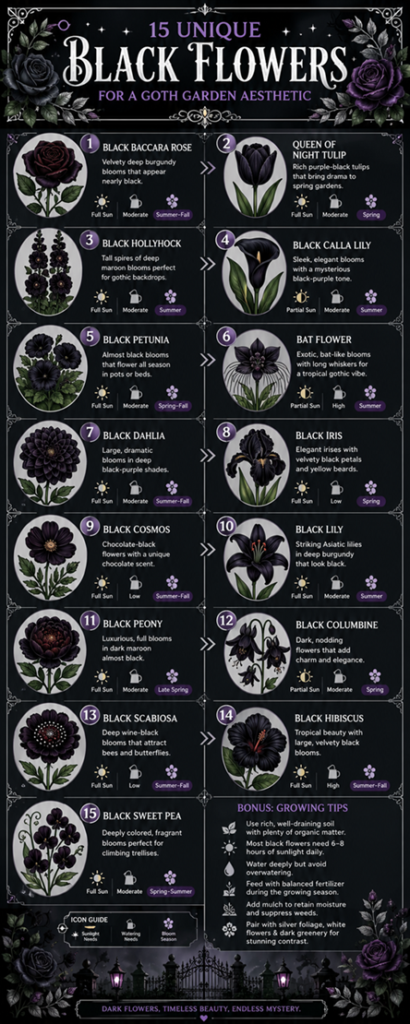
The heart of every gothic garden is its collection of dramatic, nearly black flowers. Instead of filling every corner with colorful blooms, a carefully selected combination of dark flowers creates elegance, mystery, and visual depth. Each plant offers a different texture, bloom time, and growing habit, allowing you to design a garden that changes beautifully throughout the seasons. Some flowers thrive in full sun, while others prefer filtered shade, making it possible to create a layered landscape with year-round interest. By mixing annuals, perennials, bulbs, and shrubs, your garden will never feel empty.
The following flowers are among the most popular choices for gardeners who want a sophisticated gothic aesthetic without sacrificing color variety or seasonal beauty.
Black Baccara Rose
The Black Baccara Rose is often considered the queen of gothic gardens. Although its petals are technically a deep burgundy, they appear almost black in cool weather or evening light. The velvety texture reflects very little sunlight, creating an incredibly luxurious appearance. This hybrid tea rose produces elegant blooms throughout the growing season and makes an exceptional focal point near garden entrances, pathways, or decorative arches.
Growing this rose requires six to eight hours of sunlight each day and well-drained, nutrient-rich soil. Regular watering encourages healthy blooms, but overly wet roots should be avoided because roses dislike standing water. Deadheading spent flowers encourages repeat blooming and keeps the plant looking tidy. Pair Black Baccara with silver foliage plants such as dusty miller or white flowering perennials to maximize the dramatic contrast.
Queen of Night Tulip
Few spring flowers are as iconic as the Queen of Night Tulip. Blooming in late spring, its rich purple-black petals resemble polished velvet and create breathtaking displays when planted in groups. Because tulips emerge before many summer flowers awaken, they provide an early-season gothic atmosphere that transitions beautifully into later blooming plants.
These tulips perform best in cool climates with full sun and well-drained soil. Plant bulbs during autumn before the first frost and allow them to establish roots over winter. Their elegant cup-shaped blooms look spectacular alongside white daffodils, pale pink tulips, or silver ornamental grasses. When planted in sweeping drifts, they create an almost cinematic effect.
Black Hollyhock
If you want dramatic height in your garden, the Black Hollyhock is an outstanding choice. Tall flower spikes covered with deep maroon blossoms can reach heights of six to eight feet, making them ideal for fences, walls, or the back of flower borders. Their old-fashioned charm blends perfectly with Victorian-inspired landscapes.
Black hollyhocks thrive in sunny locations with fertile soil and consistent watering. Because they grow tall, staking may be necessary in windy areas. Their towering flowers also attract bees, butterflies, and other beneficial pollinators, adding life to your garden while maintaining its mysterious appearance. Combined with climbing ivy or antique iron fencing, they produce a timeless gothic scene.
Black Calla Lily
Elegant and sculptural, the Black Calla Lily adds sophistication unlike almost any other flower. Its trumpet-shaped blooms appear nearly black with subtle purple undertones that become visible in bright sunlight. The smooth petals contrast beautifully with lush green foliage, creating an artistic focal point in flower beds or decorative containers.
These lilies appreciate moist but well-drained soil and partial to full sun depending on climate. They perform especially well near water features, garden ponds, or shaded patios. Their striking blooms are also highly valued for floral arrangements, making them both ornamental and practical for gardeners who enjoy fresh-cut flowers indoors.
Black Petunia
For gardeners wanting continuous blooms throughout summer, Black Petunias, often sold under cultivars like ‘Black Velvet,’ deliver exceptional performance. Their rich black blossoms cover hanging baskets, containers, and flower beds from late spring until frost, creating one of the darkest floral displays available.
Petunias prefer sunny locations and regular watering but dislike soggy soil. Frequent deadheading encourages nonstop flowering. Because of their compact growth, they pair wonderfully with white alyssum, silver dichondra, or cascading ivy. Their versatility makes them one of the easiest ways to introduce gothic charm into patios, balconies, and small gardens.
Bat Flower
Perhaps no plant captures gothic fantasy better than the Bat Flower. Its unusual blossoms feature wing-like bracts and long whisker-like filaments that resemble a flying bat. The flowers are naturally deep purple to black, creating one of the most exotic appearances in the plant world.
Bat flowers require warm temperatures, high humidity, and filtered light similar to tropical forest conditions. They thrive in greenhouses or shaded gardens in warm climates. While they demand more care than many traditional flowers, the extraordinary blooms reward patient gardeners with an unforgettable centerpiece unlike anything else in the landscape.
Black Dahlia
The Black Dahlia is prized for its perfectly layered petals and exceptionally dark coloration. Depending on the variety, blooms may appear nearly black with subtle shades of crimson or deep plum. These flowers bloom from midsummer until frost, providing months of dramatic beauty.
Dahlias appreciate fertile soil, full sunlight, and regular feeding throughout the growing season. Removing faded blooms encourages additional flowering. Their bold shape and rich color pair exceptionally well with ornamental grasses, white cosmos, and purple salvia, creating an elegant balance between softness and structure.
Black Iris
The Black Iris combines graceful sword-like foliage with velvety blossoms that appear almost black from a distance. Delicate veining within the petals reveals hints of purple under bright sunlight, adding complexity and elegance to the flower.
Irises perform best in sunny locations with excellent drainage. Their rhizomes should remain partially exposed to prevent rot. Once established, they require minimal maintenance and return each spring with increasingly impressive blooms. Their upright form provides architectural interest even after flowering has finished.
Comparison of Popular Black Flowers
| Flower | Bloom Season | Sunlight | Height | Best Feature |
| Black Baccara Rose | Summer–Fall | Full Sun | 3–5 ft | Velvety dark roses |
| Queen of Night Tulip | Spring | Full Sun | 18–24 in | Elegant spring display |
| Black Hollyhock | Summer | Full Sun | 6–8 ft | Dramatic vertical height |
| Black Calla Lily | Summer | Partial–Full Sun | 2–3 ft | Sculptural blooms |
| Black Petunia | Spring–Fall | Full Sun | 8–12 in | Continuous flowering |
| Bat Flower | Summer | Partial Shade | 2–3 ft | Exotic appearance |
| Black Dahlia | Summer–Fall | Full Sun | 3–4 ft | Large layered flowers |
| Black Iris | Spring | Full Sun | 2–3 ft | Elegant architectural shape |
Designing the Perfect Goth Garden
Selecting beautiful flowers is only the beginning. The real magic comes from arranging them in a way that feels immersive and intentional. A successful gothic garden relies on contrast, texture, and atmosphere rather than simply planting dark flowers everywhere. Too much black can make a space feel flat, while carefully balanced combinations create depth and sophistication.
Begin by choosing one or two focal points, such as a Black Baccara Rose or a cluster of Queen of Night Tulips. Build outward using layers of medium-height perennials, ornamental grasses, and dark foliage plants. Curved pathways, aged stone edging, wrought-iron furniture, and antique-style lanterns help reinforce the gothic theme without overwhelming the landscape. Even small gardens can achieve a dramatic effect by repeating dark plants throughout the design rather than concentrating them in one area.
Best Companion Plants
Black flowers look their best when surrounded by lighter foliage or contrasting blooms. Excellent companion plants include white foxgloves, silver dusty miller, lamb’s ear, white hydrangeas, purple heuchera, black mondo grass, and ornamental ferns. These plants soften the darkness while emphasizing the richness of nearly black petals.
Layering different textures also keeps the garden visually interesting. Broad leaves beside delicate grasses, glossy foliage next to velvety petals, and evergreen shrubs behind seasonal flowers ensure the garden remains attractive throughout the year.
Hardscape and Decorative Elements
Hardscape choices strongly influence the overall mood of a gothic landscape. Natural stone paths, weathered brick walls, black wrought-iron gates, vintage benches, and decorative urns complement dark flowers beautifully. Water features with reflective surfaces enhance the mysterious atmosphere by mirroring moonlight and surrounding foliage.
Outdoor lighting should remain subtle rather than overly bright. Soft warm lights placed beneath trees or beside pathways highlight flower beds without reducing the dramatic shadows that define gothic garden design.
Growing Tips for Black Flowers
Creating a thriving goth garden involves more than choosing dark-colored plants. While many black flowers are surprisingly easy to grow, they reward gardeners who pay attention to soil quality, sunlight, watering, and seasonal maintenance. Because the deep pigmentation of these flowers is influenced by environmental conditions, proper care often results in richer, darker blooms.
Start with healthy, well-drained soil enriched with compost or aged organic matter. Most black-flowering plants prefer fertile soil that retains moisture without becoming waterlogged. Heavy clay can suffocate roots, while sandy soil may dry too quickly during summer. Improving the soil before planting creates a strong foundation for long-term success and reduces the need for excessive fertilizers later in the season.
Sunlight is another important factor. Most black flowers perform best with six to eight hours of direct sunlight each day. Roses, dahlias, tulips, and petunias all develop stronger stems and deeper petal colors under adequate light. In very hot climates, however, afternoon shade can protect delicate blooms from fading. If your garden receives mixed sunlight, place shade-loving plants like Bat Flowers beneath taller shrubs or trees where they receive filtered light.
Watering should remain consistent rather than excessive. Deep watering once or twice a week is generally better than frequent shallow watering because it encourages stronger root systems. Applying mulch around plants helps conserve moisture, suppress weeds, and regulate soil temperature. Organic mulch such as shredded bark or compost also gradually improves soil quality as it decomposes.
Feeding your plants during the growing season supports healthy foliage and abundant flowers. A balanced slow-release fertilizer works well for most flowering plants, while roses and dahlias often benefit from specialized bloom fertilizers. Avoid applying excessive nitrogen because it encourages leafy growth at the expense of flowers. Regular deadheading, pruning, and removing damaged foliage keep plants vigorous and reduce the risk of disease throughout the season.
Seasonal Maintenance for a Gothic Garden
A gothic garden evolves with the seasons, and thoughtful maintenance ensures it remains dramatic throughout the year. Spring begins with bulbs emerging from dormancy, followed by tulips, irises, and early perennials. This is the ideal time to clean winter debris, divide overcrowded perennials, and refresh mulch around flower beds.
During summer, regular watering becomes essential as roses, dahlias, petunias, and hollyhocks reach their peak. Remove faded blooms to encourage continuous flowering, inspect plants for pests, and provide support for taller varieties that may lean under the weight of their blossoms. Summer is also the perfect season to photograph your garden, as the combination of lush foliage and dark flowers creates stunning visual contrast.
Autumn offers another opportunity to enhance your gothic landscape. Plant spring-flowering bulbs such as Queen of Night Tulips before the ground freezes. Trim back spent perennials while leaving ornamental grasses and attractive seed heads for winter interest. Fallen leaves can be composted to create nutrient-rich organic matter for the following season.
Winter may seem quiet, but it plays an important role in preparing the garden for the year ahead. Evergreen shrubs, dark bark, decorative stonework, and wrought-iron accents continue to provide structure even when flowers have disappeared. Gardeners can also use this time to plan new plant combinations, order seeds, and redesign sections of the landscape for even greater visual impact.
Common Mistakes to Avoid
Many gardeners become disappointed with black flowers simply because of a few avoidable mistakes. Understanding these common issues will help your gothic garden flourish year after year.
One of the biggest mistakes is planting every dark flower together without contrast. Although the idea sounds appealing, a bed filled entirely with black blooms often lacks definition. Instead, use lighter companion plants, silver foliage, or white flowers to create visual separation and highlight each specimen.
Another common error is ignoring bloom times. If every plant flowers during the same month, the garden can appear empty for the remainder of the year. Combining spring bulbs, summer perennials, and autumn bloomers ensures continuous seasonal interest and maintains the gothic aesthetic from early spring until frost.
Poor drainage is another frequent problem. Many flowering plants dislike constantly wet roots, which can lead to rot and fungal diseases. Raised beds or amended soil greatly improve drainage in heavy clay areas. Likewise, overcrowding reduces airflow and increases the likelihood of mildew, rust, and other plant diseases.
Finally, avoid over-fertilizing. While nutrients are essential, excessive fertilizer often produces lush green foliage with fewer flowers. Following fertilizer recommendations and observing plant growth throughout the season usually produces the healthiest balance between leaves and blooms.
Expert Tips for Creating an Authentic Gothic Garden
The most memorable gothic gardens feel intentional rather than themed. Instead of relying solely on black flowers, incorporate different textures, heights, and architectural elements that create an immersive atmosphere. Curved pathways encourage exploration, while layered planting makes the garden feel larger than it actually is.
Choose decorative materials carefully. Weathered stone, reclaimed wood, cast iron, and aged brick naturally complement dark flowers without appearing artificial. Vintage urns, stone statues, and climbing ivy add character while maintaining elegance. Water features, particularly still reflecting pools or small fountains, introduce movement and amplify the mysterious mood by reflecting surrounding plants.
Color restraint is another hallmark of successful gothic design. Limiting the palette to black, deep purple, burgundy, silver, white, and dark green creates harmony throughout the landscape. Bright colors should be used sparingly as accents rather than dominant features.
Nighttime deserves special consideration as well. Soft pathway lighting, lanterns, and subtle uplighting beneath trees reveal the garden’s textures after sunset without eliminating its dramatic shadows. Many gardeners discover that their black flowers appear even more striking during evening hours than they do in full daylight.
Conclusion
A gothic garden is more than a collection of unusual flowers—it is a carefully crafted landscape that combines mystery, elegance, and timeless beauty. By selecting distinctive black blooms such as Black Baccara Roses, Queen of Night Tulips, Black Hollyhocks, Black Calla Lilies, and Bat Flowers, you can create a garden unlike any traditional flower border. The rich colors, luxurious textures, and dramatic contrasts transform ordinary outdoor spaces into artistic retreats that invite exploration and quiet reflection.
Success comes from thoughtful planning rather than simply choosing dark plants. Healthy soil, proper sunlight, seasonal maintenance, and carefully selected companion plants all contribute to richer blooms and a longer-lasting display. Adding stone pathways, wrought-iron features, evergreen shrubs, and subtle lighting completes the atmosphere while allowing the flowers to remain the stars of the landscape.
Whether you have a sprawling backyard or a compact courtyard, incorporating a few carefully chosen black flowers can dramatically change the personality of your garden. With patience and creativity, your outdoor space can become a breathtaking gothic sanctuary that captivates visitors throughout every season.
Frequently Asked Questions
1. Are black flowers naturally black?
No. Most black flowers are actually extremely dark shades of purple, burgundy, or maroon that appear black under certain lighting conditions.
2. Which black flower is easiest for beginners?
Black Petunia is one of the easiest options because it grows quickly, blooms continuously, and requires relatively simple care.
3. Do black flowers attract pollinators?
Yes. Many black flowers, including hollyhocks, roses, irises, and dahlias, attract bees, butterflies, and other beneficial pollinators.
4. Can black flowers grow in containers?
Absolutely. Black Calla Lilies, Black Petunias, and some roses perform exceptionally well in decorative containers with proper drainage.
5. What colors pair best with black flowers?
Silver foliage, white flowers, deep purple plants, dark green evergreens, and burgundy foliage provide the strongest visual contrast while maintaining a sophisticated gothic aesthetic.
