

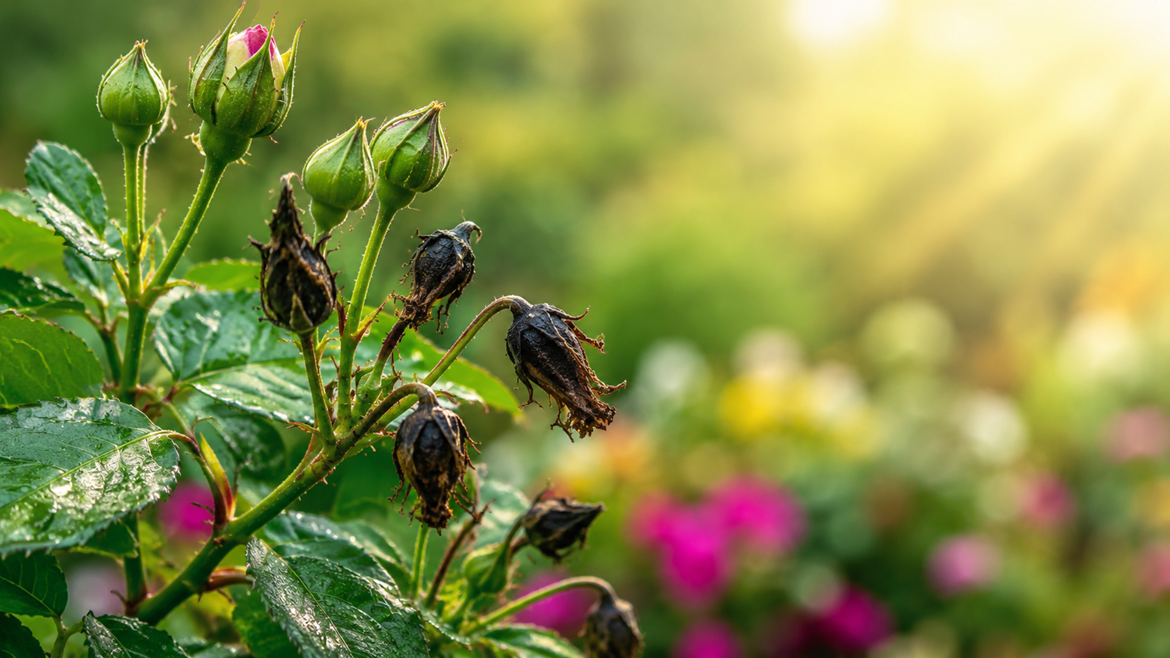
Before writing this guide, current horticultural sources were reviewed to ensure the advice reflects the latest gardening recommendations. Recent extension services and gardening experts continue to identify watering stress, temperature extremes, fungal and bacterial diseases, poor pollination, and pest infestations as the leading reasons flower buds turn black and drop before opening. Recent gardening reports also highlight that extreme summer heat can trigger widespread bud and blossom drop, even in otherwise healthy plants.
Why Are My Plant Buds Turning Black and Falling Off?
Have you been eagerly waiting for your plant to bloom only to discover that the flower buds suddenly turn black, dry up, and fall onto the soil? It can be incredibly disappointing, especially when the rest of the plant appears healthy. Many gardeners immediately assume a disease has attacked the plant, but the reality is often much more complicated. Black flower buds are actually a symptom rather than a disease itself, and they can result from several environmental, cultural, or biological problems.
The encouraging news is that this issue is usually reversible once the underlying cause is identified. Whether you grow roses, gardenias, camellias, hibiscus, orchids, tomatoes, or indoor flowering plants, the same basic principles apply. Buds require a delicate balance of moisture, nutrients, temperature, sunlight, and healthy roots. When any one of these factors becomes unbalanced, the plant protects itself by sacrificing its flowers to conserve energy. Understanding why this happens is the first step toward restoring healthy blooms and preventing future bud loss.
Understanding Healthy Flower Bud Development
Flower buds represent one of the most energy-intensive stages of a plant’s life cycle. Before a flower opens, the plant invests significant amounts of carbohydrates, minerals, and water into each developing bud. If conditions suddenly change, the plant enters survival mode and redirects those valuable resources toward maintaining stems, leaves, and roots instead of flowers.
Healthy buds typically remain firm, green, and gradually enlarge until blooming. Buds that become soft, black, brown, shriveled, or fail to open indicate that something interrupted normal development. Sometimes this interruption happens because of sudden weather changes. In other cases, hidden root problems, insect damage, fungal infections, or improper watering are responsible. Identifying the timing of bud drop often provides valuable clues about the true cause.
Why Black Buds Should Never Be Ignored
Early Warning Signs
Blackening buds rarely appear without warning. You may first notice discoloration at the bud tip, slower bud growth, yellowing nearby leaves, or tiny brown spots developing before the bud collapses. These subtle symptoms often appear days before the flower drops, giving attentive gardeners an opportunity to intervene.
How Bud Drop Affects Future Blooms
Repeated bud loss weakens the plant because it continuously expends energy creating flowers that never open. Over time, flowering becomes less abundant, growth slows, and the plant becomes increasingly vulnerable to pests and diseases. Addressing the root cause early helps preserve the plant’s energy for future blooming cycles.
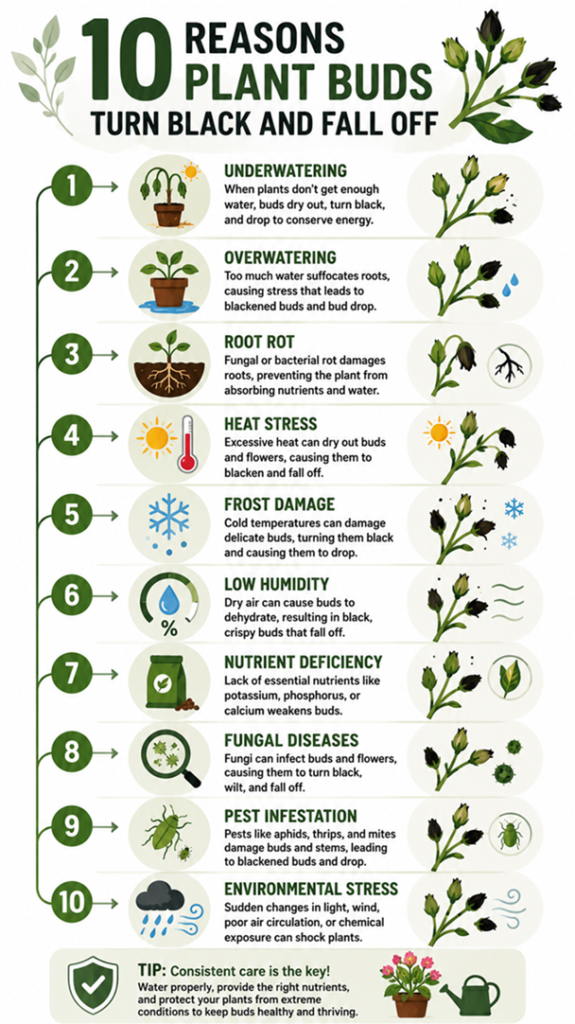
10 Common Causes of Plant Buds Turning Black and Falling Off
1. Inconsistent Watering
One of the most common reasons flower buds turn black and fall off is inconsistent watering. Plants thrive on routine, and sudden shifts between dry and overly wet soil create stress that interrupts bud development. When the roots cannot absorb water consistently, the plant prioritizes survival over flowering. As a result, the buds stop developing, darken, and eventually drop before they have a chance to bloom.
Underwatering is especially harmful during the bud formation stage. Dry soil reduces the movement of nutrients from the roots to the flower buds, causing them to shrink and blacken. On the other hand, watering too frequently can deprive roots of oxygen, making them less efficient at supporting healthy flowers. Both extremes produce similar symptoms, which often confuses gardeners.
The solution is simple but requires consistency. Water deeply instead of lightly, allowing moisture to penetrate several inches into the soil. Check the top inch of soil before watering again. If it feels dry, it’s time to water. Adding organic mulch around outdoor plants also helps maintain even soil moisture and reduces rapid evaporation during hot weather.
2. Overwatering and Root Rot
Many gardeners believe that giving plants more water will solve every problem, but excessive watering can actually be far more damaging than temporary dryness. Constantly saturated soil prevents oxygen from reaching the roots, creating ideal conditions for fungi that cause root rot. Once the roots begin to decay, they can no longer transport water and nutrients effectively, even though the soil remains wet.
Flower buds are among the first parts of the plant to suffer. They often turn dark brown or black, become soft, and fall off. Leaves may simultaneously turn yellow, stems may weaken, and the soil may develop a sour smell. If left untreated, root rot can eventually kill the entire plant.
To correct the problem, reduce watering immediately and ensure the pot or garden bed drains properly. Remove standing water from saucers beneath containers and consider repotting indoor plants into fresh, well-draining soil if root damage is severe. Trim away rotten roots using sterilized pruning shears before replanting.
3. Heat Stress
Recent years have brought increasingly intense heat waves across many regions, making heat stress a leading cause of bud drop. When temperatures rise above a plant’s preferred range, it begins conserving moisture by limiting flower production. Buds are often sacrificed because they require significant energy and water to mature into blooms.
Heat stress usually appears during extended periods of direct afternoon sun. Buds stop enlarging, become dry around the edges, turn black or brown, and fall before opening. Leaves may curl, wilt during midday, or develop scorched margins despite regular watering.
Protecting plants from extreme heat involves several strategies. Water early in the morning, apply mulch to cool the root zone, and provide temporary shade cloth during prolonged heatwaves. Container plants can be moved to locations with bright morning sunlight and filtered afternoon shade to reduce stress.
4. Cold Damage and Frost Injury
Cold temperatures can be just as destructive as excessive heat. Unexpected spring frosts or chilly nights often damage delicate flower buds before gardeners even notice a problem. Ice crystals form inside plant tissues, rupturing cells and causing buds to blacken within a day or two.
Some shrubs, such as camellias and magnolias, are especially vulnerable because they develop buds well before flowering season. A single frost event can destroy an entire season’s blooms while leaving the leaves and branches relatively unaffected.
Whenever frost is predicted, cover sensitive plants with frost cloth, old bedsheets, or breathable fabric before sunset. Remove the covering after sunrise once temperatures begin to warm. Avoid using plastic directly against plant tissues, as it can trap moisture and increase cold injury.
5. Low Humidity
Indoor flowering plants often struggle because household air is much drier than their natural environment. Tropical species such as orchids, gardenias, jasmine, and peace lilies require moderate to high humidity for successful bud development. When indoor air becomes excessively dry—especially during winter heating or summer air conditioning—buds may shrivel, darken, and fall prematurely.
Low humidity reduces moisture around developing flowers faster than the roots can replace it. Even if watering is adequate, buds may still fail because the surrounding air pulls moisture from delicate tissues.
Increasing humidity can significantly improve flowering success. Group plants together, use pebble trays filled with water, run a room humidifier, or place humidity-loving plants in naturally moist spaces such as bright bathrooms or kitchens where appropriate.
6. Nutrient Deficiencies
Flowering demands a balanced supply of nutrients. While nitrogen promotes leafy growth, phosphorus and potassium are essential for healthy bud formation and strong blooms. A shortage of these nutrients weakens developing flowers and may cause buds to blacken before opening.
Plants suffering nutrient deficiencies often produce fewer flowers overall. Buds may remain unusually small, fail to mature, or drop while still tightly closed. Leaves can also display yellowing, pale coloration, or poor overall growth depending on the missing nutrient.
Rather than applying fertilizer blindly, consider conducting a soil test if the problem persists. Choose a balanced fertilizer formulated for flowering plants, and follow the manufacturer’s recommendations carefully. Excess fertilizer can be just as harmful as insufficient feeding because it increases salt buildup around the roots.
7. Fungal Diseases
Several fungal diseases directly attack flower buds. Botrytis blight, commonly known as gray mold, is one of the most widespread causes of blackened buds in cool, damp conditions. The fungus spreads rapidly when humidity remains high and air circulation is poor.
Infected buds typically develop small brown spots that expand until the entire bud turns black. During humid weather, a fuzzy gray mold may become visible on infected tissues. Flowers fail to open, and nearby leaves may also become infected if the disease spreads.
Managing fungal diseases begins with sanitation. Remove infected buds immediately and dispose of them rather than composting them. Improve airflow by spacing plants properly and pruning overcrowded branches. Water at soil level instead of wetting leaves and flowers whenever possible.
8. Bacterial Diseases
Unlike fungal infections, bacterial diseases often spread through splashing water, contaminated tools, or insect feeding damage. Once bacteria enter plant tissues, they multiply rapidly and block the movement of water inside stems and buds.
Affected buds frequently appear water-soaked before turning black. In some cases, stems also darken, and leaves develop irregular black lesions surrounded by yellow halos. Because bacterial infections can spread quickly, early removal of infected material is essential.
Always sterilize pruning tools between plants using rubbing alcohol or a diluted bleach solution. Avoid working with plants when foliage is wet, as moisture helps bacteria spread more easily from one plant to another.
9. Pest Infestations
Tiny insects are another major cause of bud failure. Aphids, thrips, spider mites, and budworms feed directly on developing flowers, damaging delicate tissues before the buds have a chance to open. Some pests inject toxins into the plant while feeding, which further disrupts normal flower development.
Signs of pest activity include distorted buds, tiny holes, sticky residue, webbing, or visible insects hiding beneath leaves or inside flower buds. Thrips are particularly difficult to detect because they are extremely small and often hide deep within unopened flowers.
Inspect plants regularly, especially during spring and early summer when pests become more active. Wash small infestations away with a strong stream of water or use insecticidal soap or neem oil according to product instructions. Encouraging beneficial insects such as ladybugs can also help keep pest populations under control.
10. Environmental Stress
Sometimes no disease or pest is present at all. Instead, the plant is reacting to sudden environmental changes. Moving a houseplant to a new location, repotting during flowering, strong winds, transplant shock, poor lighting, or rapid temperature swings can all trigger bud drop.
Plants naturally respond to stress by conserving resources. Since flowers are not essential for immediate survival, buds are often the first structures to be abandoned. This protective response is temporary, and healthy plants usually resume flowering once conditions stabilize.
Reducing environmental stress involves maintaining consistent care. Avoid relocating flowering plants unnecessarily, protect outdoor plants from strong winds, and provide the appropriate amount of sunlight recommended for each species. Stable growing conditions encourage reliable blooming throughout the season.
How to Diagnose the Real Problem
When flower buds start turning black and falling off, resist the temptation to apply fertilizer or spray pesticides immediately. Many gardeners waste time and money treating the wrong issue because several problems produce nearly identical symptoms. A systematic inspection is the fastest way to identify the real cause and restore healthy flowering.
Start by examining the buds closely. If the buds are soft, mushy, and covered with gray fuzz, a fungal disease such as Botrytis blight is the likely culprit. If they are dry, shriveled, and crispy, environmental stress such as drought, heat, or low humidity is a more probable cause. Buds with tiny holes, distorted growth, or sticky residue often indicate insect activity, while black buds accompanied by yellow leaves and soggy soil usually point to overwatering or root problems.
Next, inspect the leaves and stems. Healthy foliage suggests the issue is localized to the flower buds, whereas yellowing leaves, black stem lesions, or wilting indicate a broader health problem. Look underneath leaves with a magnifying glass for aphids, spider mites, or thrips, as these tiny pests often hide where they are difficult to see. Don’t forget to inspect the soil. Dry, cracked soil suggests underwatering, while constantly wet soil with a sour smell is a classic sign of poor drainage or root rot.
Consider recent weather conditions as well. Ask yourself a few simple questions:
| Question | Possible Cause |
| Has there been a heatwave recently? | Heat stress |
| Did temperatures suddenly drop overnight? | Frost damage |
| Have you recently repotted the plant? | Transplant shock |
| Is the soil constantly wet? | Overwatering or root rot |
| Is the plant indoors with dry air? | Low humidity |
| Are insects visible? | Pest infestation |
| Are black spots spreading on leaves too? | Disease |
Keeping a simple gardening journal can also make diagnosis easier. Record watering dates, fertilizer applications, weather events, and pest sightings. Over time, patterns become obvious, helping you prevent future bud loss before it starts.
Step-by-Step Treatment
Once you’ve identified the likely cause, it’s time to help your plant recover. The key is to make gradual improvements rather than changing everything at once. Sudden changes in watering, lighting, or fertilization can create additional stress and delay recovery.
Step 1: Remove Damaged Buds
Begin by pruning away all blackened or diseased buds using clean, sterilized pruning shears. Dead buds no longer contribute to the plant and may harbor fungi or bacteria that spread to healthy tissues. Dispose of infected plant material in the trash rather than adding it to a compost pile.
Step 2: Correct Watering Practices
Check soil moisture before watering. Water deeply until excess water drains from the bottom of the container or penetrates several inches into the garden soil. Allow the top layer of soil to dry slightly before watering again. Consistency is far more important than frequency.
Step 3: Improve Drainage
If drainage is poor, amend garden soil with compost or coarse organic matter. Container plants should be grown in pots with adequate drainage holes and high-quality potting mix. Never allow containers to sit in standing water for extended periods.
Step 4: Optimize Light Conditions
Every flowering plant has unique light requirements. Roses generally need six to eight hours of direct sunlight, while orchids often prefer bright indirect light. Providing the correct amount of light encourages strong bud development without causing heat stress.
Step 5: Increase Air Circulation
Crowded plants remain damp longer after watering, increasing disease risk. Prune dense growth, remove dead leaves, and provide adequate spacing between plants to improve airflow.
Step 6: Apply Fertilizer Carefully
Use a balanced fertilizer formulated for flowering plants. Products with slightly higher phosphorus levels often encourage better flowering, but excessive fertilizer can burn roots and increase bud drop. Follow package directions rather than assuming more fertilizer will produce more flowers.
Step 7: Treat Pests and Diseases Promptly
If pests are identified, begin treatment immediately using insecticidal soap, neem oil, or appropriate horticultural products. For fungal diseases, remove infected tissue and apply a recommended fungicide if necessary. Always read product labels carefully and avoid spraying during the hottest part of the day.
Step 8: Be Patient
Plants need time to recover. Existing damaged buds usually won’t recover, but healthy new buds should begin forming once the underlying issue is corrected. Focus on encouraging fresh growth rather than trying to save already blackened flowers.
Prevention Tips for Healthy Flower Buds
Preventing bud drop is much easier than treating it. Healthy flowering plants thrive when their environment remains stable and predictable. Instead of reacting after problems appear, establish good gardening habits that minimize stress throughout the growing season.
One of the most effective preventive measures is maintaining a consistent watering schedule. Water according to your plant’s needs rather than following a fixed calendar. During hot weather, plants may require more frequent watering, while cooler seasons usually require less. Always check soil moisture first.
Regular feeding also supports healthy flowering. Slow-release fertilizers provide a steady supply of nutrients without causing sudden growth spurts. Organic compost improves soil structure, enhances microbial activity, and helps retain moisture while improving drainage at the same time.
Proper sanitation is equally important. Remove dead flowers, fallen leaves, and diseased plant material promptly. Clean gardening tools after pruning different plants to reduce the spread of bacteria and fungi. Monitoring your plants every few days allows you to catch pests or diseases before they become severe.
Finally, choose the right plant for your climate. Many flowering problems occur because tropical plants are grown outdoors in cool climates or sun-loving species are planted in excessive shade. Matching plants to their preferred growing conditions dramatically improves flowering success.
Plant-Specific Causes and Solutions
Roses
Rose buds often turn black due to Botrytis blight, thrips, aphids, or sudden weather changes. Excess moisture around tightly packed buds encourages fungal growth, especially during cool, rainy periods. Heat stress can also prevent buds from opening properly.
Prune infected buds promptly and improve airflow around the plant. Water only at the base, avoiding wet foliage whenever possible. Feed roses with a balanced rose fertilizer during the growing season and inspect buds weekly for insect activity. Healthy roses rewarded with consistent care often produce multiple blooming cycles each year.
Gardenias
Gardenias are famous for producing beautiful white flowers, but they are equally well known for dropping buds unexpectedly. Low humidity, inconsistent watering, sudden temperature fluctuations, and alkaline soil are among the most common reasons.
Keep the soil evenly moist without becoming waterlogged. Increase humidity around indoor gardenias using a humidifier or pebble tray. Feed with an acid-loving plant fertilizer and avoid moving the plant while buds are developing, as gardenias dislike sudden environmental changes.
Camellias
Camellias frequently develop buds months before flowering, making them especially vulnerable to environmental stress. Drought during summer often causes buds to abort long before winter blooming begins. Late frosts may also blacken unopened buds overnight.
Maintain consistent soil moisture throughout the year and mulch heavily around the root zone. Protect plants from harsh winter winds and cover them during unexpected frost events. Selecting cold-hardy cultivars for your region further reduces the risk of frost-related bud damage.
Orchids
Orchid growers commonly refer to premature bud drop as “bud blast.” This condition develops when orchids experience sudden changes in temperature, humidity, lighting, or watering. Ethylene gas from ripening fruit can even trigger bud blast in sensitive orchid varieties.
Place orchids in bright, indirect light with stable temperatures and moderate humidity. Avoid placing them near heating vents, air conditioners, fireplaces, or fruit bowls. Water only when the growing medium begins to dry and avoid overfertilizing. Stable conditions are the secret to long-lasting orchid blooms.
Conclusion
Watching flower buds turn black and fall off before they bloom can be frustrating, but it is usually a sign that your plant is responding to stress rather than an irreversible problem. Whether the cause is inconsistent watering, root rot, extreme temperatures, low humidity, nutrient deficiencies, pests, or disease, the blackened buds are the plant’s way of conserving energy until conditions improve. By carefully observing the symptoms and addressing the underlying issue instead of simply treating the visible damage, you can help your plant recover and bloom again.
Healthy flowering plants thrive on consistency. Maintaining even soil moisture, providing the correct amount of sunlight, ensuring good air circulation, feeding with a balanced fertilizer, and regularly inspecting for pests are simple habits that make a significant difference. Removing damaged buds promptly and keeping your gardening tools clean also reduce the spread of diseases that can affect future blooms.
Every plant species has its own preferences, but the basic principles remain the same. A rose struggling in soggy soil, an orchid exposed to dry indoor air, or a camellia damaged by frost will all respond positively once their growing conditions are corrected. Patience is equally important—blackened buds will not recover, but healthy new buds should begin forming once the plant regains its strength.
If you’ve identified the cause early and made the necessary adjustments, don’t be discouraged if flowering doesn’t resume immediately. Plants often need a few weeks to redirect energy toward producing new buds. Continue providing consistent care, monitor your plant regularly, and you’ll greatly improve your chances of enjoying vibrant, healthy blooms throughout the growing season.
Frequently Asked Questions (FAQs)
1. Can black flower buds recover and bloom later?
Unfortunately, no. Once a flower bud has turned completely black, the tissue has died and cannot recover. The best approach is to remove the damaged bud so the plant can redirect its energy toward producing healthy new buds.
2. Does overwatering always cause black buds?
Not always. While overwatering is one of the most common causes, black buds can also result from underwatering, fungal diseases, bacterial infections, insect damage, frost, heat stress, or poor humidity. Inspecting the soil, leaves, and stems together helps determine the real cause.
3. Should I fertilize a plant that is dropping buds?
Only if a nutrient deficiency is the problem. Applying fertilizer to a stressed plant without diagnosing the cause can sometimes make the situation worse. If the plant is suffering from root rot, drought, or disease, correcting those issues should come first.
4. Which plants are most likely to experience bud drop?
Many flowering plants are susceptible, including:
- Roses
- Gardenias
- Camellias
- Orchids
- Hibiscus
- Azaleas
- Jasmine
- Tomatoes
- Peppers
- Citrus trees
These plants are particularly sensitive to sudden environmental changes during the flowering stage.
5. How can I prevent flower buds from turning black in the future?
The best prevention strategy includes:
- Water consistently without overwatering.
- Use well-draining soil.
- Provide the correct sunlight for your plant.
- Maintain proper humidity for indoor plants.
- Fertilize appropriately during the growing season.
- Remove diseased plant material immediately.
- Inspect plants weekly for pests and diseases.
- Protect plants from extreme heat and unexpected frost.
Following these practices will significantly reduce the chances of future bud drop and encourage healthier, more abundant blooms.
Related Articles You Can Link Internally
- How to Fix Yellow Leaves on Houseplants
- Best Fertilizers for Flowering Plants
- How Often Should You Water Indoor Plants?
- Common Plant Diseases and How to Treat Them
- Signs of Root Rot and How to Save Your Plant
Recommended External Resources
- University Extension guides on plant diseases and pest management
- Royal Horticultural Society (RHS) gardening advice
- USDA Plant Hardiness Zone Map
- Local agricultural extension office for region-specific recommendations
