

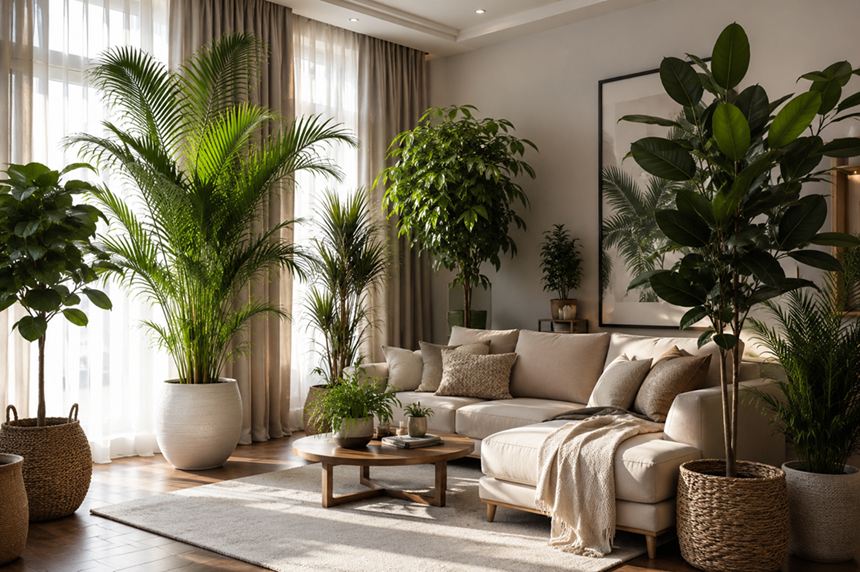
Before writing the article, I searched for current information about low-light houseplants and indoor tree care to ensure the recommendations reflect up-to-date horticultural guidance.
Why Dramatic Indoor Trees Are Trending
Indoor trees have become one of the biggest home décor trends because they instantly transform an ordinary room into a vibrant, welcoming space. While small potted plants certainly add charm, a tall indoor tree creates a focal point that captures attention the moment someone enters the room. Whether your home has a modern minimalist aesthetic, a cozy Scandinavian design, or a luxurious tropical feel, a dramatic indoor tree can tie the entire space together. The growing popularity of indoor gardening has also encouraged homeowners and apartment dwellers to experiment with larger plants that deliver visual impact without requiring a backyard.
Another reason these trees are so desirable is their ability to soften harsh architectural lines. Empty corners, plain walls, and unused spaces suddenly become lively with lush foliage stretching toward the ceiling. Studies continue to show that indoor plants contribute to improved well-being by reducing stress, enhancing concentration, and making indoor environments feel more comfortable. While no plant can thrive in complete darkness, many beautiful indoor trees tolerate lower light levels surprisingly well. Choosing the right species allows you to enjoy a dramatic green centerpiece even if your home doesn’t receive abundant sunlight throughout the day.
Understanding Low-Light Conditions
Many people misunderstand what “low light” actually means. It does not refer to a room without windows or a dark basement. Instead, low light generally describes areas that receive indirect sunlight for only a few hours each day or rooms where windows are shaded by nearby buildings or trees. These environments are common in apartments, offices, and north-facing rooms. Fortunately, numerous tropical trees naturally grow beneath dense rainforest canopies, making them perfectly adapted to lower light conditions indoors.
One of the biggest mistakes beginners make is placing a low-light tree in a completely dark corner and expecting it to thrive indefinitely. Even shade-tolerant plants require some natural or artificial light to photosynthesize. Rotating the tree every few weeks helps maintain balanced growth, while occasional dusting of the leaves improves light absorption. Proper watering is equally important because low-light conditions slow soil evaporation. Overwatering remains one of the leading causes of indoor tree decline, so always check the soil before adding more water. By understanding these basic principles, you’ll significantly increase your chances of growing a healthy, eye-catching indoor tree.
Best Low Light Indoor Trees
1. Lady Palm (Rhapis excelsa)
The Lady Palm is one of the finest indoor trees for low-light homes. Its elegant fan-shaped leaves create a sophisticated tropical appearance that complements nearly every decorating style. Unlike many palms that demand bright sunshine, the Lady Palm naturally grows beneath forest canopies, making it exceptionally tolerant of indirect light. Mature specimens can reach 6 to 10 feet indoors, creating a dramatic vertical display without overwhelming the room.
This palm is also remarkably forgiving. It tolerates average household humidity, requires only moderate watering, and grows slowly enough that frequent repotting isn’t necessary. Its dense foliage makes it especially effective for filling empty corners or framing furniture. Although it appreciates occasional feeding during the growing season, it generally requires very little maintenance. If you’re searching for a timeless indoor tree with graceful foliage and dependable performance, the Lady Palm deserves a place at the top of your list.
2. Fiddle Leaf Fig (Ficus lyrata)
The Fiddle Leaf Fig remains one of the most recognizable indoor trees thanks to its enormous violin-shaped leaves and sculptural appearance. While it performs best in bright indirect light, healthy specimens can adapt to moderately low-light environments if their watering routine is carefully managed. This flexibility has made it a favorite among interior designers seeking dramatic greenery in living rooms and offices.
Proper placement is essential. Position the tree near a bright window without exposing it to harsh afternoon sunlight. Avoid frequent relocation because Fiddle Leaf Figs dislike sudden environmental changes. Regularly wiping the large leaves keeps them glossy while maximizing their ability to capture available light. With patience and consistent care, this iconic tree rewards homeowners with bold architectural beauty that instantly elevates any interior space.
3. Corn Plant (Dracaena fragrans)
The Corn Plant offers one of the easiest ways to create height and elegance indoors. Its thick cane-like stems support graceful clusters of long green leaves that resemble tropical corn foliage, giving the plant its common name. It adapts exceptionally well to low-light conditions and tolerates occasional neglect, making it perfect for beginners.
Beyond its visual appeal, the Corn Plant grows slowly and predictably, reducing maintenance requirements. Allow the top portion of the soil to dry before watering to prevent root problems. Although growth may slow in dimmer locations, the foliage remains lush and attractive throughout the year. This dependable species works beautifully in offices, hallways, bedrooms, and living rooms where natural light is limited.
4. Kentia Palm (Howea forsteriana)
The Kentia Palm is often described as one of the most elegant indoor trees available, and for good reason. Its long, arching fronds create a luxurious tropical appearance without looking overwhelming or messy. Unlike many palm varieties that demand constant sunshine, the Kentia Palm naturally tolerates lower light conditions, making it an outstanding choice for apartments, offices, hotel lobbies, and homes with shaded rooms. It grows slowly, which means it maintains its attractive shape for years and rarely outgrows its space too quickly. If you want a plant that delivers dramatic height while remaining easy to manage, the Kentia Palm deserves serious consideration.
One of the reasons homeowners love this palm is its resilience. It adapts well to average indoor humidity and only needs watering when the top two inches of soil feel dry. Overwatering is far more harmful than underwatering, so it’s better to err on the side of caution. Feeding with a balanced liquid fertilizer once a month during spring and summer encourages healthy growth, but excessive fertilizer should be avoided because it can damage the roots. Its graceful silhouette works beautifully beside sofas, reading chairs, or large windows where it can soften empty spaces with flowing green foliage. As the fronds mature, they create a layered canopy that instantly gives any room a sophisticated, resort-inspired atmosphere.
5. Rubber Tree (Ficus elastica)
The Rubber Tree is a favorite among interior designers because its thick, glossy leaves add bold texture and visual depth to almost any room. The foliage reflects available light, making even dim spaces appear brighter and more vibrant. Although the Rubber Tree grows best in bright indirect light, it can tolerate lower-light environments surprisingly well, especially the darker green varieties. Mature plants can easily reach 8 feet or taller indoors, creating a stunning focal point that requires relatively little maintenance compared to many other large houseplants.
Caring for a Rubber Tree is refreshingly straightforward. Allow the top layer of soil to dry before watering, and avoid leaving the roots sitting in water for extended periods. Dust the large leaves regularly to keep them shiny and improve photosynthesis. Rotating the pot every few weeks encourages even growth and prevents the plant from leaning toward the nearest light source. The thick trunk and broad leaves give the Rubber Tree a sculptural quality that fits modern, industrial, contemporary, and minimalist interiors alike. Whether placed in a decorative ceramic planter or a woven basket, it provides year-round elegance with very little effort.
6. Money Tree (Pachira aquatica)
The Money Tree combines attractive braided trunks with a lush canopy of bright green leaves, creating an indoor tree that feels both decorative and meaningful. Popular in many cultures as a symbol of prosperity and good fortune, this tree has become a common feature in homes and offices around the world. While it appreciates bright indirect light, it also performs well in moderate to low-light settings, making it suitable for spaces where direct sunlight is limited. Its balanced shape and manageable size make it ideal for people who want dramatic greenery without overwhelming their living area.
One of the biggest advantages of the Money Tree is its forgiving nature. It tolerates occasional missed waterings and adapts well to normal indoor temperatures. Water thoroughly when the top inch or two of soil becomes dry, then allow excess moisture to drain completely. High humidity encourages healthier foliage, although average household humidity is usually sufficient. With consistent care, the braided trunk gradually thickens while the canopy becomes fuller, producing an increasingly impressive display. The combination of attractive structure and easy maintenance makes the Money Tree a practical choice for beginners and experienced plant enthusiasts alike.
7. Dragon Tree (Dracaena marginata)
If you’re looking for a dramatic indoor tree with a modern architectural appearance, the Dragon Tree is difficult to beat. Its slender stems support clusters of narrow, sword-like leaves that arch gracefully outward, creating a striking silhouette that stands out without occupying excessive floor space. Native to Madagascar, this adaptable species naturally tolerates lower light levels better than many broad-leaved tropical trees. Its upright growth habit makes it especially useful for decorating narrow corners, apartment living rooms, or office reception areas.
The Dragon Tree is also one of the easiest indoor trees to maintain. It prefers soil that dries slightly between waterings and rarely requires pruning unless you wish to control its height. Older plants often develop multiple stems, giving them an even more dramatic appearance over time. Because the foliage grows primarily near the top of the stems, the plant develops a distinctive tree-like form that adds vertical interest without creating visual clutter. Whether paired with neutral décor or bold contemporary furniture, the Dragon Tree provides year-round beauty with minimal maintenance requirements.
8. Olive Tree (Olea europaea) – For Bright Low-Light Rooms
Although Olive Trees generally prefer brighter conditions than the other trees on this list, they can still perform well in rooms that receive several hours of indirect light or filtered morning sun. Their slender gray-green leaves and naturally sculptural trunks create a Mediterranean aesthetic that complements rustic, farmhouse, coastal, and minimalist interiors. Young olive trees are particularly popular because they add elegance without requiring an enormous amount of floor space.
Success with an indoor Olive Tree depends largely on choosing the brightest location available within your home. Allow the soil to dry partially between waterings, and ensure the container has excellent drainage. Good air circulation also helps prevent common indoor growing issues. While growth may slow indoors compared to outdoor specimens, the tree retains its distinctive character and timeless beauty. If your home has a bright north-facing room or a lightly shaded south-facing window, an Olive Tree can become one of the most sophisticated statement plants you own.
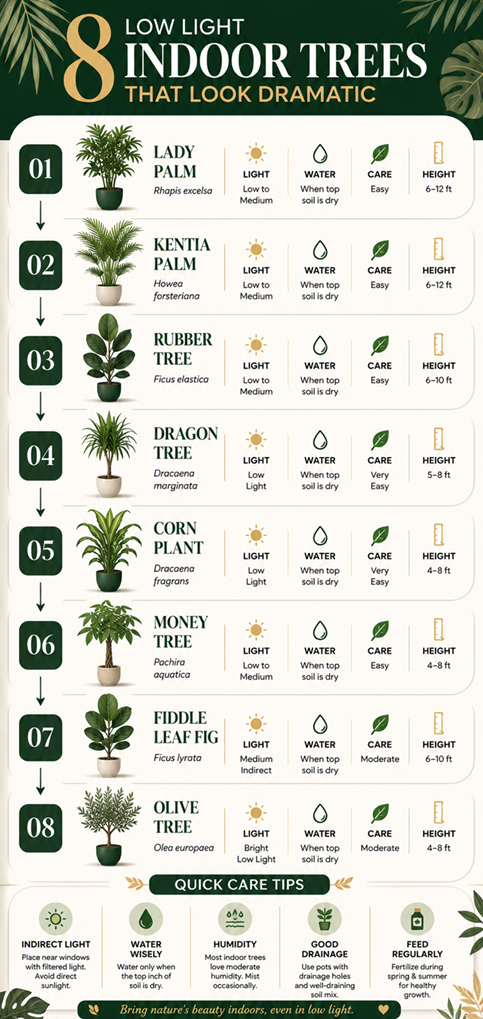
Comparison Table of Dramatic Low-Light Indoor Trees
| Indoor Tree | Light Tolerance | Mature Indoor Height | Care Level | Best Feature |
| Lady Palm | Excellent | 6–10 ft | Easy | Dense tropical foliage |
| Kentia Palm | Excellent | 6–12 ft | Easy | Graceful arching fronds |
| Corn Plant | Excellent | 4–8 ft | Very Easy | Beginner friendly |
| Dragon Tree | Excellent | 5–8 ft | Very Easy | Modern architectural shape |
| Rubber Tree | Good | 6–10 ft | Easy | Large glossy leaves |
| Money Tree | Good | 4–8 ft | Easy | Braided trunk |
| Fiddle Leaf Fig | Moderate | 6–10 ft | Moderate | Oversized dramatic leaves |
| Olive Tree | Moderate | 4–8 ft | Moderate | Mediterranean elegance |
Choosing the Right Tree for Your Home
Selecting the perfect indoor tree involves more than simply choosing the one with the most attractive leaves. Begin by evaluating your available space, ceiling height, and natural lighting. A towering Kentia Palm may look incredible in a spacious living room with vaulted ceilings, while a Dragon Tree might be a better choice for a compact apartment. Consider your lifestyle as well. If you travel frequently or occasionally forget to water your plants, choose forgiving species like the Corn Plant or Dragon Tree rather than varieties that require more consistent attention.
Your home’s decorating style should also influence your decision. Broad-leaved trees such as the Rubber Tree create bold, contemporary statements, while palms deliver a softer tropical atmosphere. Olive Trees contribute rustic European charm, whereas Money Trees fit both traditional and modern interiors. By matching the plant’s growth habit with your available space and maintenance routine, you’ll enjoy healthier plants and a more cohesive interior design that feels intentional rather than crowded.
Essential Care Tips for Long-Term Success
Even the toughest low-light indoor trees benefit from consistent care. Understanding a few basic principles can dramatically improve their health and longevity. Water only when the soil indicates it is needed rather than following a fixed schedule. Low-light environments naturally reduce evaporation, meaning plants typically require less frequent watering than those placed in brighter rooms. Always use containers with drainage holes to prevent root rot, one of the most common causes of indoor plant failure.
Humidity, cleaning, and occasional feeding also contribute to healthy growth. Dust accumulation blocks sunlight from reaching the leaves, so gently wipe foliage with a damp cloth every few weeks. Fertilize lightly during spring and summer using a balanced houseplant fertilizer, but reduce feeding during winter when growth naturally slows. Finally, inspect plants regularly for pests such as spider mites or scale insects so any problems can be addressed early. With these simple habits, your indoor trees can remain healthy, dramatic, and visually impressive for many years.
Conclusion
Low-light rooms don’t have to feel empty or uninspiring. The right indoor tree can completely transform a dim corner into the centerpiece of your home while requiring surprisingly little maintenance. Whether you prefer the elegant fronds of a Kentia Palm, the bold leaves of a Rubber Tree, or the sculptural form of a Dragon Tree, there is a dramatic option suited to almost every interior style and lighting condition.
Remember that “low light” does not mean “no light.” Providing indirect natural light, watering carefully, and following basic maintenance practices will help your indoor trees thrive. With thoughtful placement and consistent care, these beautiful plants will reward you with lush foliage, improved ambiance, and timeless natural beauty that enhances your home throughout every season.
Frequently Asked Questions
1. Which indoor tree survives best in very low light?
The Lady Palm, Kentia Palm, Corn Plant, and Dragon Tree are among the most reliable choices for rooms with limited natural light.
2. Can indoor trees live without sunlight?
No. All plants require some form of light for photosynthesis. If natural light is insufficient, full-spectrum LED grow lights can successfully supplement it.
3. How often should I water low-light indoor trees?
Most indoor trees should be watered only after the top 1–2 inches of soil have dried. The exact schedule varies depending on temperature, humidity, and the plant species.
4. Which dramatic indoor tree is easiest for beginners?
The Corn Plant and Dragon Tree are excellent beginner-friendly options because they tolerate occasional neglect and adapt well to average indoor conditions.
5. Do indoor trees improve indoor air quality?
Indoor trees can contribute to a healthier indoor environment by increasing humidity and supporting overall well-being. While they do help process carbon dioxide and release oxygen, good ventilation remains the primary factor for maintaining healthy indoor air.
