

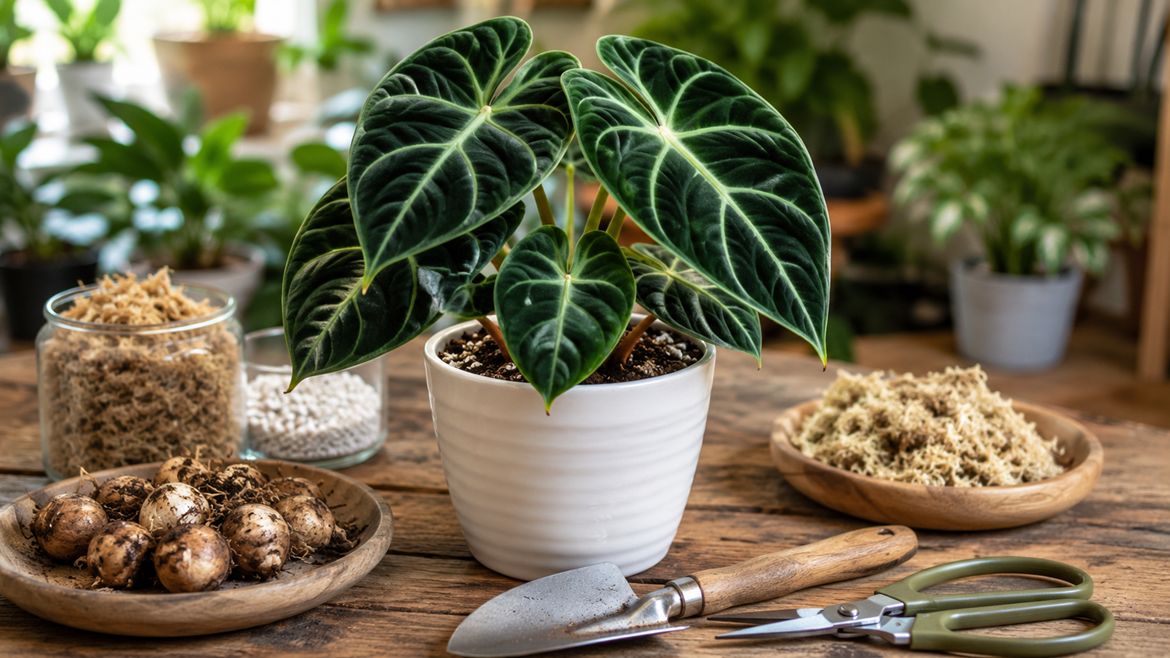
Black Velvet Alocasia (Alocasia reginula) is one of the most admired houseplants because of its deep green, velvety leaves and striking silver veins. Unlike many common indoor plants, it cannot be propagated from leaf or stem cuttings. Instead, successful propagation relies on corms (bulb-like structures), rhizome division, or offsets that develop naturally beneath the soil. Recent horticultural guides continue to recommend corm propagation as the easiest and most reliable method for home gardeners.
Understanding Black Velvet Alocasia
If you have ever admired a houseplant that looks almost too beautiful to be real, chances are it was a Black Velvet Alocasia. Native to Borneo, this compact tropical plant belongs to the jewel Alocasia group. Its thick, velvety foliage makes it one of the most sought-after indoor plants. Unlike pothos or philodendrons, however, propagation is not as simple as snipping a stem and placing it in water. The plant grows from underground rhizomes that produce corms and offsets over time. Understanding this growth habit is the secret to successful propagation.
Why This Plant Is Different
Most beginner gardeners fail because they treat Black Velvet like a regular cutting plant. Leaf cuttings will never produce a new plant. Instead, Black Velvet stores energy underground in rhizomes and tiny corms. These structures eventually develop roots and leaves, making them the preferred propagation material.
Best Time to Propagate
Spring and early summer are the ideal seasons because the plant is actively growing. During this period, roots recover quickly, and corms sprout faster thanks to warmer temperatures and longer daylight hours. Although propagation is technically possible year-round indoors, success rates drop significantly during winter dormancy. The ideal temperature ranges between 70–80°F (21–27°C) with humidity above 60%.
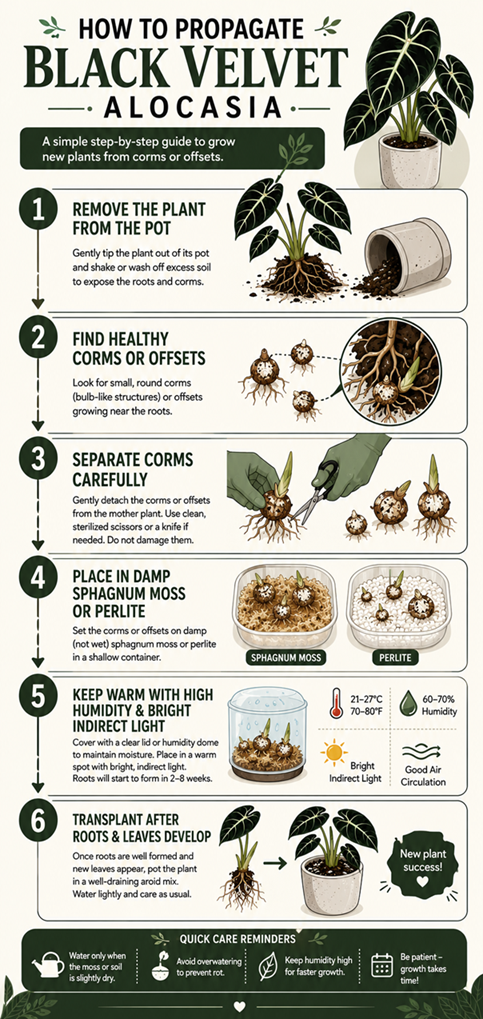
Method 1 – Propagating Black Velvet Alocasia from Corms
Corm propagation is the easiest and most popular method among plant collectors.
Step-by-Step Process
- Remove the parent plant during repotting.
- Locate small round corms attached near the roots.
- Gently detach healthy corms without damaging them.
- Peel away the brown outer layer if it is loose.
- Place the corm on damp sphagnum moss or perlite.
- Cover the container with a clear lid to maintain humidity.
- Keep temperatures warm and provide bright indirect light.
- Wait patiently. Most corms sprout within 2–8 weeks, though some take longer depending on size and growing conditions.
Method 2 – Rhizome Division
If your mature plant has developed multiple growth points, rhizome division is another reliable propagation technique.
Step-by-Step Guide
Remove the plant from its pot and gently shake away excess soil. Identify natural divisions where roots and leaves already exist. Using a sterilized knife, separate each section carefully. Plant every division into fresh, well-draining aroid soil and water lightly. Place the new plants in bright indirect sunlight while they establish fresh roots. Garden experts recommend performing rhizome division only during active growth to reduce transplant shock.
Method 3 – Propagating Using Offsets
Mature Black Velvet plants sometimes produce small baby plants connected to the mother plant. These offsets already possess roots, making them relatively easy to separate. Carefully remove the offset during repotting and plant it in a small container with an airy soil mix.
Best Soil Mix for Successful Propagation
A well-draining substrate prevents root rot while providing enough moisture for young roots.
| Ingredient | Percentage |
| Orchid Bark | 30% |
| Perlite | 30% |
| Coco Coir | 20% |
| Quality Potting Mix | 20% |
This combination keeps the soil airy while allowing roots to breathe.
Light, Humidity, and Temperature
Freshly propagated plants thrive in bright indirect light rather than direct sunlight, which can scorch their delicate leaves. High humidity—around 60–70%—encourages faster root development, while temperatures between 21–27°C (70–80°F) help maintain steady growth. Many growers use a humidity dome or clear plastic container during the first few weeks to retain moisture, but good airflow remains important to prevent fungal problems.
Caring for Newly Propagated Plants
Once a corm develops its first leaf, resist the urge to overwater. Young Black Velvet Alocasias are especially prone to root rot if kept constantly wet. Water only when the top inch of the growing medium begins to dry. Avoid fertilizing until the plant has produced two or three healthy leaves. At that point, a diluted balanced liquid fertilizer every four to six weeks during the growing season is sufficient. Repot only when the roots clearly outgrow the container, as these plants prefer to remain slightly root-bound.
Common Mistakes to Avoid
Many propagation failures come from simple mistakes that are easy to prevent:
- Trying to propagate from leaf or stem cuttings.
- Using heavy, compact soil that traps water.
- Overwatering newly sprouted corms.
- Separating immature corms too early.
- Exposing young plants to direct afternoon sunlight.
- Keeping the environment too dry, which slows root formation.
Growers on Reddit also frequently report that patience is essential—healthy corms can take several weeks or even months to sprout, and disturbing them too often can reduce success.
Troubleshooting Common Problems
| Problem | Likely Cause | Solution |
| Corm turns mushy | Overwatering | Reduce moisture and improve drainage |
| No sprouting after weeks | Cool temperatures | Increase warmth to 70–80°F |
| Yellow leaves | Excess water | Allow soil to dry slightly |
| Brown leaf edges | Low humidity | Raise humidity with a humidifier or pebble tray |
| Root rot | Poor drainage | Repot into an airy aroid mix |
Conclusion
Propagating Black Velvet Alocasia may seem intimidating at first, but it becomes straightforward once you understand how the plant naturally reproduces. Instead of relying on stem cuttings, focus on healthy corms, rhizome divisions, or offsets. With warm temperatures, bright indirect light, high humidity, and patience, even beginners can successfully grow multiple healthy plants from a single mature specimen. The reward is a collection of stunning jewel Alocasias that continue to multiply year after year.
FAQs
1. Can Black Velvet Alocasia grow from a leaf cutting?
No. Unlike pothos or philodendrons, leaf cuttings cannot produce a new Black Velvet Alocasia.
2. How long does a corm take to sprout?
Most healthy corms sprout within 2–8 weeks, although some may take longer depending on size and growing conditions.
3. What is the easiest propagation method?
Propagation from corms is generally considered the simplest and most successful method.
4. Should I keep propagated corms in water?
Most growers achieve better results using slightly damp sphagnum moss or perlite rather than fully submerging corms in water.
5. How often should I water newly propagated plants?
Water only when the top layer of the growing medium begins to dry. Keeping the soil constantly wet increases the risk of root rot.

1 Comment
Nice perspective on the topic. You may find Pixwit useful — . Pixwit