







Looking stylish does not have to mean buying expensive designer labels or constantly replacing your wardrobe. With thoughtful shopping, smart styling, and proper clothing care, it is possible to create polished outfits while keeping spending under control.
Budget fashion is less about buying the cheapest item available and more about getting maximum value from every purchase. Choosing versatile pieces, shopping secondhand, learning simple styling techniques, and taking care of what you already own can make a significant difference.
A useful way to think about wardrobe spending is cost per wear: a reasonably priced item worn frequently can provide more value than an expensive item that rarely leaves the closet. Forbes has highlighted wardrobe-usage tracking and cost per wear as useful ways to think about clothing consumption.
1. Start With the Wardrobe You Already Own
Before spending money, take a serious look at what is already hanging in your closet.
Pull out your clothes and divide them into four groups:
- Frequently worn: Pieces you regularly enjoy wearing.
- Occasionally worn: Items that work but need better styling.
- Needs repair: Clothing that could become useful again with minor alterations.
- Never worn: Pieces that no longer fit your lifestyle or preferences.
This simple wardrobe audit can reveal that you already own many of the building blocks for stylish outfits.
Try the “Three Outfit” Rule
Before buying something new, ask yourself:
Can I create at least three different outfits with this item using clothes I already own?
For example, a simple white button-down could work with jeans and sneakers for a casual outfit, tailored trousers for work, or a skirt and accessories for an evening look.
If you can only imagine wearing a new item with one specific outfit, it may not provide enough value for your budget.
2. Build Around Versatile Basics
A budget wardrobe becomes easier to manage when you have dependable basics that can be mixed and matched.
Depending on your personal style and lifestyle, useful foundations may include:
- A well-fitting T-shirt
- A neutral button-down shirt
- Straight or relaxed-fit jeans
- Simple trousers
- A versatile jacket or blazer
- A neutral sweater
- A casual dress or skirt
- Comfortable everyday shoes
- A practical handbag or backpack
- A few simple accessories
These do not have to be expensive. The priority should be fit, versatility, comfort, and construction.
Vogue has similarly highlighted affordable closet essentials as practical wardrobe workhorses rather than suggesting that style depends exclusively on luxury purchases.
3. Focus on Fit Rather Than the Price Tag
One of the easiest ways to make inexpensive clothing look more polished is to pay attention to fit.
An affordable garment that fits properly can look considerably more put-together than an expensive garment that is poorly proportioned.
Look for:
- Shoulder seams that sit correctly
- Trousers that fall naturally
- Sleeves with an appropriate length
- Shirts that do not pull across the chest
- Waistbands that sit comfortably
- Jackets that allow natural movement
Consider Simple Alterations
Small tailoring adjustments can sometimes transform an otherwise ordinary garment.
For example, shortening trousers, adjusting a waistband, or changing sleeve length may make a secondhand or sale item much more wearable.
When considering alterations, compare the repair cost with the garment’s purchase price and expected use.
4. Learn the Power of Outfit Repetition
Repeating clothes is not a fashion failure. In fact, developing a recognizable personal style can make dressing easier and reduce unnecessary shopping.

Instead of trying to create a completely different outfit every day, experiment with different combinations of the same core pieces.
For example:
One pair of jeans + three tops + two pairs of shoes = multiple outfit combinations.
Change the appearance with:
- A belt
- Jewelry
- A scarf
- A jacket
- Different shoes
- Layering
- A change of hairstyle
The goal is not to own more clothing. It is to get more combinations from the clothing you already have.
5. Shop Secondhand and Pre-Owned
Thrift stores, resale platforms, vintage shops, clothing swaps, and local secondhand markets can be useful sources for budget-conscious shoppers.
Secondhand shopping can be particularly useful for finding:
- Denim
- Jackets
- Coats
- Handbags
- Occasion wear
- Vintage pieces
- Quality natural-fiber garments
However, do not buy something simply because the price is low.
Check:
- Fabric condition
- Seams and stitching
- Zippers and buttons
- Stains or odors
- Signs of excessive wear
- Whether the item actually fits
- Whether you have existing pieces to style it with
A $10 item that stays unworn is not necessarily a better purchase than a $30 item you wear regularly.
6. Shop With a Specific Budget
Impulse purchases can quickly undermine a fashion budget.
Before shopping, decide how much you are comfortable spending and identify what you actually need.
A simple monthly approach could be:
| Category | Example Budget |
| Everyday clothing | $40 |
| Shoes/accessories | $25 |
| Secondhand/vintage | $20 |
| Repairs/alterations | $15 |
| Total | $100 |
The numbers can be adjusted to your income and circumstances. The important part is having a limit before you begin shopping.
Use a 48-Hour Waiting Period
For non-essential purchases, consider waiting 48 hours before buying.
During that time, ask:
- Do I actually need it?
- Do I already own something similar?
- Can I style it with at least three outfits?
- Will I still want it after the current trend passes?
- Does it fit my normal lifestyle?
This creates a simple barrier between seeing something you like and immediately spending money on it.
7. Shop Sales Strategically
Sales can save money, but only when you were already planning to buy the item.
A 50% discount is not a saving if you would never have purchased the product otherwise.
Instead of browsing sales without a plan, maintain a shopping list.
For example:
“I need black trousers, comfortable everyday sneakers, and a lightweight jacket.”
When one of those items goes on sale, you can evaluate it against your actual needs.
Vogue’s current affordable-fashion coverage also demonstrates how styling can combine accessible pieces with versatile silhouettes rather than requiring an entirely luxury wardrobe.
8. Use Accessories to Refresh Basic Outfits
Accessories can change the appearance of simple clothing without requiring a completely new outfit.
Consider experimenting with:
- Belts
- Watches
- Scarves
- Sunglasses
- Simple necklaces
- Earrings
- Hats
- Structured bags
- Statement shoes
For example, the same white shirt and jeans can look casual with sneakers and a canvas bag, or more polished with loafers, a belt, and structured accessories.
The key is intentional coordination, not the price of the accessories.
9. Take Care of Your Clothes
One of the most overlooked budget-fashion strategies is extending the useful life of clothing.
Read the garment’s care instructions before washing or drying it. Clothing care labels are designed to provide information about appropriate cleaning methods and precautions.
Practical habits include:
- Following washing instructions
- Avoiding unnecessarily harsh washing
- Treating stains promptly
- Repairing loose buttons
- Fixing small tears before they become larger
- Storing knitwear appropriately
- Keeping shoes clean
- Rotating frequently worn footwear
Good maintenance can help prevent small problems from becoming expensive replacements.
10. Create a Personal Color Palette
A coordinated wardrobe does not need to be monochromatic, but choosing a few colors that work well together can make outfit planning easier.
For example, you might build your everyday wardrobe around:
Base colors: black, white, navy, beige, gray or brown
Accent colors: burgundy, green, blue, pink or another favorite shade
This makes mixing and matching easier because many pieces can work together naturally.
11. Try the Cost-Per-Wear Test
Price alone does not tell you whether an item represents good value.
Use this simple formula:
Cost per wear = Purchase price ÷ Number of times worn
Imagine:
- Jacket A costs $40 and is worn 20 times.
- Jacket B costs $100 and is worn 100 times.
Jacket A costs $2 per wear, while Jacket B costs $1 per wear.
This does not mean everyone should spend more money on clothing. Instead, it illustrates why frequency of use matters when evaluating purchases. Forbes has discussed this broader concept in relation to wardrobe usage and clothing’s environmental impact.
12. Make Trends Work for Your Existing Wardrobe
You do not need to replace your entire closet every time fashion trends change.
Instead, introduce trends through relatively small additions such as:
- A scarf
- Jewelry
- A bag
- A belt
- A seasonal color
- A new styling technique
For instance, if wide-leg trousers become popular, you do not necessarily need to buy an entirely new wardrobe. You might experiment with styling a pair of trousers you already own differently.
This approach allows personal style to evolve without turning every trend into a shopping requirement.
13. Don’t Ignore Repairs and DIY Styling
A small repair can sometimes give an old garment a second life.
Simple skills worth learning include:
- Sewing on buttons
- Fixing loose hems
- Replacing basic fasteners
- Removing minor stains
- Polishing shoes
- Adjusting simple garments
You can also experiment with harmless styling changes, such as rolling sleeves, tucking shirts differently, layering garments, or using a belt to alter a silhouette.
For more complicated alterations, professional tailoring may be safer than attempting a difficult DIY repair.
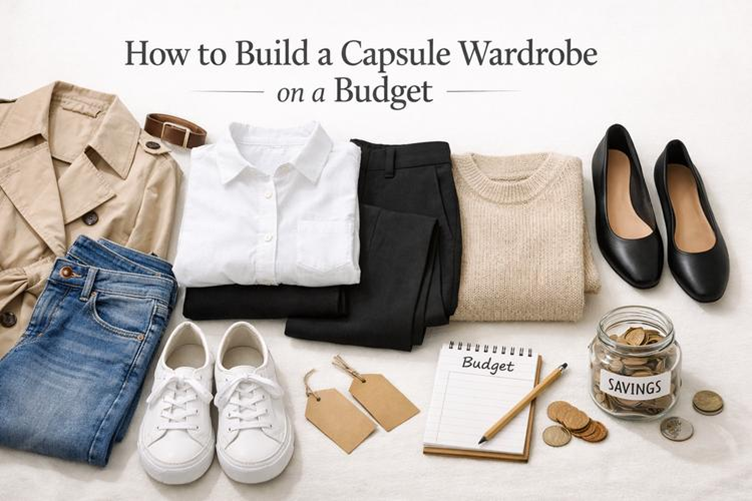
14. Create a Simple Capsule Wardrobe
A capsule wardrobe is a relatively small collection of clothing designed to work together.
It does not have to follow a strict number of items. Instead, concentrate on versatility.
For example:
Tops: 4–6
Bottoms: 3–4
Outer layers: 2–3
Shoes: 2–4
Accessories: several interchangeable pieces
The exact numbers should reflect your climate, occupation, lifestyle, laundry routine, and personal preferences.
The objective is simple: fewer pieces that can create more useful combinations.
15. Know When Not to Buy
Perhaps the most powerful budget-fashion skill is recognizing when your wardrobe already has enough.
Before purchasing, ask:
“Am I buying this because I need it, because it fills a genuine wardrobe gap, or simply because I saw it repeatedly online?”
If the answer is unclear, waiting can be a smart option.
Budget fashion is ultimately about making deliberate choices rather than constantly chasing new products.
Conclusion
Looking stylish on a budget is less about finding the cheapest clothes and more about becoming a smarter wardrobe manager. Start with what you already own, prioritize versatile pieces, pay attention to fit, shop secondhand when appropriate, and avoid purchases that do not have a clear purpose.
Most importantly, remember that style is not determined by the price printed on a label. Good styling comes from combining clothing thoughtfully, understanding what works for you, maintaining your garments, and buying with intention.
With these habits, you can create a wardrobe that feels personal, practical, and polished—without spending a fortune.


