







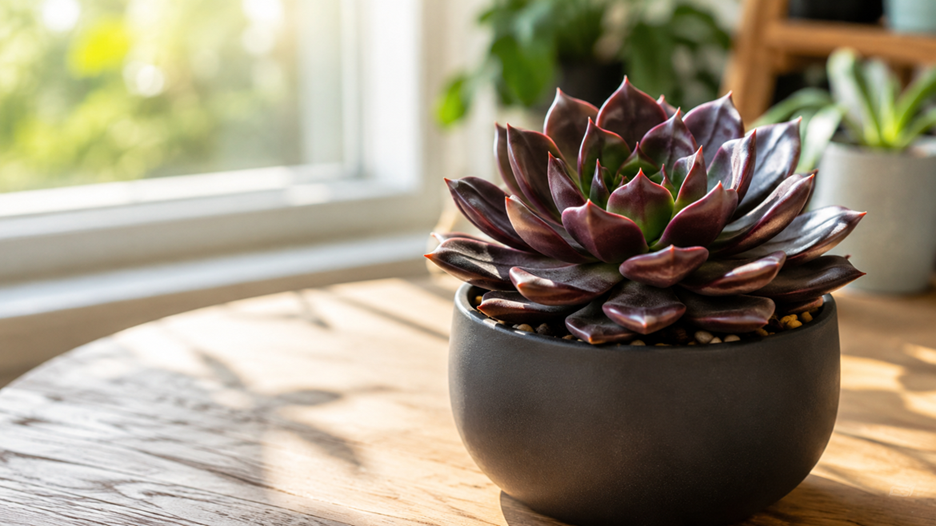
The Black Prince succulent (Echeveria ‘Black Prince’) is one of the most striking succulents you can grow. Its dramatic dark purple to nearly black rosettes make it a favorite among indoor gardeners, collectors, and beginners alike. Recent horticultural guidance continues to recommend the classic “soak and dry” watering method, well-draining succulent soil, and at least six hours of bright light daily for healthy growth. Repotting is generally needed only when roots outgrow the container, while overwatering remains the leading cause of plant failure.
How to Care for Black Prince Succulent
What Is a Black Prince Succulent?
The Black Prince succulent is a beautiful cultivar of Echeveria, famous for its compact rosette shape and almost black foliage. While many succulents display shades of green or blue, this variety develops deep burgundy to nearly black leaves that become even darker when exposed to sufficient sunlight. During late autumn and winter, mature plants often produce striking red flowers on tall stalks, creating an eye-catching contrast against the dark foliage. Healthy plants also produce offsets, commonly called “pups,” which make propagation easy.
Unlike demanding houseplants, Black Prince is relatively forgiving. It stores water inside its thick leaves, allowing it to tolerate occasional neglect. This makes it an excellent choice for beginners who are still learning the basics of succulent care. Although easy to maintain, giving the plant the proper environment dramatically improves its appearance, color intensity, and overall health.
Its slow growth habit means you won’t need frequent repotting or pruning. With proper care, a single specimen can thrive for years while continuously producing new offsets that eventually fill the pot with stunning dark rosettes.
Why Gardeners Love This Dark Beauty
Black Prince has become increasingly popular because it combines elegance with simplicity. Few succulents can match its dramatic appearance, especially when paired with lighter-colored plants in mixed arrangements. The dark leaves almost resemble polished obsidian, making the plant stand out whether placed on a sunny windowsill or incorporated into a modern succulent garden.
Another reason gardeners appreciate this plant is its adaptability. It grows well indoors with bright light and also performs beautifully outdoors in warm climates. Its compact growth means it fits comfortably on desks, balconies, kitchen windows, or small apartment shelves without demanding much space.
Perhaps its greatest advantage is that success depends more on avoiding mistakes than performing complicated maintenance. As long as the soil drains quickly, watering is controlled, and sunlight is adequate, Black Prince rewards growers with rich color, symmetrical growth, and attractive blooms year after year.
Understanding the Natural Growing Conditions
Native Habitat
Understanding where the Black Prince succulent comes from makes it much easier to provide the right care. Although Echeveria ‘Black Prince’ is a cultivated hybrid rather than a naturally occurring species, it inherits its characteristics from Echeveria plants native to semi-arid regions of Mexico. These areas experience bright sunshine, warm temperatures, rocky terrain, and infrequent rainfall. Instead of growing in rich garden soil, these plants naturally thrive in sandy, gravelly locations where water drains away almost immediately after rain. Their roots are adapted to absorb moisture quickly and then remain relatively dry until the next rainfall. This evolutionary adaptation explains why Black Prince prefers drought over consistently wet soil.
In its natural environment, rainfall is unpredictable, yet sunlight is abundant throughout the year. The fleshy leaves act like tiny water reservoirs, storing enough moisture to keep the plant alive during extended dry periods. This survival strategy is one of the reasons succulents are considered among the easiest ornamental plants to maintain. When recreating these conditions at home, your goal isn’t to keep the soil constantly moist but rather to imitate nature by allowing the soil to dry completely between waterings. Many beginners unintentionally “love their plant to death” by watering too frequently. Once you understand that Black Prince evolved to survive dry conditions, it becomes much easier to resist overwatering and instead provide the balanced care that encourages vigorous growth and rich leaf coloration.
Growth Characteristics
Black Prince is a relatively slow-growing succulent, but that slow pace is part of its charm. Instead of producing long vines or tall stems, it develops into a compact rosette that gradually expands over time. Mature plants typically reach between 4 and 6 inches in diameter, though clusters formed from offsets can eventually create much larger displays. The leaves are thick, triangular, and tightly arranged around the center, giving the plant its signature geometric appearance. New leaves emerge from the middle with a brighter greenish or reddish tone before gradually darkening as they mature and receive more sunlight.
One fascinating feature of this succulent is its ability to produce offsets, often called pups. These baby plants grow around the base of the mother plant and can eventually be separated to create entirely new plants. During late fall or winter, mature specimens may also send up tall flower stalks bearing small, bell-shaped flowers in shades of coral red or orange. These blooms attract pollinators outdoors while adding seasonal beauty indoors. Although flowering requires energy, it generally doesn’t harm the plant. After blooming, simply remove the spent flower stalk to encourage continued healthy growth. Understanding these growth habits helps gardeners know what is normal and prevents unnecessary concern when the plant appears to grow slowly compared to traditional houseplants.
Light Requirements

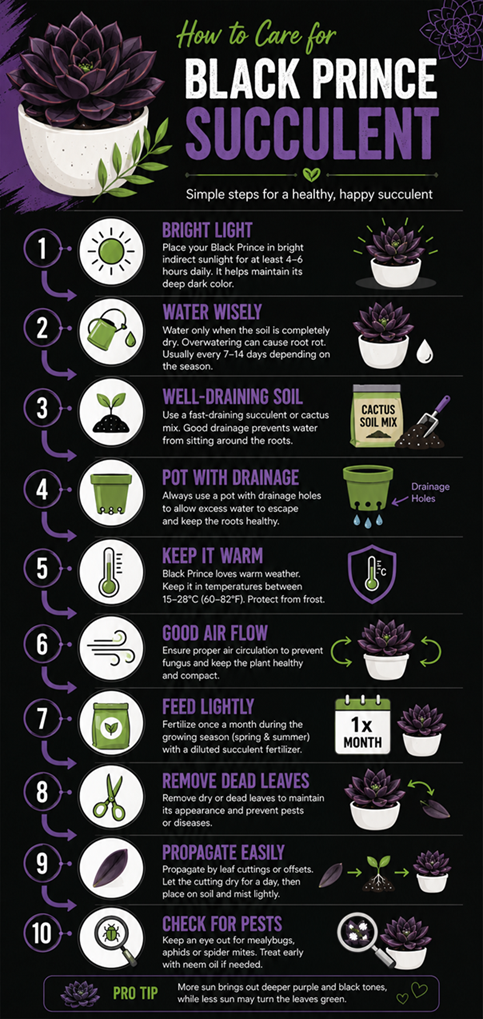
Indoor Lighting
Light is arguably the single most important factor in maintaining a healthy Black Prince succulent. Without adequate light, the plant loses its signature dark coloration and begins stretching toward available light sources, a condition known as etiolation. Indoors, the ideal location is a south-facing window where the plant receives at least six hours of bright sunlight each day. East- and west-facing windows can also work well, provided they receive strong natural light. If your home lacks sufficient sunlight, a full-spectrum LED grow light positioned 8 to 12 inches above the plant for 12 to 14 hours daily can effectively supplement natural lighting.
When Black Prince receives proper illumination, its leaves become compact, firm, and richly colored. The rosette remains symmetrical, with each leaf tightly packed around the center. By contrast, insufficient light causes elongated stems, wider spacing between leaves, and a faded green appearance. If moving the plant from a shaded location to direct sunlight, do so gradually over one to two weeks. Sudden exposure can scorch the leaves, leaving permanent brown or white patches. A slow transition allows the succulent to adapt while preserving its beautiful appearance.
Outdoor Lighting
Growing Black Prince outdoors often produces the deepest foliage colors, but placement is still important. In regions with mild climates, the plant thrives in full morning sun followed by light afternoon shade. In cooler areas, it can tolerate full sun throughout the day, while gardeners in extremely hot climates should protect it from intense afternoon heat to prevent sunburn. Excessive summer temperatures combined with harsh sunlight can stress the plant even though it enjoys bright conditions.
Outdoor gardeners should also consider seasonal changes. During spring and autumn, Black Prince generally flourishes with abundant sunshine and moderate temperatures. Winter sunlight remains beneficial, particularly in frost-free regions where the plant continues growing. However, if temperatures begin approaching freezing, container-grown plants should be moved indoors or into a protected greenhouse. Providing consistent light throughout the year ensures the succulent maintains its compact form, dark coloration, and overall vitality. Proper lighting doesn’t simply keep the plant alive—it transforms it into the dramatic centerpiece that makes Black Prince one of the most admired succulents available.
Watering Guide
How Often to Water
Watering correctly is the difference between a thriving Black Prince succulent and one that struggles with disease or rot. The most reliable technique is the soak-and-dry method. Rather than watering on a fixed weekly schedule, thoroughly soak the soil until water drains freely from the bottom of the pot, then allow the soil to dry out completely before watering again. Depending on your climate, indoor temperature, humidity, pot size, and season, this may mean watering every 10 to 21 days during the active growing season and only once every three to five weeks during winter dormancy.
Instead of relying on a calendar, check the soil with your finger or a moisture meter. If the soil feels completely dry several inches below the surface, it’s time to water. If any moisture remains, wait a few more days. Watering in the morning is generally preferred because it gives excess moisture time to evaporate before cooler nighttime temperatures arrive. Always water the soil directly rather than pouring water over the leaves, as trapped moisture inside the rosette can encourage fungal problems and rot. By following the soak-and-dry method consistently, you’ll create conditions that closely resemble the plant’s natural environment and dramatically reduce the risk of common watering mistakes.
Signs of Overwatering
Overwatering is by far the most common reason a Black Prince succulent dies. Because these plants are adapted to survive long periods without rain, constantly wet soil deprives the roots of oxygen and creates the perfect environment for root rot. Unfortunately, many beginners mistake succulents for tropical houseplants and water them every few days. While this routine works for some foliage plants, it is disastrous for Echeverias. Learning to recognize the early warning signs of overwatering can help you save your plant before permanent damage occurs.
One of the first symptoms is soft, mushy leaves. Instead of feeling firm and plump, the leaves become squishy and may turn translucent or yellow. As the problem worsens, lower leaves begin falling off with very little pressure, and the stem may become black or brown near the soil line. You might also notice an unpleasant smell coming from the pot, which often indicates root decay. If these symptoms appear, immediately stop watering and inspect the root system. Healthy roots should be white or light tan and firm to the touch. Dark, slimy, or foul-smelling roots should be trimmed away using sterilized scissors before repotting the plant into fresh, dry succulent soil.
The container itself also plays a major role in preventing overwatering. Pots without drainage holes trap excess water around the roots, significantly increasing the likelihood of rot. Even if you water sparingly, stagnant moisture can still accumulate at the bottom of the container. Choosing a breathable terracotta pot with adequate drainage helps excess water evaporate faster and keeps the root zone healthier. Remember, it’s much easier for a Black Prince to recover from slight underwatering than from severe overwatering, making restraint one of the gardener’s greatest strengths.
Signs of Underwatering
Although Black Prince is drought tolerant, it still requires occasional watering to remain healthy. A plant that goes without water for too long will begin showing visible signs of dehydration. Unlike overwatering, which often causes soft leaves, underwatering results in leaves becoming thinner, wrinkled, and less firm. The succulent uses the moisture stored in its leaves to survive, gradually consuming these reserves until rainfall—or your watering can—replenishes them.
One common symptom is shriveled lower leaves. While older leaves naturally dry up as part of the plant’s growth cycle, excessive wrinkling throughout the rosette usually indicates insufficient moisture. The leaves may curl inward, lose their glossy appearance, and appear dull or faded. Growth also slows dramatically because the plant conserves energy while waiting for better conditions. Fortunately, underwatering is generally easier to correct than overwatering. A thorough watering followed by proper drying usually restores the leaves’ firmness within a few days.
It’s important not to overcompensate by watering repeatedly after noticing dehydration. One deep watering is enough. Allow the soil to absorb moisture fully, let excess water drain away, and then resume the normal soak-and-dry routine. Consistency is far more beneficial than alternating between severe drought and excessive watering. By observing your plant regularly, you’ll quickly learn its natural rhythm and recognize when it’s genuinely thirsty rather than watering according to habit alone.
Best Soil Mix
The foundation of a healthy Black Prince succulent is its soil. Unlike traditional houseplants that thrive in moisture-retentive potting mixes, succulents demand a growing medium that drains quickly and allows air to circulate around the roots. Standard garden soil or regular indoor potting soil often holds far too much water, creating conditions that encourage root rot. The ideal succulent mix should mimic the rocky, sandy environments where Echeverias naturally grow.
A high-quality commercial cactus or succulent mix is an excellent starting point, but many experienced growers prefer making their own blend for even better drainage. A reliable homemade recipe consists of approximately two parts cactus soil, one part coarse sand, and one part perlite or pumice. This combination creates large air pockets that allow water to move freely through the container while preventing the roots from remaining wet for extended periods.
| Soil Component | Purpose | Recommended Percentage |
| Cactus Potting Mix | Provides nutrients and structure | 50% |
| Coarse Sand | Improves drainage | 25% |
| Perlite or Pumice | Increases airflow and prevents compaction | 25% |
Avoid using fine beach sand because it compacts easily and reduces drainage. Likewise, heavy clay-based soils should never be used for succulents. If you’re unsure whether your soil drains fast enough, water the pot and observe how quickly excess moisture exits through the drainage hole. Ideally, water should begin draining within seconds. Fast drainage keeps oxygen available to the roots and significantly reduces the risk of fungal diseases. Investing in the right soil may seem like a small detail, but it is one of the most effective ways to ensure long-term success with Black Prince succulents.
Choosing the Right Pot
Selecting the right container is just as important as choosing the right soil. Even the best succulent mix cannot compensate for a pot that traps water around the roots. The ideal container for a Black Prince succulent includes at least one large drainage hole and is made from a material that allows excess moisture to evaporate naturally. Among all available options, terracotta pots remain the favorite choice of experienced succulent growers because their porous surface absorbs excess moisture from the soil, helping it dry more evenly between waterings.
Plastic pots are lightweight and inexpensive, making them suitable for beginners, but they retain moisture much longer than terracotta. Ceramic pots offer an attractive decorative option, though glazed varieties also slow evaporation. If you choose ceramic or plastic, pay extra attention to your watering schedule, especially during cooler months when evaporation naturally slows. Regardless of the material, always avoid decorative cachepots that hold standing water unless you remove the inner nursery pot before watering.
Pot size matters as well. Many people assume a larger container allows more room for growth, but oversized pots hold excess soil that remains damp for longer periods. Since Black Prince has a relatively compact root system, choose a pot only one to two inches wider than the current root ball. This encourages healthy root development while minimizing the risk of waterlogged soil. Repotting is typically necessary every two to three years or whenever roots begin emerging from the drainage hole. By pairing the right pot with a well-draining soil mix, you create an environment where your Black Prince can develop strong roots, vibrant foliage, and long-lasting health.
Temperature and Humidity
The Black Prince succulent thrives in warm, dry conditions similar to its ancestral desert-like environment. The ideal temperature range is 65°F to 80°F (18°C to 27°C) during the growing season. Within this range, the plant develops compact rosettes, vibrant dark coloration, and healthy new growth. While it can tolerate temperatures slightly above this range if given adequate airflow, prolonged exposure to extreme heat may cause stress, resulting in slowed growth or minor leaf damage.
Cold weather is a different story. Black Prince has limited frost tolerance, and temperatures below 30°F (-1°C) can permanently damage its leaves and roots. If you live in an area with cold winters, it’s best to grow the plant in a container so it can be moved indoors before frost arrives. Indoors, avoid placing the succulent near drafty windows, air-conditioning vents, or heating units, as sudden temperature fluctuations can stress the plant. Consistent conditions are always preferable to frequent changes.
Humidity is another factor that many new succulent owners overlook. Unlike tropical houseplants that appreciate moist air, Black Prince prefers low humidity, ideally between 30% and 50%. High humidity slows soil drying and increases the risk of fungal diseases, especially if airflow is poor. If you live in a humid climate, improve ventilation by placing the plant near an open window, using a small fan, or spacing it away from other densely packed plants. Good air circulation helps moisture evaporate naturally and keeps the foliage healthy throughout the year.
Fertilizing Tips
One of the best things about growing a Black Prince succulent is that it doesn’t demand frequent feeding. In fact, too much fertilizer often causes more harm than good. Because these plants naturally grow in nutrient-poor soils, they have evolved to thrive with very little supplemental nutrition. Excess fertilizer can encourage weak, elongated growth, reduce the intensity of the dark leaf color, and even burn delicate roots.
During the active growing season—typically spring and summer—feed your plant with a balanced, water-soluble cactus or succulent fertilizer diluted to half or even one-quarter strength. Applying fertilizer once every four to six weeks is generally sufficient. If your Black Prince is producing healthy new leaves and maintaining its rich coloration, you may not need to fertilize at all. Many experienced growers successfully cultivate beautiful specimens with only occasional feeding.
Avoid fertilizing during autumn and winter when growth naturally slows. Feeding a dormant plant provides little benefit because the roots absorb nutrients much more slowly during this period. Always water the soil lightly before applying fertilizer to reduce the chance of root burn. Remember, fertilizers should supplement good growing conditions—not replace them. Proper lighting, well-draining soil, and careful watering contribute far more to the health of your Black Prince than regular feeding ever will.
Propagation Methods
One of the most rewarding aspects of owning a Black Prince succulent is how easily it can be propagated. Instead of purchasing additional plants, you can create entirely new specimens from leaves or offsets. Propagation is not only economical but also an enjoyable way to expand your succulent collection or share plants with friends and family. The highest success rates are usually achieved during spring and early summer when the plant is actively growing.
Leaf Propagation
Leaf propagation requires patience, but it can be incredibly satisfying. Begin by selecting a healthy, mature leaf from the lower portion of the rosette. Gently twist it sideways until it separates cleanly from the stem. A complete leaf base is essential because damaged or broken leaves rarely produce new plants. Once removed, place the leaf in a dry, shaded area for two to three days to allow the cut end to callus. This protective layer reduces the risk of rot when the leaf is placed on soil.
Lay the callused leaf on top of a dry succulent mix without burying it. Bright, indirect light is ideal during this stage. Resist the urge to water immediately. After small roots begin emerging, lightly mist the soil every few days. Within several weeks, a tiny rosette usually forms near the base of the original leaf. As the new plant develops, the parent leaf gradually shrivels and transfers its stored energy to the baby succulent. Once the new rosette has established a healthy root system, it can be transplanted into its own container.
Offset Propagation
Offset propagation is faster and generally more reliable than leaf propagation. Mature Black Prince succulents naturally produce small pups around their base. Allow these offsets to develop until they have several leaves and a small root system of their own. Carefully remove the entire plant from its pot and gently separate the offset using clean hands or a sterilized knife if necessary.
After separation, let the cut surfaces dry for a day before planting the offset into fresh succulent soil. Water sparingly until new growth appears, indicating that the roots have successfully established themselves. Offset propagation often results in stronger, faster-growing plants because the young rosettes already possess a developed structure. With proper care, these new plants can mature into full-sized Black Prince succulents within a couple of growing seasons, providing an endless supply of beautiful additions to your collection.
Common Problems and Solutions
Even though the Black Prince succulent is considered one of the easiest succulents to grow, it isn’t completely immune to problems. The good news is that most issues are caused by environmental conditions rather than diseases, meaning they can usually be corrected by adjusting your care routine. Paying close attention to your plant’s appearance allows you to identify problems early, often before they become serious. Healthy Black Prince succulents have firm leaves, a compact symmetrical rosette, and rich burgundy to nearly black coloration. Any noticeable change from this appearance is usually the plant’s way of signaling that something needs attention.
One of the most common issues is etiolation, where the plant stretches toward the light. Instead of remaining compact, the stem elongates and the leaves become widely spaced. This occurs when the succulent isn’t receiving enough sunlight. Moving the plant to a brighter location or supplementing with a grow light will encourage healthier future growth, although the stretched stem itself will not return to its original form. Another frequent problem is sunburn, which appears as pale white, tan, or brown patches on the leaves after sudden exposure to intense sunlight. Gradually acclimating the plant to brighter conditions over one to two weeks helps prevent this damage.
Pests occasionally target Black Prince as well. Mealybugs are among the most common, appearing as small white cotton-like clusters in the leaf joints. Aphids and spider mites may also appear, particularly on flowering stalks. These pests can usually be controlled by wiping affected areas with cotton swabs dipped in 70% isopropyl alcohol or by applying insecticidal soap formulated for succulents. Good air circulation, clean pots, and regular inspection greatly reduce the likelihood of infestations. If fungal issues develop due to excessive moisture, improving drainage and reducing watering frequency usually resolves the problem before significant damage occurs.
| Problem | Likely Cause | Solution |
| Soft, mushy leaves | Overwatering | Allow soil to dry, trim rotten roots, repot if necessary |
| Wrinkled leaves | Underwatering | Water thoroughly using the soak-and-dry method |
| Stretching (Etiolation) | Insufficient light | Move to a brighter location or use a grow light |
| Brown sunburn spots | Sudden intense sunlight | Gradually acclimate to direct sun |
| Yellowing leaves | Poor drainage or excess moisture | Improve drainage and reduce watering |
| Mealybugs | Pest infestation | Remove with rubbing alcohol or insecticidal soap |
| Root rot | Constantly wet soil | Remove affected roots and repot in fresh soil |
By regularly observing your succulent and responding quickly to changes, you can prevent minor issues from becoming major setbacks. Most Black Prince plants recover remarkably well once their growing conditions are corrected.
Seasonal Care
Like many succulents, Black Prince follows a natural seasonal growth cycle. Understanding these seasonal changes helps you adjust watering, lighting, and general maintenance throughout the year. Instead of following the exact same routine every month, adapting your care to the seasons allows the plant to grow more naturally and reduces unnecessary stress.
Spring
Spring marks the beginning of active growth. As temperatures rise and daylight hours increase, Black Prince begins producing new leaves and, in mature specimens, offsets. This is the ideal time for repotting, propagation, and fertilizing. Water slightly more frequently than during winter, but always ensure the soil dries completely between waterings. If your plant spent the winter indoors, gradually reintroduce it to outdoor sunlight to prevent leaf scorch.
Summer
Summer provides excellent growing conditions as long as temperatures remain moderate. Bright sunlight enhances the plant’s signature dark coloration, but extremely hot afternoons may require light shade, especially in regions where temperatures consistently exceed 95°F (35°C). Check soil moisture more often because higher temperatures increase evaporation. Despite the heat, avoid watering excessively—allow the soil to dry before each watering.
Autumn
As days become shorter, Black Prince gradually slows its growth. Mature plants may produce beautiful coral-red flowers during this season. Reduce fertilizing and begin spacing out watering intervals. This transition prepares the succulent for its slower winter growth cycle while maintaining healthy roots.
Winter
Winter is typically the plant’s dormant or semi-dormant period. Growth slows considerably, meaning the succulent requires much less water. Water only when the soil is completely dry, which may be every three to five weeks depending on indoor conditions. Keep the plant in the brightest location available, since winter sunlight is generally less intense. If freezing temperatures are expected outdoors, move container-grown plants inside before frost arrives. Protecting Black Prince from prolonged cold is essential for preventing irreversible damage.
By aligning your care routine with the changing seasons, you’ll encourage stronger growth during active periods and prevent common winter problems such as root rot and insufficient light.
Conclusion
The Black Prince succulent proves that some of the most beautiful plants are also among the easiest to care for. Its dramatic dark foliage, elegant rosette shape, and occasional coral-red blooms make it an exceptional addition to windowsills, offices, patios, and succulent collections of every size. Although its appearance may seem exotic, its needs are refreshingly simple: abundant sunlight, fast-draining soil, careful watering, and protection from prolonged frost.
Success with this succulent depends less on doing many things and more on avoiding a few common mistakes. Overwatering, poor drainage, and insufficient light account for the majority of problems experienced by beginners. By following the soak-and-dry watering method, choosing a pot with proper drainage, and providing at least six hours of bright light each day, you’ll create the ideal conditions for healthy growth and vibrant coloration.
Whether you’re purchasing your very first succulent or expanding an established collection, Black Prince rewards patience with years of low-maintenance beauty. As it matures, produces offsets, and occasionally flowers, it becomes even more impressive, demonstrating why this remarkable Echeveria hybrid continues to be one of the world’s most beloved succulents.
Frequently Asked Questions (FAQs)
1. How often should I water a Black Prince succulent?
Water only when the soil has dried out completely. During spring and summer, this is usually every 10–21 days, while in winter it may only need watering every 3–5 weeks, depending on your environment.
2. Why is my Black Prince turning green instead of black?
The most common reason is insufficient sunlight. Increasing the amount of bright, direct light your plant receives will usually restore its deep burgundy to black coloration over time.
3. Can Black Prince succulents grow indoors?
Yes. They grow very well indoors if placed near a bright south-facing window or under a quality LED grow light that provides at least 6 hours of strong light daily.
4. Does Black Prince need fertilizer?
Very little. Feed with a diluted cactus or succulent fertilizer once every four to six weeks during spring and summer. Avoid fertilizing during autumn and winter.
5. Is Black Prince safe around pets?
Like many ornamental plants, it’s best to keep Black Prince out of reach of pets. While it is generally considered to have low toxicity, preventing chewing is the safest approach if you have curious cats or dogs.


