





Diamond painting has become a popular creative pastime for people who enjoy crafting, colorful artwork, and hands-on activities. Despite its name, it does not involve painting with a brush or using real diamonds. Instead, crofters create mosaic-style pictures by placing hundreds or thousands of tiny resin pieces, commonly called drills, onto a color-coded adhesive canvas.
The appeal is easy to understand: the process is simple enough for beginners, repetitive enough to feel calming, and creative enough to produce something you can display when finished. It also fits conveniently into short sessions, making it practical for people who want a screen-free hobby after work or during quiet weekends.
Research into creative activities provides useful context. A Forbes report covering research published in Frontiers in Public Health noted an association between participation in arts and crafts and higher measures of happiness, life satisfaction, and a sense that life is worthwhile. Importantly, the researchers also emphasized that this type of evidence does not establish that crafting itself causes those outcomes.
What Is Diamond Painting?
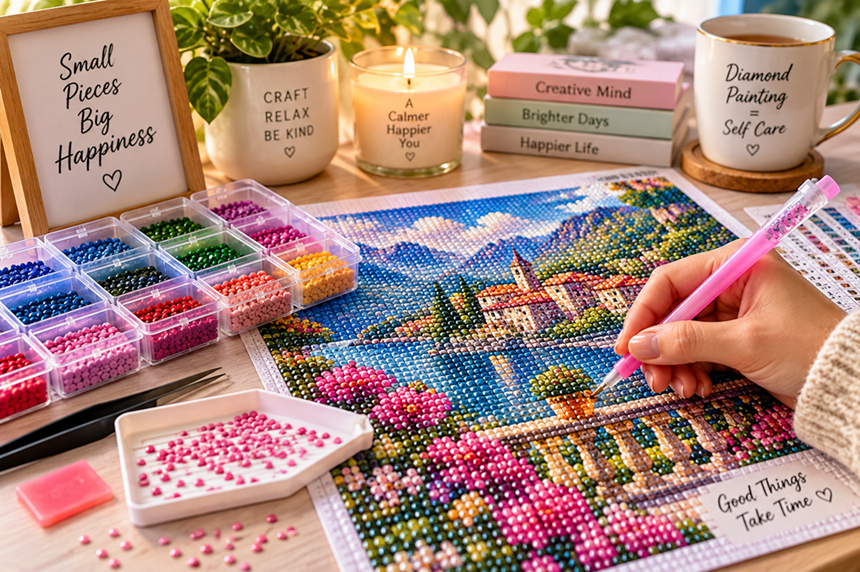
Diamond painting is a craft that combines elements of paint-by-numbers, mosaic art, and bead work.
A typical kit contains:
- An adhesive, printed canvas
- Colored resin drills
- An applicator pen
- Wax or another pickup medium
- A small tray for organizing drills
- Instructions and a color/symbol chart
The canvas is divided into tiny sections, with each section representing a particular color. The crafted matches the symbol on the canvas to the corresponding drill and places it onto the adhesive surface.
As more drills are added, the individual pieces gradually form a larger image.
Unlike traditional painting, you generally don’t need to mix colors, learn brush techniques, or have previous artistic experience. That accessibility is one reason the craft appeals to beginners.
Why Is Diamond Painting So Relaxing?
One of the most enjoyable aspects of diamond painting is its repetitive nature.
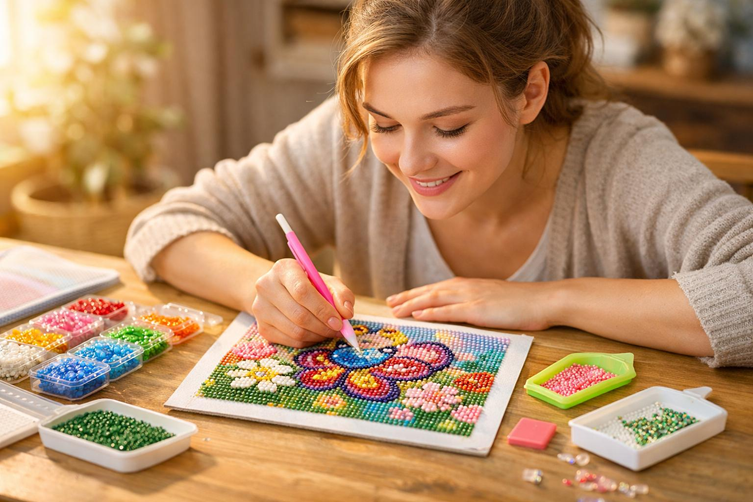
You select a color, arrange the drills in your tray, pick them up with the applicator, and place them onto the corresponding symbols. Then you repeat the process.
That predictable sequence can make the activity feel easier to concentrate on than hobbies requiring constant decision-making.
It Gives You One Clear Task
Modern life often involves switching between emails, messages, notifications, work tasks, and entertainment. Diamond painting offers a very different experience: there is usually one immediate objective—place the next correct drill.
This can make a crafting session feel like a deliberate break from digital distractions.
Research covered by Forbes has also explored how creating art can be associated with relaxation and reduced stress. One small study discussed by Forbes found lower cortisol levels after a 45-minute art-making session for most participants, although the research involved general art-making rather than diamond painting specifically.
That distinction matters: evidence about creative activities should not automatically be interpreted as clinical evidence specifically for diamond painting.
It Creates Visible Progress
Another satisfying feature is that progress is easy to see.
At the beginning, the canvas may look like a collection of symbols and empty adhesive spaces. After several sessions, recognizable sections begin to appear.
This creates small milestones:
10 minutes: a few rows completed
30 minutes: a recognizable section emerges
Several sessions: a substantial part of the image is finished
End of the project: a completed piece of artwork
That visible progression can make the hobby particularly satisfying for people who enjoy completing projects.
Diamond Painting vs. Traditional Painting
Diamond painting is sometimes described as painting without paint.
There are similarities, but the experiences are different.
| Diamond Painting | Traditional Painting |
| Uses resin drills | Uses paint |
| Color placement is guided by symbols | Color choices can be completely open |
| Minimal artistic training required | Brush and color techniques may take practice |
| Highly repetitive | Often more improvisational |
| Produces mosaic-style artwork | Produces painted artwork |
| Easy to pause and resume | Some techniques require continuous work |
Neither approach is inherently better. Diamond painting is particularly suited to people who enjoy structured creativity, while traditional painting may appeal more to people who want complete artistic freedom.

Round vs. Square Drills
Two common types of drills are round and square.
Round Drills
Round drills are often considered beginner-friendly because they are relatively easy to position. Small gaps can remain between individual pieces, contributing to a softer mosaic appearance.
Square Drills
Square drills sit closely together and can create a more continuous, tiled appearance.
Because the pieces meet edge-to-edge, alignment becomes more noticeable. This can be satisfying for experienced crofters who enjoy creating very orderly patterns.
For a first project, choosing a smaller canvas with round drills can make the experience less intimidating.
How to Start Diamond Painting
Starting is straightforward, but a few practical habits can make the experience considerably easier.
1. Choose a Manageable Design
Don’t begin with the largest canvas you can find.
A smaller or medium-sized image allows you to understand the process without committing to hundreds of hours of work.
Good beginner themes include:
- Flowers
- Simple landscapes
- Animals
- Abstract patterns
- Simple geometric designs
- Small decorative illustrations
2. Prepare Your Workspace
Use a flat surface with good lighting.
An LED light pad can be useful when symbols are difficult to distinguish, particularly on detailed canvases. Martha Stewart also recommends adequate lighting and comfortable seating for diamond painting sessions.
Keep your drills in labeled containers rather than leaving multiple colors loose on the table.
3. Work in Small Sections
Don’t remove the entire protective covering from the canvas.
Instead, expose a manageable section and keep the remainder covered. This helps protect the adhesive from dust, hair, and other debris.
4. Load the Applicator
Place a small amount of wax into the applicator tip according to the kit’s instructions.
Pour some drills into the tray and gently shake it so the flat sides settle downward. This makes picking them up easier.
5. Match Symbols Carefully
Look at the canvas legend and identify the symbol corresponding to your selected drill color.
Then place each drill onto its matching square.
Don’t worry about completing the entire color at once. Work in whichever way feels most comfortable.
Practical Tips for a Better Diamond-Painting Experience
Keep Your Drills Organized
Color confusion can quickly become frustrating.
Small storage containers, labeled bags, or a dedicated organizer can help you separate colors and prevent mistakes.
Use Good Lighting
Poor lighting can make similar symbols and colors difficult to distinguish.
Natural daylight works well, while an adjustable desk lamp or LED light pad can be useful for evening sessions.
Take Regular Breaks
Diamond painting requires repetitive hand and eye movements. If your neck, shoulders, wrists, or eyes become uncomfortable, stop and take a break.
Adjust your chair and working height so you aren’t constantly bending forward.
Don’t Chase Perfection
Small imperfections are normal.
A drill may sit slightly crooked or you may occasionally place the wrong color. Correct mistakes when practical, but don’t allow perfectionism to remove the relaxing quality of the hobby.
Can Diamond Painting Improve Well-Being?
Creative hobbies have attracted considerable interest from researchers because they combine concentration, self-expression, learning, and accomplishment.
A 2024 study involving 7,182 UK adults examined participation in arts and crafts and measures of subjective well-being. Participants who reported crafting activities also reported higher levels of some well-being measures. However, the researchers stressed that the observational nature of the research means it cannot establish a cause-and-effect relationship.
This is an important distinction when discussing diamond painting.
It is reasonable to describe diamond painting as a potentially calming and enjoyable creative hobby. It would be inappropriate to claim that diamond painting treats anxiety, depression, or another medical condition based on general arts-and-crafts research.
For people seeking professional support for mental-health concerns, a hobby can complement—but should not replace—appropriate professional care.
Turning Diamond Painting Into a Mindful Routine
You don’t have to spend hours working on one project.
Try creating a simple routine:
After work: 20–30 minutes
Weekend: 45–60 minutes
Before bed: a short, screen-free session if the activity feels comfortable and doesn’t interfere with sleep
Put your phone aside, prepare your drills, and focus on the small section in front of you.
The objective doesn’t have to be finishing quickly. The process itself can be the enjoyable part.
What Can You Do With Finished Diamond Paintings?
Once a project is complete, there are several possibilities.
Frame It
A finished diamond painting can become decorative wall art. Choose a frame that complements the size and colors of the artwork.
Give It as a Gift
Personalized handmade gifts can be meaningful because they represent time and effort rather than simply being purchased.
Create Decorative Items
Smaller diamond-painting projects can be used for bookmarks, stickers, key chains, notebooks, and other decorative objects.
Display a Collection
If you enjoy the hobby long-term, you can create a rotating display of completed projects and change them seasonally.
Common Beginner Mistakes to Avoid
Starting too big: A massive canvas can become overwhelming.
Removing too much protective film: Exposing the entire adhesive area unnecessarily can allow dust to accumulate.
Mixing drill colors: Always return unused drills to their labeled containers.
Working in poor lighting: This makes symbols harder to read.
Ignoring posture: A comfortable chair and appropriate table height can make longer sessions much more pleasant.
Rushing: Diamond painting is a process-oriented hobby. Speed isn’t the objective.
Is Diamond Painting Worth Trying?
If you enjoy puzzles, coloring, crafts, bead work, or other repetitive creative activities, diamond painting is an accessible hobby to explore.
It requires relatively little artistic training, provides a clear structure, and produces a physical piece of artwork at the end. Most importantly, you can adapt it to your own schedule—from a 15-minute evening session to a longer weekend crafting project.
The broader research on arts and crafts provides encouraging evidence of an association with aspects of well-being, while specific claims about diamond painting itself should remain appropriately cautious.
Conclusion
Diamond painting combines creativity, concentration, repetition, and tangible progress in one remarkably approachable hobby.
You don’t need to know how to paint, draw, or design. You simply need a canvas, some colorful drills, a little patience, and enough time to enjoy the process.
Whether you want a screen-free evening activity, a creative weekend project, handmade decor, or simply something new to try, diamond painting offers a structured way to make art one tiny piece at a time.
And perhaps that’s the real attraction: you don’t have to finish the picture today. You only have to place the next diamond.


