


A healthy scalp is the foundation for healthy-looking hair, but it does not always require an elaborate routine. Two simple at-home options that have gained attention are rosemary water and gentle scalp massage with a scalp massage.
Rosemary has been studied in relation to hair growth, although much of the clinical evidence involves rosemary oil rather than homemade rosemary water. A small randomized clinical trial found that rosemary oil was associated with increased hair counts after six months in people with androgenic especial. Scalp massage has also been investigated, with one small study finding increased hair thickness after 24 weeks of standardized massage.
The key is to treat these methods as supportive scalp-care practices—not guaranteed cures for hair loss.
What Is Rosemary Water?
Rosemary water is an infusion made by steeping fresh or dried rosemary leaves in water. After cooling and straining, the liquid can be applied to the scalp as a light mist or rinse.
It is important to distinguish rosemary water from rosemary essential oil. The research supporting rosemary and hair growth has primarily examined rosemary oil or specific formulations, so it would be inaccurate to assume that homemade rosemary water produces the same results.
For evidence-based information about rosemary oil and hair, see this Cleveland Clinic guide to rosemary oil for hair growth.
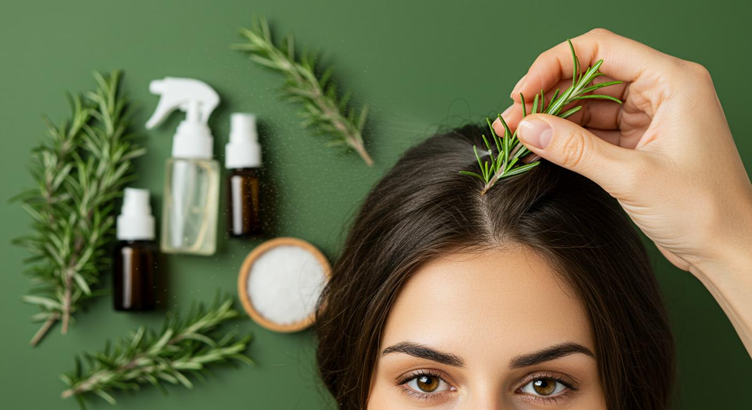
How to Make Rosemary Water at Home
Simple Rosemary Water Recipe
You will need:
- 2–3 fresh rosemary sprigs, or approximately 1–2 tablespoons dried rosemary
- 2 cups of water
- A clean saucepan
- A clean spray bottle or container
Preparation
- Bring the water to a gentle boil.
- Add the rosemary.
- Reduce the heat and simmer gently for around 10–15 minutes.
- Allow the infusion to cool completely.
- Strain out the rosemary.
- Transfer the liquid to a clean container.
Because homemade herbal water contains water and has no standardized preservative system, make small batches, keep them refrigerated, and discard the preparation if it develops an unusual smell, appearance, or contamination.
How to Use Rosemary Water on Your Scalp
Start with a clean scalp and lightly apply the rosemary water to the roots rather than soaking the entire length of your hair.
Part your hair into several sections and gently mist the scalp. You can then massage the liquid with your fingertips or a soft silicone scalp massage.
A practical routine might look like this:
Step 1: Apply rosemary water to the scalp.
Step 2: Massage gently for 3–5 minutes.
Step 3: Leave it on if your scalp tolerates it, or rinse during your normal washing routine.
Step 4: Repeat consistently rather than applying excessive amounts.
There is currently no well-established clinical schedule proving that daily rosemary-water application produces hair regrowth, so consistency should not be confused with guaranteed effectiveness.
Using a Scalp Massages Correctly
A silicone scalp massage can make massage easier, but more pressure is not better.
Use the massage with small, gentle circular movements. Work across the front, sides, crown and back of the scalp without aggressively scratching or pulling the hair.
Research on standardized scalp massage is limited, but one study involving nine healthy men found that four minutes of daily massage for 24 weeks increased measured hair thickness. The researchers did not find a significant increase in hair growth rate or hair density.
This distinction matters: scalp massage may have potential benefits, but the evidence does not establish it as a universal hair-loss treatment.
A Simple Rosemary Water + Massage Routine
For someone experimenting with this DIE approach, a straightforward routine could be:
1. Prepare a fresh small batch
Keep the preparation simple and hygienic. Avoid adding numerous kitchen ingredients that could irritate the scalp.
2. Apply sparingly
Mist the scalp rather than completely saturating the hair.
3. Massage gently
Use a clean silicone massage for several minutes. If you experience pulling, pain or irritation, reduce the pressure or stop.
4. Monitor your scalp
Pay attention to itching, redness, burning, excessive dryness or worsening flaking.
5. Give it realistic expectations
Hair grows slowly. A DIE scalp routine should not be judged after a few applications. More importantly, persistent hair loss should not be attributed automatically to poor scalp care.
Rosemary Water vs. Rosemary Oil
| Feature | Rosemary Water | Rosemary Oil |
| Form | Water-based infusion | Concentrated essential oil/formulation |
| Research | Limited direct clinical evidence | Some clinical research exists |
| Texture | Lightweight | More concentrated and oily |
| Irritation risk | Generally lower, but individual reactions occur | Can cause irritation if used improperly |
| Main role | Scalp-care routine | More concentrated topical treatment |
A randomized trial comparing rosemary oil with 2% minoxidil followed participants for six months and found increased hair counts in both groups at six months, with no significant difference between the groups. However, this was a study of rosemary oil—not homemade rosemary water.
Safety Tips You Shouldn’t Ignore
Natural does not automatically mean risk-free. Stop using a DIE preparation if it causes burning, significant itching, redness or irritation.
Also, avoid vigorous massage over an injured, infected or inflamed scalp.
If you’re experiencing rapid shedding, noticeable bald patches, a widening part, receding hairline or persistent thinning, consider seeing a dermatologist. Hair loss has numerous possible causes—including hereditary factors, illness, hormonal changes, nutritional issues, infections and certain medications—and identifying the cause is important for choosing appropriate treatment.
For professional guidance, the American Academy of Dermatology’s hair-loss diagnosis and treatment resource is a useful reference.
Final Thoughts
Rosemary water and a gentle scalp massage can form a simple, inexpensive addition to a personal hair-care routine. The strongest evidence currently relates to rosemary oil and standardized scalp massage, while evidence specifically supporting homemade rosemary water for hair growth remains limited.
The most sensible approach is to keep the routine gentle, hygienic and realistic. If hair loss is persistent or progressing, DIE treatments should complement—not replace—professional evaluation.
