

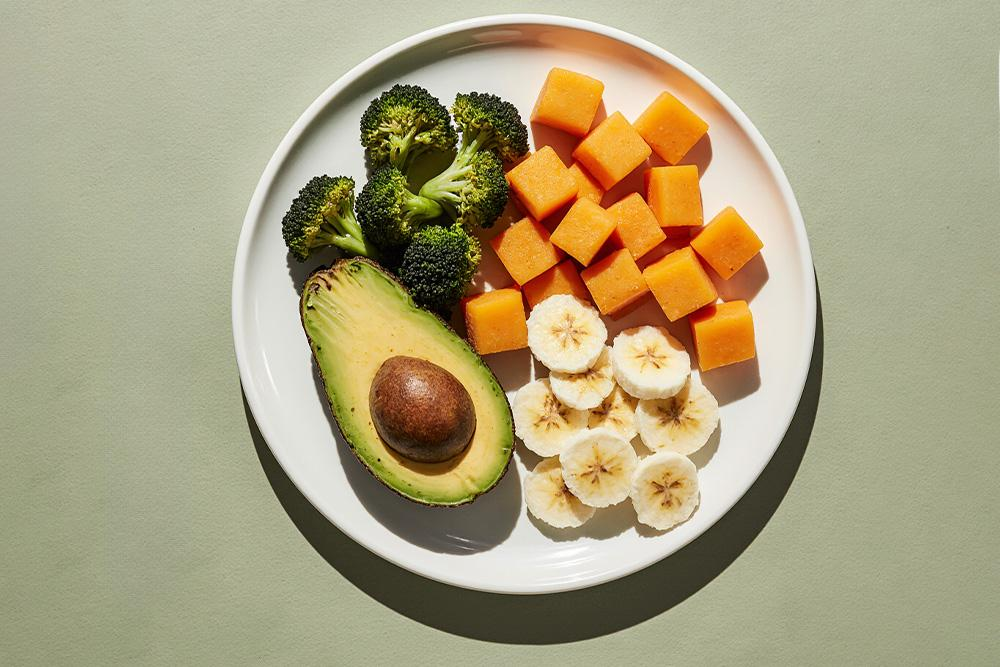
Starting solid foods is an exciting milestone, but many parents feel pressure to begin with traditional infant rice cereal. The good news is that rice cereal is not required as a baby’s first food. Current guidance supports offering a variety of developmentally appropriate foods around 6 months, including vegetables, fruits, proteins, dairy foods, and grains.
Baby-led weaning (BLW) is one approach in which babies are offered appropriately prepared finger foods and encouraged to explore and self-feed. It does not have to mean eliminating purées or spoon-feeding altogether. A combination approach can work well, provided foods are nutritious, appropriately textured, and served safely.
The most important priorities are readiness, nutrition, texture, and choking prevention—not whether a baby eats cereal first.
When Is a Baby Ready for First Foods?
Most babies are ready for complementary foods at around 6 months, when they also show developmental signs of readiness. These can include:
- Sitting upright with good head and neck control
- Bringing objects or food toward the mouth
- Opening the mouth when food is offered
- Swallowing food instead of consistently pushing it back out
- Showing interest in food
- Beginning to grasp objects and bring them to the mouth
The exact timing should be individualized, particularly for babies born prematurely or those with developmental or feeding concerns.
Breast milk or infant formula remains an important source of nutrition during the transition to solids. Complementary foods gradually become a larger part of the diet as the baby develops.
10 Nutritious First Foods Besides Rice Cereal
1. Avocado
Avocado is a convenient BLW starter because it is naturally soft and easy for babies to mash with their gums.
How to serve: Cut a ripe avocado into thick wedges that are easy for a baby to grasp. Leaving some peel on one end can make the slippery fruit easier to hold.
Why it works: Avocado provides healthy fats and energy while introducing a creamy texture.
2. Soft-Cooked Sweet Potato
Sweet potato is an excellent way to introduce vegetables while providing carbohydrates, fiber, and several micronutrients.
How to serve: Steam, roast, or boil until very soft. Cut into thick sticks that a baby can hold.
A useful test is the squish test: the food should be soft enough to mash easily between your fingers.
3. Steamed Broccoli
Broccoli can introduce babies to a stronger vegetable flavor and a different texture.
How to serve: Steam until tender. Large florets with a longer stem can be easier for a beginning self-feeder to grasp.
As babies become more skilled, foods can gradually move from larger graspable pieces toward smaller pieces and more advanced textures.
4. Ripe Banana
Banana requires little preparation and is naturally soft.
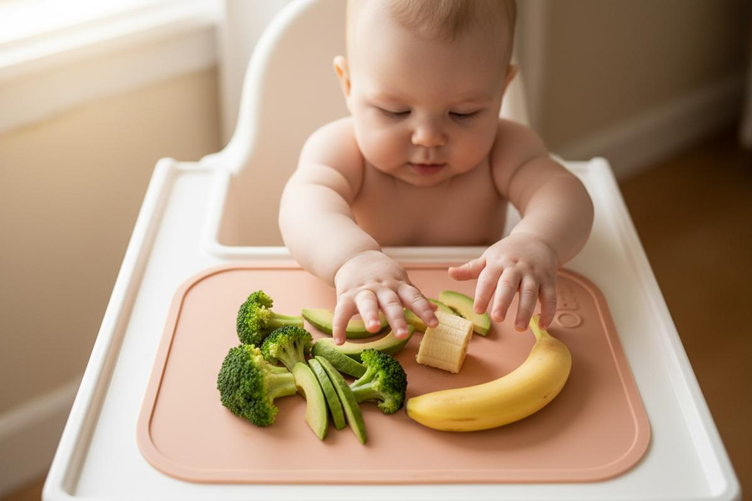
How to serve: Cut a peeled banana lengthwise into halves or quarters. You can also leave part of the peel on as a handle.
Bananas are useful for breakfast or as a simple snack alongside a more iron-rich food.
5. Soft, Ripe Pear
A ripe pear can provide variety without requiring complicated preparation.
How to serve: Use a very ripe, soft pear. Remove the core and seeds, then cut it into appropriately sized pieces. If the pear is firm, cook it until soft.
Hard raw fruits can be choking hazards, so texture matters more than simply choosing a “healthy” food.
6. Well-Cooked Egg
Egg is an especially useful first food because it provides protein and is also one of the major food allergens that parents should know how to introduce safely.
How to serve: Offer fully cooked scrambled egg in soft pieces or another infant-appropriate texture.
Current guidance does not recommend unnecessarily delaying common allergenic foods once a baby is developmentally ready for solids. Babies with severe eczema or an existing egg allergy may need individualized advice before peanut introduction and should be discussed with their healthcare professional.
7. Plain Full-Fat Yogurt
Plain, unsweetened, pasteurized yogurt can be an easy way to introduce dairy while giving babies a spoon-friendly texture.
How to serve: Offer a small amount on a preloaded spoon or let your baby scoop it with their fingers. It can also be mixed with mashed fruit.
Avoid added sugar, and remember that cow’s milk as a drink is different from yogurt; cow’s milk should not replace breast milk or infant formula before 12 months.
8. Soft Shredded Chicken
Iron becomes increasingly important during complementary feeding, making iron-rich foods particularly valuable.
How to serve: Cook chicken thoroughly until tender and remove bones, skin, and tough pieces. Finely shred the meat and moisten it if necessary.
Large or tough pieces of meat can be choking hazards, so preparation is critical.
9. Soft-Cooked Lentils
Lentils are a practical plant-based source of protein and iron.
How to serve: Cook until very soft. You can offer thick mashed lentils on a preloaded spoon or form them into soft patties that break apart easily.
Pairing lentils with vegetables or fruit can also create opportunities for babies to experience different flavors and textures.
10. Smooth Peanut Butter, Thinned for Baby
Peanut is another important allergenic food that does not need to be postponed simply because it is an allergen.
How to serve safely: Never offer a spoonful of thick peanut butter. Thin smooth peanut butter with warm water, breast milk, formula, or another suitable food until it has a loose, easily manageable consistency.
Whole peanuts and thick globs of nut butter are choking hazards. Babies with severe eczema or egg allergy may require specific guidance before peanut introduction.
Why Iron-Rich Foods Matter in Baby-Led Weaning
One common concern with BLW is whether babies will consume enough iron. A plate dominated by fruit and vegetables may look healthy but may not provide enough iron or energy.
Try building meals around an iron-rich food, then adding a vegetable or fruit and an energy-rich food.
For example:
Meal idea: shredded chicken + soft sweet potato + avocado
Another option: soft lentils + broccoli + ripe banana
Breakfast: fully cooked egg + avocado + soft pear
This approach provides variety without making every meal complicated. The WHO recommends a diverse complementary diet that includes animal-source foods such as meat, fish, or eggs, along with fruits, vegetables, pulses, nuts, and seeds in developmentally appropriate forms.
Baby-Led Weaning Safety: The Rules That Matter Most
BLW should never mean simply handing a baby pieces of adult food.
Always consider texture
Food should be soft enough to mash easily. Hard raw vegetables, firm apple pieces, whole grapes, whole nuts, popcorn, tough meat, and similar foods can present choking risks.
Use appropriate shapes
For beginning self-feeders, larger soft pieces that are easy to grasp can be more practical than small round pieces. Avoid round, firm shapes that can plug the airway.
As a baby’s hand skills improve, foods can gradually be cut into smaller pieces appropriate for their developmental abilities.
Always supervise meals
A baby should eat while sitting upright in a safe high chair. Stay close and watch continuously while they eat. Do not let babies eat while lying down, crawling, walking, or riding in a vehicle or stroller.
Learn the difference between gagging and choking
Gagging can be noisy and is part of learning to manage new textures. Choking can be silent and prevents normal breathing. Parents and caregivers should learn infant choking first aid rather than relying on online demonstrations or assumptions.
What About Rice Cereal?
Rice cereal is not “bad,” but it is not mandatory. If parents choose infant cereal, variety matters. Current CDC guidance specifically recommends considering fortified oat, barley, or multigrain cereals rather than relying exclusively on rice cereal, because exclusive reliance on infant rice cereal can increase exposure to arsenic.
The larger lesson is that first foods should not be viewed as a competition between “cereal” and “BLW.” What matters most is providing a safe, varied, and nutrient-dense diet that evolves with the baby’s skills.
A Simple First-Week Example
Parents don’t need an elaborate menu. A simple progression could look like this:
Day 1: Avocado wedges
Day 2: Soft sweet potato
Day 3: Banana
Day 4: Steamed broccoli
Day 5: Fully cooked egg
Day 6: Soft lentils
Day 7: Repeat familiar foods and combine two or three foods.
When introducing foods, offering one new food at a time initially can make it easier to identify reactions. However, current allergy guidance emphasizes that common allergens should not be unnecessarily delayed. If your baby has severe eczema, a known food allergy, or another medical concern, discuss an introduction plan with your pediatrician.
Conclusion
Baby-led weaning does not require expensive products, complicated recipes, or rice cereal as a starting point. Soft avocado, sweet potato, broccoli, banana, pear, egg, yogurt, chicken, lentils, and safely prepared peanut butter can all become part of a varied introduction to solid foods.
The goal is not to make every meal perfect. It is to help your baby gradually learn how to handle different tastes, textures, and foods while receiving the nutrients needed for growth.
Start when your baby is developmentally ready, prioritize iron-rich and nutrient-dense foods, prepare foods to reduce choking risks, supervise every meal, and continue breast milk or infant formula as appropriate. When in doubt—especially regarding allergies, prematurity, swallowing difficulties, or growth—your baby’s pediatrician or a qualified feeding professional can provide individualized guidance.
