

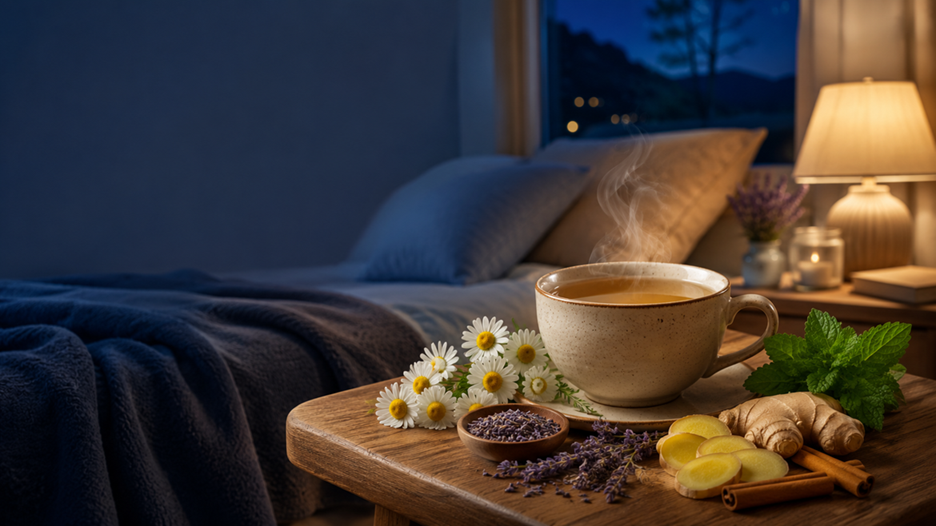
Why Herbal Tea Can Be Part of a Relaxing Bedtime Routine
There is something calming about making a warm cup of tea after a busy day. First, you heat the water and choose your favorite herb. Then, you watch the steam rise and take a few quiet minutes for yourself.
This simple habit can signal that the day is ending. Herbal tea for sleep is not a magic remedy. Instead, it can become one part of a relaxing bedtime routine.
The warmth and gentle flavor may help you slow down. Also, the act of making tea gives you a short break from daily tasks.
Think of the tea as a gentle doorway to bedtime. It should not be treated like a sleeping pill.
Current research is important, too. Many herbs have a long history of traditional use. However, scientific evidence does not always support strong sleep claims.
For example, research has not shown that chamomile can reliably treat insomnia. Studies on valerian have also produced mixed results.
That does not make herbal tea useless. Instead, it means that expectations should stay realistic.
If your mind feels busy after work or screen time, a quiet tea break can help you slow down. You can also use this time to read or practice slow breathing.
The goal is not to force sleep. Rather, the goal is to create a calmer evening and a more peaceful bedtime routine.
The Connection Between Relaxation and Better Sleep
Relaxation can make bedtime feel easier. When your mind stays busy, falling asleep may become harder.
For example, late-night emails can keep you thinking about work. Similarly, bright screens and stressful conversations can keep your attention active.
A regular tea ritual can provide a simple cue. Over time, your evening cup can become a reminder that it is time to slow down.
You can make this cue stronger in several ways. First, dim the lights before making your tea. Next, put your phone away and take a few slow breaths.
Relaxation techniques may help some people with sleep problems. However, they are not a replacement for proven treatments.
For people with chronic insomnia, cognitive behavioral therapy for insomnia (CBT-I) is an evidence-based option. Therefore, herbal tea should be viewed as a supporting habit rather than a medical treatment.
A simple routine can include tea, reading, gentle stretching, and a regular bedtime. As a result, your evenings may feel more predictable and calm.
What Herbal Tea Can and Cannot Do
Many websites make strong claims about herbal sleep teas. For example, some promise deep sleep within minutes.
Such claims should be treated carefully. Herbal teas can affect people in different ways.
One person may find chamomile relaxing. Another person may notice little difference.
Research on chamomile and insomnia is also limited. Therefore, chamomile should not be presented as a guaranteed sleep treatment.
Lavender is another popular ingredient. However, research on lavender and sleep is still developing.
Instead of expecting one herb to cure sleep problems, use tea as a calming bedtime beverage. Choose caffeine-free ingredients and notice how your body responds.
If you often struggle to fall asleep, look beyond herbal tea. Also, seek professional advice if you regularly wake during the night or feel very tired during the day.
Adults generally need enough time for proper sleep. However, tea cannot make up for a schedule that does not allow enough rest.
Best Herbs for a Calming Nighttime Tea
Chamomile
Chamomile tea is one of the most popular choices for bedtime. Its mild floral flavor makes it easy to enjoy without much sweetener.
Chamomile has been used traditionally for relaxation. However, traditional use is not the same as scientific proof.
Current evidence about chamomile and insomnia remains limited. Therefore, it is better to view chamomile as a pleasant caffeine-free drink.
To prepare it, steep dried chamomile flowers in hot water. You can drink it plain or add a little honey.
Chamomile also works well in blends. For example, you can combine it with lavender, lemon balm, cinnamon, or ginger.
There is one important safety point. People with allergies to ragweed, daisies, or related plants may react to chamomile.
If you take medication regularly, speak with a healthcare professional before using chamomile often. This is especially important if you take medicines that may interact with herbs.
Lavender
Lavender gives herbal tea a soft floral aroma. Even a small amount can add a pleasant scent.
However, lavender can taste strong. Therefore, start with a small amount.
Research into lavender and sleep is still developing. Existing studies have limitations, so lavender should not be treated as a guaranteed sleep aid.
For homemade tea, use culinary-grade dried lavender. Avoid treating concentrated essential oil as a substitute for dried herbs.
Lavender pairs well with chamomile. In addition, a little lemon balm can create a fresher flavor.
If the taste becomes too strong, simply reduce the amount. The best tea is one that you actually enjoy drinking.
Lemon Balm
Lemon balm has a fresh, lemon-like aroma. Because of this, it can be a good choice if you prefer lighter flavors.
You can use dried lemon balm on its own. Alternatively, combine it with chamomile for a softer blend.
A little honey can also add sweetness. However, there is no need to use much.
Keeping the recipe simple has another benefit. You can easily identify which ingredients you enjoy.
In addition, the repeated ritual can become part of your bedtime routine. Making the same tea each evening may create a clear transition from daytime to rest.
Still, natural does not automatically mean risk-free. Therefore, ask a healthcare professional before using herbal products regularly if you take medication or have a health condition.
Peppermint and Ginger
Peppermint and ginger can add plenty of flavor to herbal tea. P
However, they may not be the first choice for a sleep-focused drink. Instead, use them mainly for flavor and comfort.
Peppermint may worsen reflux symptoms in some people. Therefore, avoid it near bedtime if it causes heartburn.
Ginger can also become strong when used in large amounts. Usually, one or two thin slices are enough.
The goal is to create a drink that feels comfortable. If a tea causes discomfort, choose a different blend.
7 Herbal Tea Recipes for Deep Sleep and Relaxation
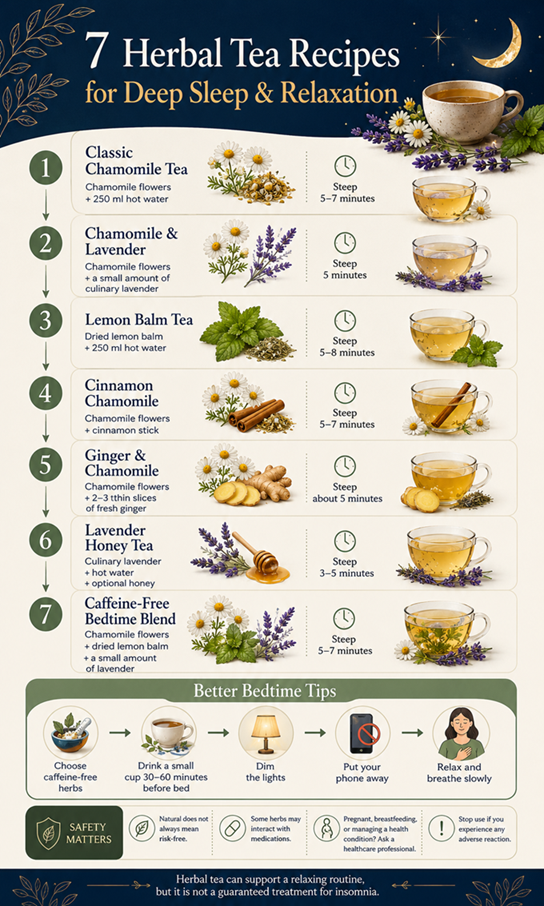
1. Classic Chamomile Bedtime Tea
Ingredients:
- 1–2 teaspoons dried chamomile flowers
- 250 ml hot water
- Honey, optional
First, place the chamomile flowers in a cup or tea infuser.
Next, pour hot water over the flowers. Cover the cup and let it steep for 5–7 minutes.
After that, strain the tea. Add a little honey if you want more sweetness.
This is one of the easiest herbal tea recipes for relaxation. It uses one main herb and takes only a few minutes to prepare.
For a calmer evening, enjoy the tea while reading. Alternatively, listen to soft music or practice slow breathing.
However, chamomile is not a proven treatment for insomnia. Instead, use it as one part of a healthy bedtime routine.
2. Chamomile and Lavender Relaxation Tea
Ingredients:
- 1 teaspoon dried chamomile flowers
- ¼ teaspoon culinary-grade dried lavender
- 250 ml hot water
- Honey, optional
First, add the chamomile and lavender to a cup or tea infuser.
Next, pour in the hot water. Cover the cup and steep for 5 minutes.
Then, strain the tea and taste it. If needed, add a little honey.
Lavender has a strong floral taste. Therefore, a small amount is usually enough.
Together, chamomile and lavender create a gentle evening blend. For example, you can enjoy it while reading or listening to quiet music.
Dim the lights before drinking it. Also, put your phone away to reduce distractions.
Research on lavender and sleep is still limited. Therefore, treat this tea as a relaxation drink, not an insomnia treatment.
3. Lemon Balm Relaxation Tea
Ingredients:
- 1–2 teaspoons dried lemon balm
- 250 ml hot water
- Honey, optional
Begin by placing the dried lemon balm in a cup or infuser.
Next, pour hot water over the herb. Let it steep for 5–8 minutes.
Afterward, strain the tea. Add a little honey if you prefer a sweeter taste.
Lemon balm has a light and fresh flavor. As a result, it can be a nice alternative to stronger floral teas.
You can also add a small amount of chamomile. However, start with a simple blend first.
That makes it easier to find your preferred flavor. In addition, you can see how your body responds.
Finally, take your time while drinking the tea. A few quiet minutes can help you shift from daily tasks to bedtime.
4. Cinnamon Chamomile Comfort Tea
Ingredients:
- 1 teaspoon dried chamomile
- 1 small piece of cinnamon stick
- 250 ml hot water
- Honey, optional
First, add the chamomile and cinnamon to a cup.
Next, pour in the hot water. Cover the cup and steep for 5–7 minutes.
Then, remove the herbs and cinnamon. Add a little honey if you want more sweetness.
Cinnamon gives the drink a warm flavor. Meanwhile, chamomile adds a soft floral note.
Because of this combination, the tea can feel comforting on cool evenings. You can enjoy it while reading or relaxing.
However, cinnamon is mainly included for flavor. It should not be treated as a proven sleep treatment.
Therefore, keep the recipe mild. If you take medication or have a health condition, ask a healthcare professional before using herbal ingredients often.
5. Ginger and Chamomile Evening Tea
Ingredients:
- 1 teaspoon dried chamomile
- 2–3 thin slices of fresh ginger
- 250 ml hot water
- Honey, optional
Start by adding the chamomile and ginger to a cup.
Next, pour hot water over the ingredients. Cover the cup and let it steep for about 5 minutes.
Afterward, strain the tea. Add a little honey if you want a sweeter taste.
Ginger adds warmth and spice. At the same time, chamomile gives the drink a softer flavor.
If you prefer a mild taste, use one slice of ginger. Otherwise, two or three slices will give the tea more flavor.
This is a caffeine-free evening option. However, it should not be used as a sedative.
If you have acid reflux, pay attention to how ginger affects you. If discomfort occurs, choose a milder tea instead.
6. Lavender Honey Herbal Tea
Ingredients:
- ¼ teaspoon culinary-grade dried lavender
- 250 ml hot water
- ½–1 teaspoon honey, optional
First, place the lavender in a cup or tea infuser.
Next, pour hot water over it. Let the herb steep for 3–5 minutes.
Then, strain the tea and add honey if desired. Let it cool slightly before drinking.
Lavender has a strong aroma. Therefore, a small amount is usually enough.
For a relaxing experience, keep the lights low while making the tea. Also, put your phone away.
Meanwhile, take slow breaths as you sip. You can also read a few pages of a book.
Research on lavender and sleep is still developing. Therefore, use this recipe as a relaxing bedtime drink rather than a proven insomnia treatment.
7. Caffeine-Free Bedtime Tea Blend
Ingredients:
- 1 teaspoon dried chamomile
- ½ teaspoon dried lemon balm
- A small amount of dried lavender
- 250 ml hot water
- Honey, optional
First, combine the herbs in a tea infuser.
Next, place the infuser in a cup. Pour in 250 ml of hot water and cover the cup.
Let the blend steep for 5–7 minutes. Afterward, remove the infuser and taste the tea.
Add honey if you want some sweetness. You can also adjust the herb amounts next time.
Chamomile provides a soft floral taste. Meanwhile, lemon balm adds a fresh citrus note.
Lavender adds aroma. However, too much can overpower the blend.
This recipe is caffeine-free and easy to adjust. Therefore, it can work well as a simple evening drink.
Avoid adding herbs simply because they are marketed as powerful sleep aids. For example, research on valerian has produced mixed results.
Kava also deserves caution because some kava products have been linked to serious liver problems. Therefore, a simple blend is often a better starting point.
How to Prepare Herbal Tea for Sleep
Good preparation can turn a simple drink into a bedtime ritual.
First, start with fresh water. Heat it until it is hot.
Next, place the herbs in a cup or tea infuser. Pour the hot water over them.
Then, cover the cup while the herbs steep. This helps keep the aroma in the cup.
Follow the recommended steeping time for your recipe. Afterward, strain the herbs before drinking.
Avoid making the tea extremely strong. More herbs do not always mean better results.
Instead, start with one or two familiar ingredients. Then, adjust the recipe slowly.
For bedtime, choose caffeine-free ingredients. Avoid adding black tea, green tea, white tea, or energy drinks.
Finally, consider the amount of liquid you drink. A smaller cup may be better if you often wake during the night to use the bathroom.
Best Time to Drink Herbal Tea Before Bed
There is no single time that works for everyone. However, many people may enjoy a small cup 30–60 minutes before bed.
This timing can fit naturally into a wind-down routine. For example, you could make your tea after dinner.
Next, dim the lights and put your phone away. Then, choose a quiet activity such as reading or stretching.
Sip the tea slowly instead of drinking it quickly. Meanwhile, give your mind time to slow down.
If you often wake up to use the bathroom, change the timing. Instead, drink a smaller cup earlier in the evening.
The tea is only one part of the routine. Therefore, it should not be expected to solve every sleep problem.
Healthy sleep also requires enough time for rest. As a result, a good bedtime schedule remains important.
Herbal Tea Safety and Precautions
Natural does not always mean risk-free. Therefore, herbal teas should still be used with care.
For example, chamomile may cause allergic reactions in some people. This risk may be higher if you are sensitive to ragweed, daisies, or related plants.
Chamomile may also interact with certain medicines. Because of this, check with a healthcare professional if you take medication regularly.
Valerian is another popular sleep herb. However, research on valerian has produced mixed results.
Kava requires extra caution. In particular, some kava products have been linked to serious liver problems.
Pregnant or breastfeeding people should also seek professional advice before regularly using medicinal herbs. The same applies if you have a health condition.
In addition, prescription medicines can interact with some herbs. Therefore, checking first is a sensible step.
Finally, stop using a tea if you develop an unusual reaction. Seek medical advice if the reaction is severe or does not improve.
Tips to Build a Better Bedtime Routine
A good bedtime routine does not need to be complicated. In fact, simple habits are often easier to repeat.
First, keep your bedtime and wake time fairly consistent. This can help create a steady daily rhythm.
Next, reduce bright lights before bed. Also, limit activities that keep your mind highly active.
Instead of scrolling late at night, choose a quieter activity. For example, read a book, stretch gently, or practice slow breathing.
Your tea can become a useful signal, too. Once the cup is ready, let that moment mark the end of your busy day.
Meanwhile, work messages can wait until morning. Turn off notifications if they keep pulling your attention back to your phone.
In addition, keep your bedroom comfortable and quiet when possible. A calm setting can support your overall sleep routine.
Pay attention to how your body reacts to each tea. If an ingredient causes discomfort, stop using it.
Finally, seek professional advice if sleep problems continue. Stronger herbal blends are not a substitute for proper care.
Conclusion
Herbal tea recipes for deep sleep and relaxation can make your evening feel calmer.
Chamomile, lavender, lemon balm, ginger, and cinnamon offer different flavors. In addition, many can be used to create simple caffeine-free drinks.
However, herbal tea is not a guaranteed solution for insomnia. Research on several popular sleep herbs remains limited or mixed.
Therefore, use tea as one part of your bedtime routine. Prepare a mild cup and lower the lights.
Next, put away your phone and give yourself time to relax. Reading or gentle breathing can make the routine even more calming.
If you have ongoing sleep problems, do not rely on herbal tea alone. Cognitive behavioral therapy for insomnia, often called CBT-I, has stronger evidence for chronic insomnia.
Ultimately, choose a tea that tastes good and feels comfortable for you. A simple routine that you enjoy is often easier to maintain.
FAQs
1. What is the best herbal tea for deep sleep?
Chamomile is a popular choice for a caffeine-free bedtime tea. It has a mild flavor and a long history of traditional use.
However, scientific evidence does not prove that chamomile reliably treats insomnia. Instead, use it as part of a relaxing nighttime routine.
2. Can I drink chamomile tea every night?
Many people enjoy chamomile tea regularly. However, it may not suit everyone.
For example, people with certain plant allergies should be careful. Chamomile may also interact with some medicines.
Therefore, check with a healthcare professional if you take medication or have concerns about regular use.
3. Is lavender tea good before bed?
Lavender tea can be a pleasant evening drink. In addition, its floral aroma can make a bedtime routine feel more relaxing.
Still, research on lavender and sleep is limited. Therefore, do not treat it as a guaranteed sleep remedy.
4. How long before bed should I drink herbal tea?
A small cup 30–60 minutes before bed can fit well into a wind-down routine.
However, you may want to drink it earlier if fluids cause you to wake during the night.
5. Can herbal tea cure insomnia?
No. Herbal tea should not be considered a cure for chronic insomnia.
Research on several popular sleep herbs is limited or mixed. Therefore, persistent sleep problems should be discussed with a healthcare professional.
Evidence-based treatments such as CBT-I may be more appropriate for chronic insomnia.

1 Comment
Claro e prático. Experimente The Choicer Voicer em . The Choicer Voicer