


Starting a new job is exciting—but it can also stir up unexpected self-doubt. Many high-achieving professionals quietly struggle with imposter syndrome, a psychological pattern where individuals doubt their accomplishments and fear being exposed as a “fraud.” Left unaddressed, it reduces confidence, impedes performance, and makes adapting to a new role harder than it needs to be.
Fortunately, imposter syndrome is a common and manageable experience. This article breaks down how it shows up, why it matters, and practical ways to overcome it with confidence and clarity.
What Is Imposter Syndrome—and Why It Happens in New Roles
Imposter syndrome isn’t a clinical diagnosis, but it’s a well-documented phenomenon studied by psychologists and organizational experts. It often appears during transitions—like starting a new job—when expectations feel high, and familiarity feels low.
Common Triggers When Starting a New Job
- Unclear role boundaries: Not knowing exactly what success looks like.
- High-performing environment: Comparing yourself to experienced peers.
- Lack of feedback: Not yet receiving clear indicators of competence.
- Self-imposed pressure: Feeling you must prove you belong.
According to research, many capable professionals struggle with these beliefs at some point in their careers, especially early on or during transitions. For more context on how imposter feelings affect performance, Harvard Business Review offers research-based insights on identifying and addressing the pattern.¹
Recognizing Imposter Thoughts: The First Step
Before it can be managed, imposter syndrome must be recognized. These thoughts often show up as:
- “Everyone else seems to know what they’re doing; I don’t.”
- “I just got lucky in the interview—it won’t last.”
- “If I ask for help, people will think I’m incompetent.”
Signs You Might Be Experiencing It
| Thought Pattern | Behavioral Impact |
| Self-doubt despite evidence | Overpreparing, second-guessing decisions |
| Attributing success to luck | Discounting feedback or praise |
| Fear of being “found out.” | Avoiding tasks beyond the comfort zone |
Understanding these patterns helps you spot them early, which is essential for addressing them proactively rather than reactively.
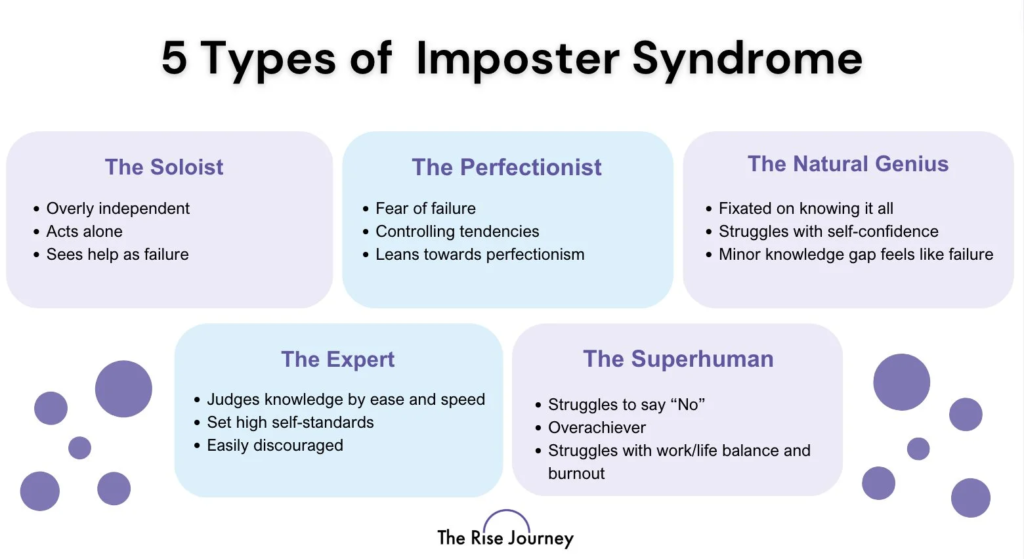
Practical Ways to Overcome Imposter Syndrome
Here are evidence-informed, actionable strategies to help you build confidence and feel grounded in your new role.
1. Reframe Your Inner Dialogue
Your self-talk shapes perception. Instead of:
“I’m not qualified for this.”
Try:
“I may be new, but I bring valuable skills, and I’m learning.”
This isn’t mere optimism; it’s a cognitive restructuring technique used in professional coaching and clinical practice to reduce negative self-judgment.
Example: Keep a list of specific accomplishments from your past roles. When doubt creeps in, review it to remind yourself what you’ve already proven you can do.
2. Focus on Growth, Not Perfection
New roles require learning. Accepting that growth involves incremental progress helps shift your focus away from “needing to get everything right immediately.”
Real-world application: Set weekly micro-goals instead of aiming for perfect mastery. These small achievements build momentum and confidence.
3. Seek Feedback Early and Often
Uncertainty about performance fuels imposter feelings. Regular, constructive feedback gives you external data points about your strengths and areas for growth.
✔ Ask a mentor or manager:
- “What should I continue doing well?”
- “Where can I improve this week?”
Tip: Feedback isn’t a judgment of worth—it’s a roadmap for development.
4. Build a Support Network at Work
Connecting with colleagues relieves isolation and provides perspective. You’ll often find others feel the same way—even if they don’t show it.
Consider:
- Informal check-ins over coffee
- Peer mentorship
- Cross-team collaborations
Sharing experiences creates a culture of mutual learning instead of comparison.
5. Track Your Wins
It’s easy to forget accomplishments, especially early on. Keep a “confidence log” that records wins, compliments, and moments you learned something valuable.
This is backed by positive psychology research: recording accomplishments increases resilience and self-efficacy.²
How Organizations Can Help Employees Overcome Imposter Feelings
While this article focuses on individual strategies, workplaces also play a role. Effective organizational practices include:
- Clear onboarding and role expectations
- Regular performance check-ins
- Mentorship programs
- Transparent feedback cultures
For leaders, cultivating psychological safety helps all employees—including new hires—feel comfortable taking risks and asking questions.
When Imposter Feelings Are More Persistent
If self-doubt becomes overwhelming or starts affecting daily functioning (e.g., constant anxiety, avoidance of tasks), consider talking with a licensed mental health professional. These experiences can intersect with anxiety or stress responses that benefit from therapeutic support.
Conclusion
Imposter syndrome at a new job isn’t a reflection of your actual ability—it’s a cognitive pattern shaped by change, ambiguity, and high expectations. The good news? You don’t have to wait for confidence to arrive magically. By:
- Recognizing unhelpful thoughts
- Reframing expectations
- Seeking feedback
- Tracking your progress
- Building supportive connections
—You can shift from merely coping to thriving in your new role.
Everyone deserves to succeed where they are planted. With patience, strategy, and self-compassion, you can step into your role with grounded confidence and sustained growth.
