


Asking for a raise is one of the most important conversations in a professional’s career. It can be intimidating, but when done thoughtfully — with preparation, evidence, and clear communication — it becomes a strategic step toward fair compensation and career growth. This guide breaks down the process into understandable steps and offers practical tips for navigating the outcome you hope for — even if it doesn’t go your way.
Why Asking for a Raise Matters
Earning a raise isn’t just about money. It reflects:
- recognition of your contributions
- Your commitment to growth
- alignment of compensation with market value
Approaching this conversation with confidence and preparation signals professionalism and self-advocacy — skills highly valued in any workplace.
Before You Ask: Preparation Is Key
1. Evaluate Your Performance and Value
Start by documenting your key achievements over the past 6–12 months. Ask yourself:
- What measurable outcomes have I delivered?
- Have I taken on additional responsibilities?
- Do I solve problems in ways that save time or money?
Example:
Instead of saying “I’ve been doing a good job,” highlight specifics such as:
“I increased client retention by 18% quarter-over-quarter and led the onboarding of three major accounts.”
This type of evidence builds a strong case.
2. Research Market Salary Benchmarks
Understanding the market rate for your role ensures your request is realistic and informed. Trusted sources include:
- Glassdoor Salary Reports — browse compensation data for specific roles and regions.
- Payscale and LinkedIn Salary Insights — compare your current salary to industry norms.
Use this data to determine a reasonable salary range based on your experience and location.
Pro Tip: Frame your ask within a range (e.g., 7–12%) instead of a single figure. This indicates flexibility while anchoring expectations.
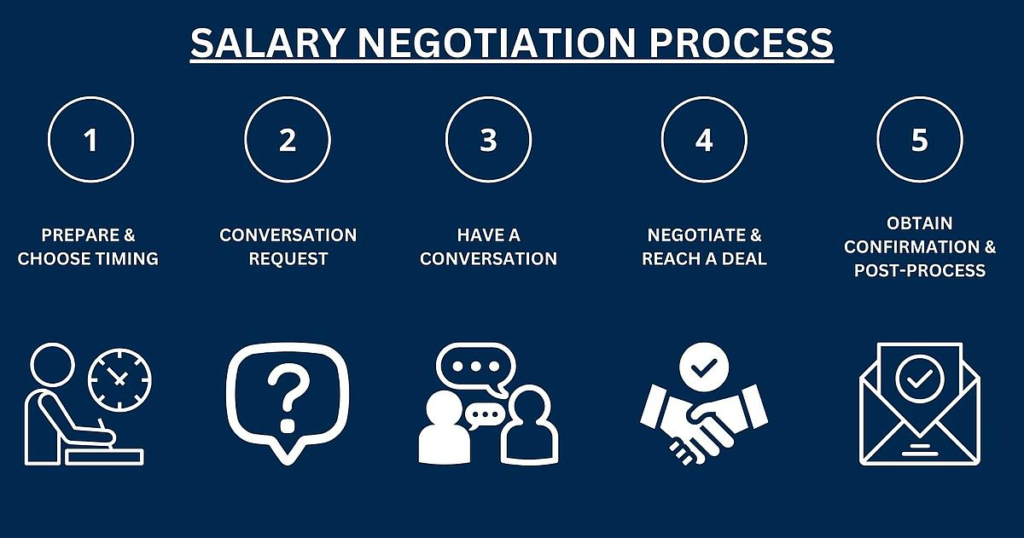
3. Time Your Request Strategically
The timing of your request can influence its reception:
- after a major success or performance review
- When the team or company meets financial goals
- not during organizational stress or budget freezes
Context matters. Be mindful of company calendars and internal rhythms.
How to Structure the Conversation
1. Open with Gratitude and Positivity
Start by expressing appreciation for your role and team:
“I’m grateful for the opportunities I’ve had, and I’m excited about where our projects are headed.”
This sets a collaborative tone.
2. Present Your Case Clearly
Use your documented accomplishments and market data:
“Over the past year, I’ve taken on responsibilities beyond my initial job scope, including mentoring new team members and leading the X project to a successful launch. I’d like to discuss adjusting my compensation to better reflect this growth and market benchmarks.”
3. Suggest a Range and Invite Dialogue
Instead of demanding a number, position the ask in a way that invites conversation:
“Based on current benchmarks and my expanded role, I believe a salary in the range of X to Y would be appropriate. I’d appreciate your thoughts.”
This approach keeps the discussion professional and collaborative.
Practical Examples: What to Say (and Not to Say)
Good Example
“Given the measurable impact of my work and industry standards, I’m requesting an adjustment in my compensation. I think this reflects my contributions and continued commitment to the team.”
Avoid Saying
- “I need a raise because I have bills to pay.”
- “Everyone else is getting paid more than me.”
- “This is non-negotiable.”
These focus on personal needs or comparisons rather than professional value and performance.
If They Say No: Next Steps
Hearing “no” doesn’t have to be a dead end. How you respond can shape future opportunities.
1. Ask for Constructive Feedback
Seek clarity:
“I understand. Could you share what specific goals or expectations I should meet to be considered for a raise in the future?”
This turns the response into actionable insight.
2. Establish a Development Plan
Work with your manager to define measurable objectives that can support future compensation discussions. Examples might include:
- Taking ownership of new initiatives
- completing specific training or certification
- delivering targeted performance improvements
Set a timeline and check-in points to track progress.
3. Consider Other Forms of Compensation
If budget constraints prevent a salary increase, explore alternatives:
- flexible working arrangements
- extra paid time off
- professional development reimbursement
These can enhance job satisfaction and total compensation value.
4. Evaluate Your Career Path (When Necessary)
A denied raise with unclear progression signals may suggest it’s time to assess broader career goals. If growth opportunities are stagnant, external market options might align better with your aspirations and values.
Conclusion: Advocate for Yourself With Confidence
Asking for a raise is fundamentally about professionally advocating for your worth. It requires preparation, evidence, timing, and clear communication. Even if the answer isn’t immediate approval, the conversation can provide valuable feedback that propels your career forward.
Approach the process with respect, confidence, and openness. Use real data and documented achievements to back your case. And if the answer is no, treat it as an opportunity to build a pathway toward your next milestone.
