

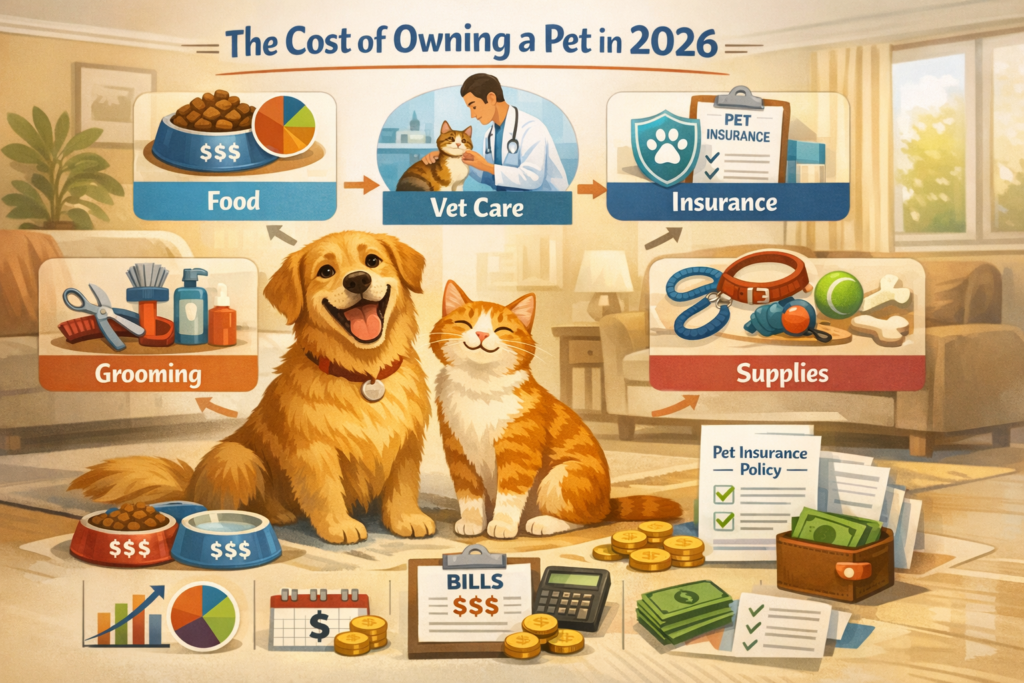
Bringing a pet into your life is deeply rewarding—but it also comes with a range of financial responsibilities. In 2026, the cost of pet ownership continues to rise due to inflation, higher veterinary fees, and growing demand for premium products and services. Understanding these expenses upfront helps ensure you’re prepared to offer your furry friend a long, healthy, and happy life. This article breaks down what it really costs to own a pet in 2026 in clear, practical terms.
Why Pet Costs Matter
Owning a pet isn’t just about the price of food and treats. It’s a long-term commitment that includes medical care, supplies, preventative health measures, and unexpected expenses. Failing to budget for these costs can strain your finances and, more importantly, jeopardize your pet’s well-being.
Upfront Costs: Bringing Your Pet Home
Adoption vs. Purchase
Whether you adopt from a shelter or buy from a breeder dramatically affects your initial cost:
- Adoption (Recommended): Shelters often include vaccinations, spay/neuter, and microchipping for a modest fee—sometimes as low as $30–$455 for dogs and a lower range for cats.
- Breeders: Depending on breed and demand, dogs can cost $775–$4,750+. These prices typically don’t include vaccines or essential gear.
Tip: Adoption is generally more cost‑effective and supports a good cause.
Essential Initial Supplies
Whether dog or cat, you’ll need starter items such as:
- Bed, bowls, leash/collar, litter box (for cats), crate
- Toys and grooming tools
- First veterinary exam and basic vaccinations
These can range from modest to substantial, particularly if you opt for premium brands or designer accessories.
Recurring Annual Costs
Once your pet is settled, regular expenses become the bulk of pet‑ownership costs.
1. Food & Treats
- Dog food for a year can vary widely depending on size and diet, ranging from economical kibble to premium formulas — expect variable annual spend.
- Cat food and litter also add a recurring bill for cat owners.
2. Veterinary Care
Routine vet care—checkups, vaccinations, deworming, and preventive medications—is essential. Over time:
- Routine care costs alone can reach hundreds to over a thousand dollars annually.
- Emergency or specialized treatments can spike expenses unpredictably.
Investing in preventative care often reduces severe outcomes and long‑term costs.
3. Pet Insurance
Insurance can help manage costly medical issues:
- Average pet insurance premiums in 2025 were about $46/month for dogs and $23/month for cats for basic comprehensive coverage.
While optional, pet insurance is increasingly considered a smart financial tool to avoid unexpected high vet bills.
4. Grooming and Supplies
- Grooming services, especially for long‑haired or high‑maintenance breeds, add to annual spending.
- Recurring purchases like toys, bedding, flea/parasite prevention, and cleaning supplies all contribute to ongoing costs.
📊 Typical Annual Figures (Based on Recent Data)
Estimates vary by location and lifestyle, but here’s a general picture:
| Category | Dogs | Cats |
| Food & Treats | Moderate to High | Moderate |
| Routine Vet Care | Moderate | Lower |
| Insurance | ~$550/year | ~$280/year |
| Grooming & Supplies | Variable | Variable |
Annual totals can range broadly, from a few hundred to several thousand dollars, depending on breed size and the choices you make for care and lifestyle.
Real‑World Example
Let’s say you adopt a small dog from a shelter in 2026:
- Initial Year: Adoption ($100–$300) + essentials ($300–$800) + first vet exam ($200–$500)
- Recurring: Food $300–$900, Insurance $500–$800, Vet care $200–$600
Total first‑year cost could easily fall between $1,500–$3,000+. Over the pet’s lifetime (often 10–15+ years for dogs), that adds up considerably, emphasizing why budgeting matters.
Hidden and Unexpected Costs
Responsible pet ownership includes:
- Emergency veterinary bills
- Behavioral training
- Boarding or pet‑sitting during travel
- Special diets or treatments for chronic conditions
These can dramatically increase your annual budget and should be part of an emergency fund.
🧘 Shared Ownership Tips (2026‑Ready)
- Plan a pet budget: List predicted expenses monthly and annually to stay on track.
- Build a savings buffer: Aim to save at least several months of pet care costs for emergencies.
- Compare vet prices: In some regions, prescription medication costs and veterinary fees vary widely. Seeking competitive options can save significantly over time.
- Consider preventive care early: Regular health checks can prevent costly issues later.
Conclusion
Owning a pet in 2026 is both a joy and a financial commitment. From up‑front adoption costs to ongoing food, healthcare, and insurance, the true cost of pet ownership extends far beyond initial impressions. Being informed and prepared ensures you can provide the best care possible without compromising your financial well-being.
